
C SERIES SALT FOG / SPRAY & HUMIDITY CHAMBERS

The Auto Technology C Series Salt Fog Chamber is a budget-friendly fiberglass corrosion chamber built on Auto Technology’s proven cyclic platform. Designed for laboratories running ASTM B117, ISO 9227 NSS / AASS / CASS, JIS Z 2371, ISO 7253, IEC 60068-2-11, EIA-364-31, MIL-STD-810 Method 509.7, and similar salt fog, salt spray, and humidity procedures, the C Series delivers low-cost operation, touchscreen simplicity, and the ability to field-upgrade into advanced cyclic capability as testing requirements evolve.
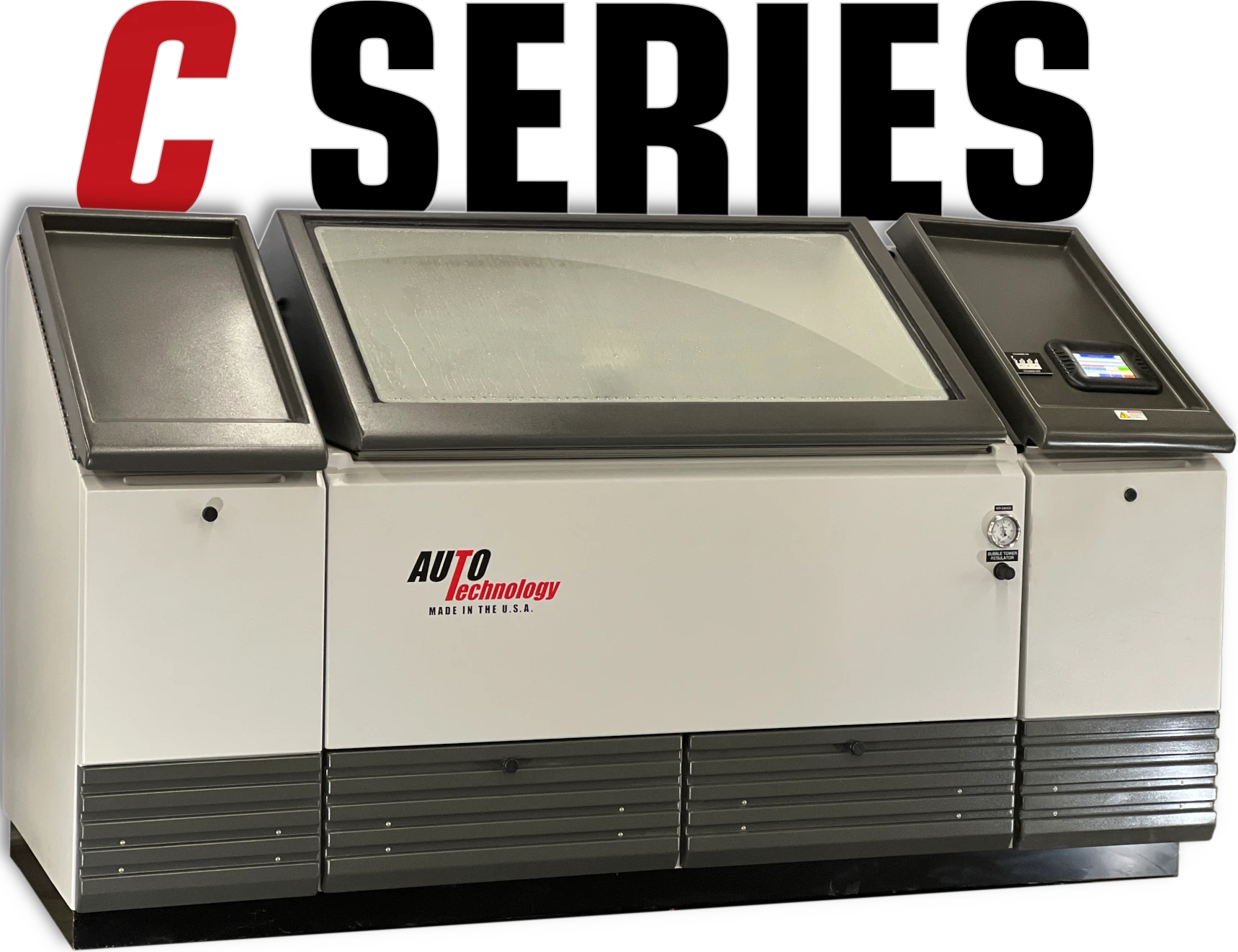
Built on a Proven Platform
The C Series leverages Auto Technology’s long-standing cyclic corrosion platform architecture while simplifying operation for steady-state salt fog testing.
Touchscreen Controls & Simple Operation
Designed for routine daily use with intuitive touchscreen controls and stable chamber management for repeatable corrosion testing.
Upgradeable as Your Lab Evolves
Start with a cost-effective salt fog chamber today and expand into more advanced cyclic capability without replacing the platform.
Tell us your chamber size, testing standard, specimen loading requirements, and any desired options.
Built for Straightforward Corrosion Testing
The C Series is for laboratories that need a chamber that runs steady-state corrosion and humidity conditions correctly, consistently, and simply. It supports routine salt spray and salt fog work, including NSS, AASS, and CASS, and can also be configured for stable high-humidity exposures where the method requires a controlled environment.
High-humidity operation: For stable high-humidity testing, the chamber can be run with the solution tank filled with DI water instead of salt solution. When humidity verification is required, add the Wet Bulb option to measure and document chamber humidity conditions.
CASS testing may require a dedicated chamber. Copper-Accelerated Acetic Acid Salt Spray introduces aggressive chemistry that can be difficult to fully remove from a chamber after testing. Many laboratories dedicate a chamber specifically for CASS work to reduce contamination risk when switching back to NSS or other salt fog procedures.
- ASTM B117 — Salt Spray (Fog)
- ISO 9227 NSS — Neutral Salt Spray
- ISO 9227 AASS — Acetic Acid Salt Spray
- ISO 9227 CASS — Copper-Accelerated Acetic Acid Salt Spray
- JIS Z 2371 — Salt Spray Testing
- GB/T 10125 — NSS / AASS / CASS
- ISO 7253 — Neutral Salt Spray
- IEC 60068-2-11 — Salt Mist
- EIA-364-31 — Salt Spray for Connectors
- MIL-STD-810 Method 509.7 — Salt Fog
- MIL-STD-202 Method 101 — Salt Atmosphere
- And related constant-environment salt spray and high-humidity procedures
Need more than steady-state testing? If your work requires cyclic corrosion capability, broader environmental transitions, or a more advanced control platform, review the full Auto Technology corrosion chamber lineup.
Simple Touch Controls for Everyday Testing
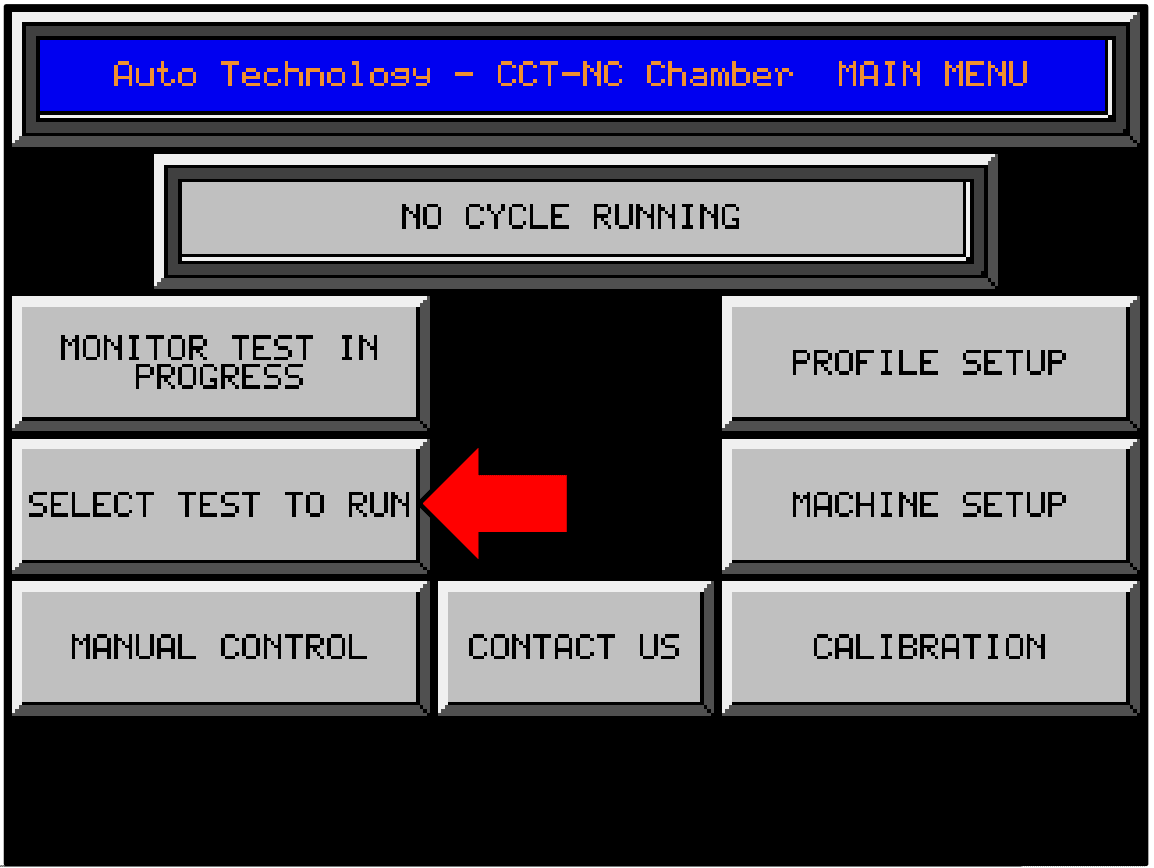
The C Series touchscreen controls are built to make salt fog testing, corrosion testing, and routine humidity work easy to start, easy to monitor, and easy to repeat.
How the C Series differs from the M Series: the biggest differences are the heating method, construction material, and controls. The M Series uses steel construction, water-jacket heating, and legacy-style controls. The C Series uses fiberglass construction, touchscreen controls, and a simplified operating workflow.
Operators can select stored methods, start the chamber, monitor status, view alarms, access manual functions, and manage routine testing without digging through complicated software.
With a 6-inch color touchscreen, stored test methods, and clear operating screens, the C Series is designed for labs that want a chamber people can learn quickly and run consistently.
Simple Chamber Operation
Preloaded methods and guided controls make routine testing easier to run the same way every time.
Stored Programs
Save recurring methods and everyday workflows so common tests are quick to start and easy to repeat.
Built-In Visibility
Live status screens, alarm prompts, and manual access functions help operators see what the chamber is doing.
Sizes and Footprint
The C Series is offered in two standard sizes. Start with your part size, how many parts you need to test at once, and the floor space available in the lab.
Tell us your size. We will match the chamber to your part geometry, loading needs, and available space.
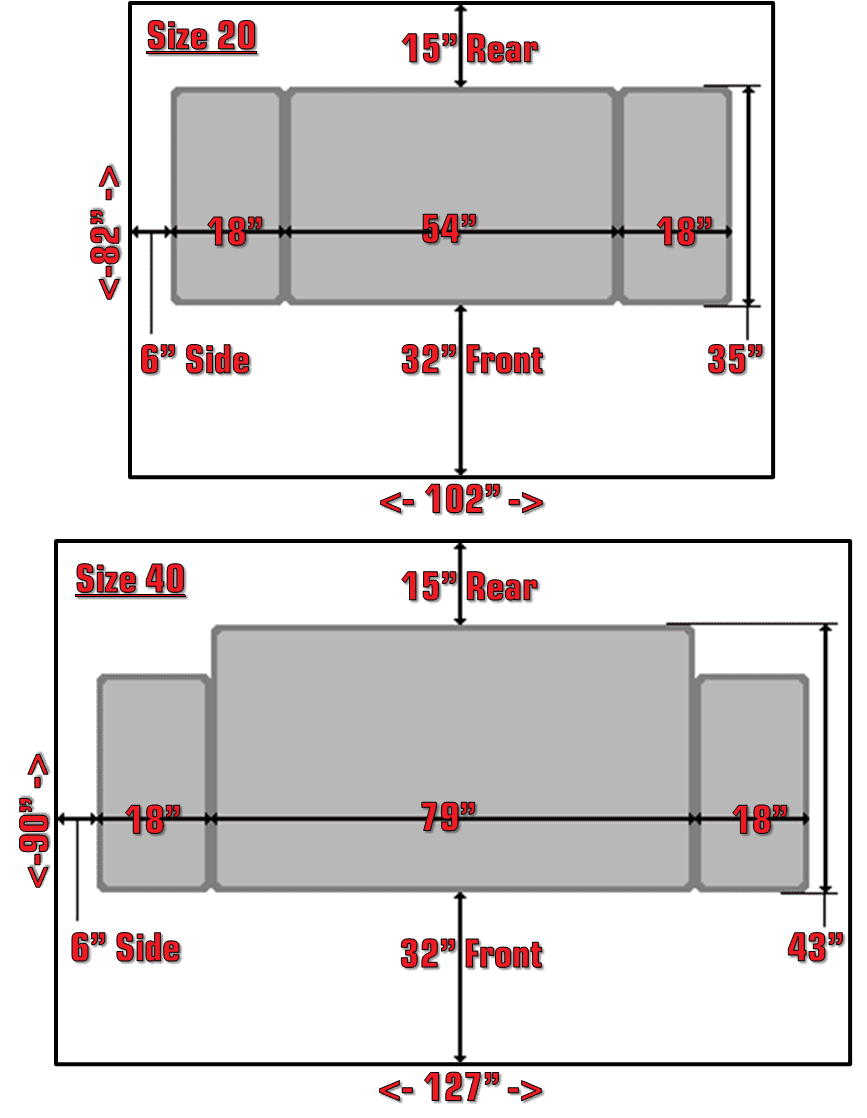
Review footprint and service clearance requirements early so utilities, operator access, and final chamber placement are planned correctly.

The Auto Technology C Series Size 20 corrosion chamber accommodates up to 160 test panels comfortably, maximizing usable specimen exposure space while maintaining uniform fog distribution.
| Size | Internal Volume | Internal Dimensions (in) | Internal Dimensions (cm) | External Dimensions (in) | External Dimensions (cm) |
|---|---|---|---|---|---|
| 20 | ~20 ft³ / 594 L | 50 × 29 × 25 in | 127 × 73 × 64 cm | 95 × 43 in | 242 × 110 cm |
| 40 | ~40 ft³ / 1189 L | 100 × 29 × 25 in | 254 × 73 × 64 cm | 145 × 43 in | 368 × 110 cm |
Important: final installed footprint changes with chamber configuration. Exhaust routing can increase installed space needs beyond the basic chamber shell.
Confirm final layout before purchase if floor space is tight or if the chamber must fit around walls, drains, service access, or exterior vent routing.
Looking for room-prep guidance? Review the corrosion chamber room requirements guide.
Options, Racking, and Consumables
Pressurized DI water is required. The C Series requires a pressurized DI water supply for operation. The bubble tower uses DI water as part of the fog-generation system, so supply pressure and water quality must be planned before installation.
Ventilation must also be planned before purchase. Direct venting to the outside is preferred whenever possible. If the exhaust run exceeds 15 feet, add the Power Exhaust Vent Kit. If direct venting is not practical, review the Recirculating Scrubber / Jet Exhaust System.
Standard Interior Configuration
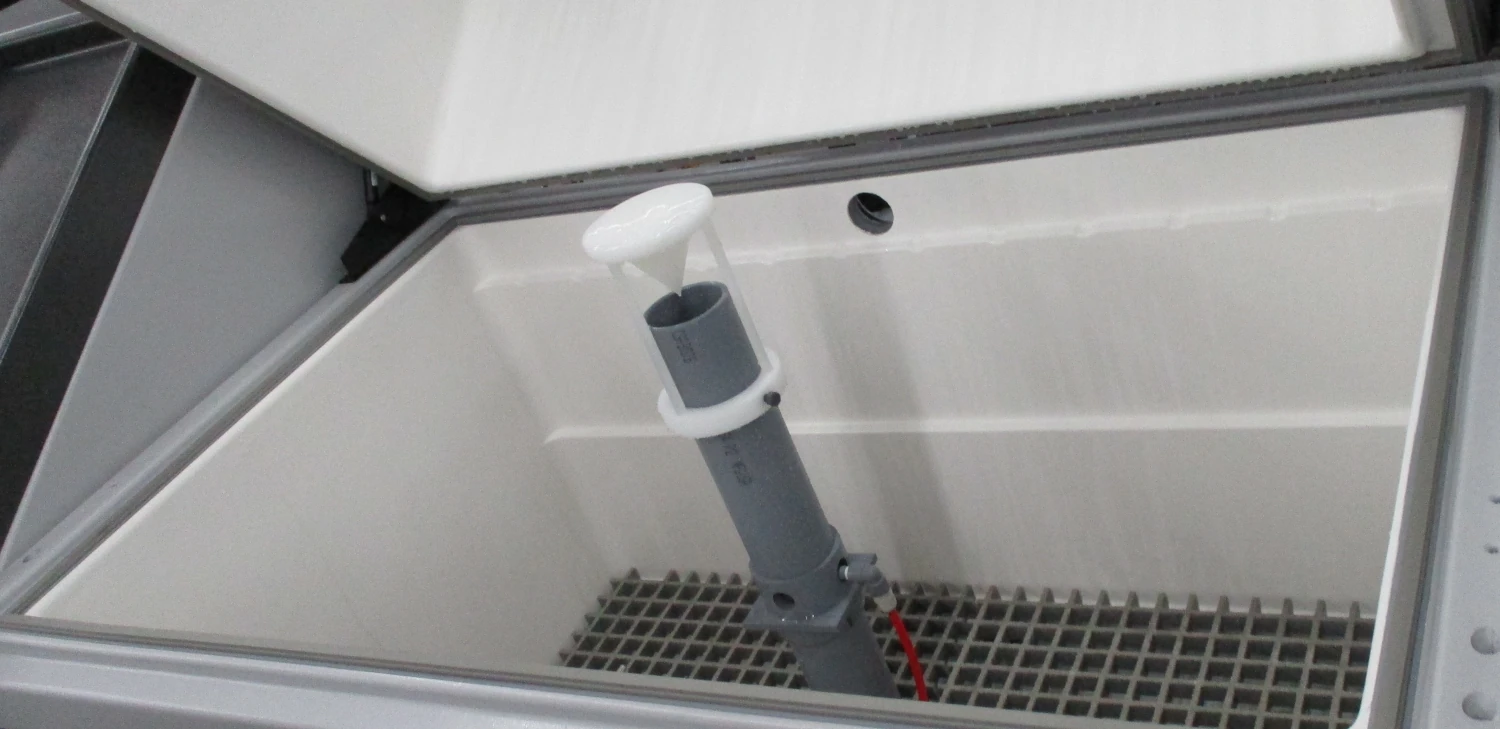
The image shown here represents the standard interior layout of the Size 20 C Series chamber. By default, the chamber includes lower-level shelving for routine specimen support and panel loading. Additional racking, support rods, support angles, slotted bars, racks, and heavy-duty shelves can be added depending on part geometry, loading density, and the exposure orientation required by the test method.
Size 40 note: the Size 40 chamber includes two dispersion towers, one on each side, to support fog distribution across the larger exposure area.
Water Fog Demonstration: This video shows water fog generation inside the C Series chamber.
Water fog is used here to clearly visualize atomization, airflow behavior, and dispersion tower performance.
The video is playing at 1.5x speed. Salt fog is opaque.
Related exposure methods include ASTM B117, ISO 9227, ASTM D1735, ASTM D2247, and IEC 60068-2-11.
Available Options
| Option | What It Does | Image |
|---|---|---|
| Wet Bulb | Adds a wet bulb arrangement for measuring and verifying chamber humidity conditions during stable high-humidity operation. | |
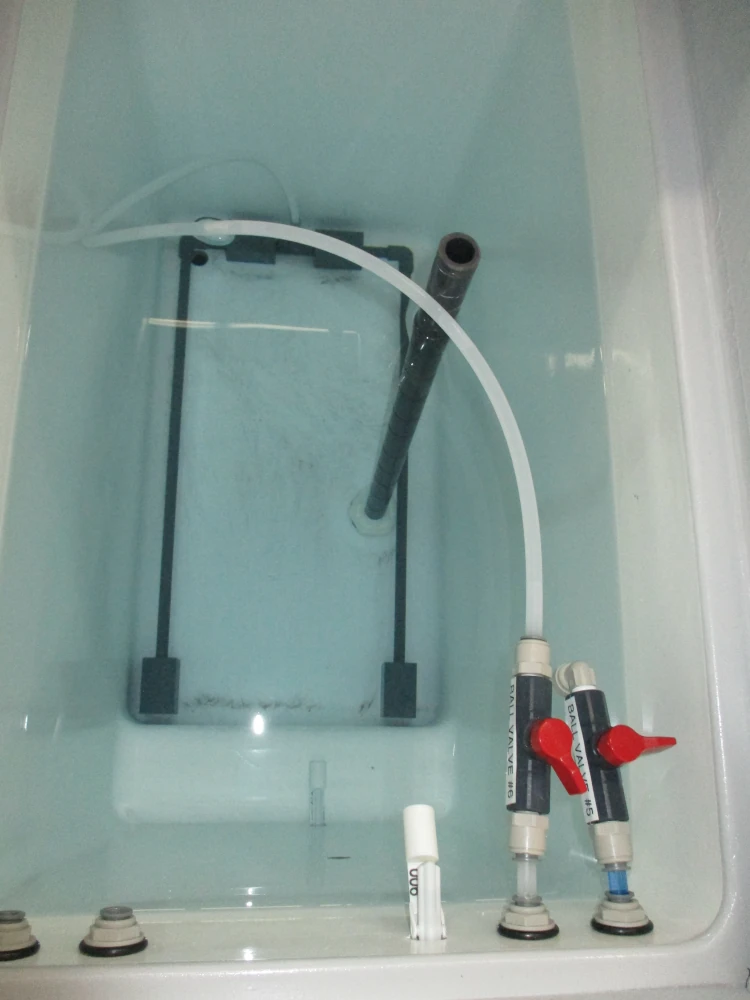
| Mixing Tank Convenience Package | Simplifies solution preparation and transfer with marked levels, fill controls, pumping, and air sparging for a more consistent lab workflow. This is especially helpful for labs mixing solution on site instead of buying pre-mixed salt solution. |
|
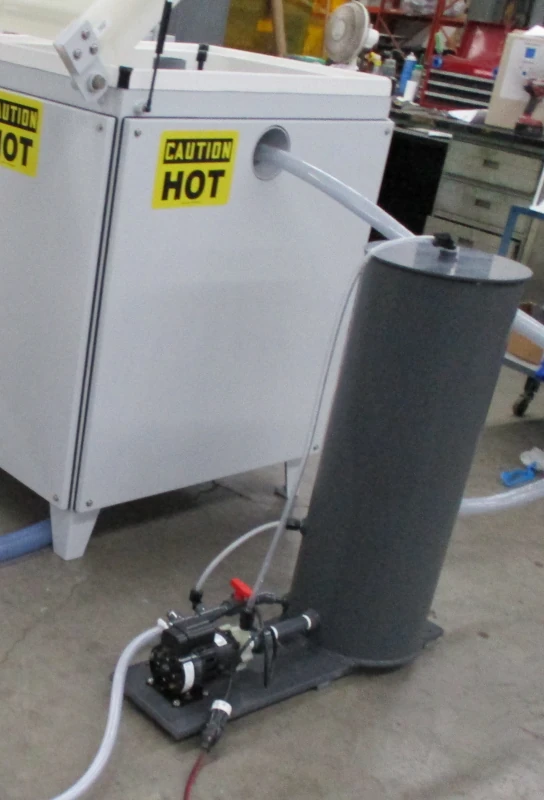
| Recirculating Scrubber / Jet Exhaust System |
Helps avoid the need for new ventilation while reducing water and sewer consumption compared with a constant-flow scrubber system.
Potential savings of up to $4,910 per year in water and sewer costs compared with a standard scrubber. *Savings based on 35 operating hours/week comparing a standard 3 GPM constant-flow scrubber to a recirculating model with a 7-gallon fill. Assumes an average combined water/sewer rate of $15 per 1,000 gallons. |
|
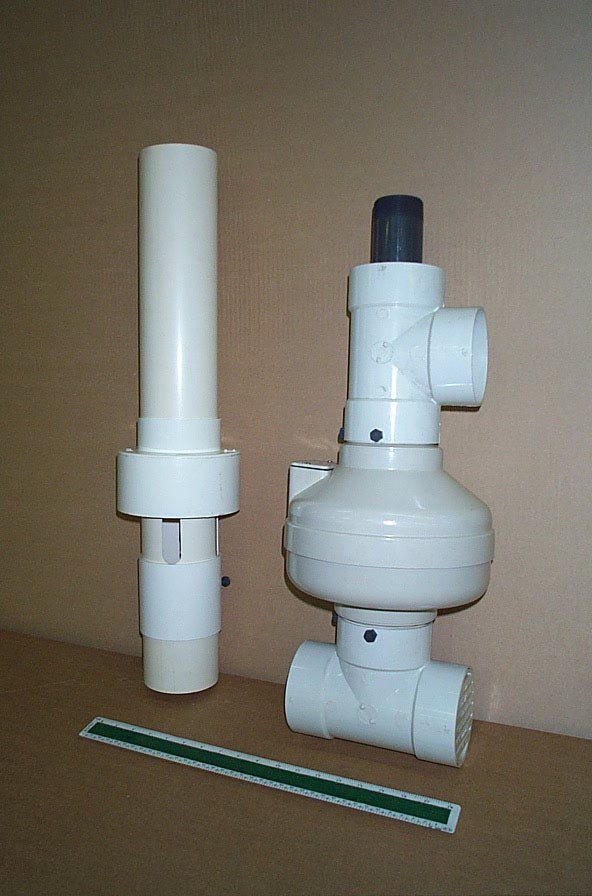
| Power Exhaust Vent Kit |
Recommended when exhaust runs exceed 15 feet to actively pull exhaust from the chamber and help maintain proper exhaust flow.
Direct venting to the outside is still the preferred approach. Add a power vent when the exhaust path is long or difficult to route. |
|
Racking and Sample Handling
The C Series can be configured with multiple specimen-support approaches depending on whether you are loading standard flat panels, suspending irregular parts, or trying to increase chamber capacity with added support levels.
| Item | Description / Important Notes | Image |
|---|---|---|
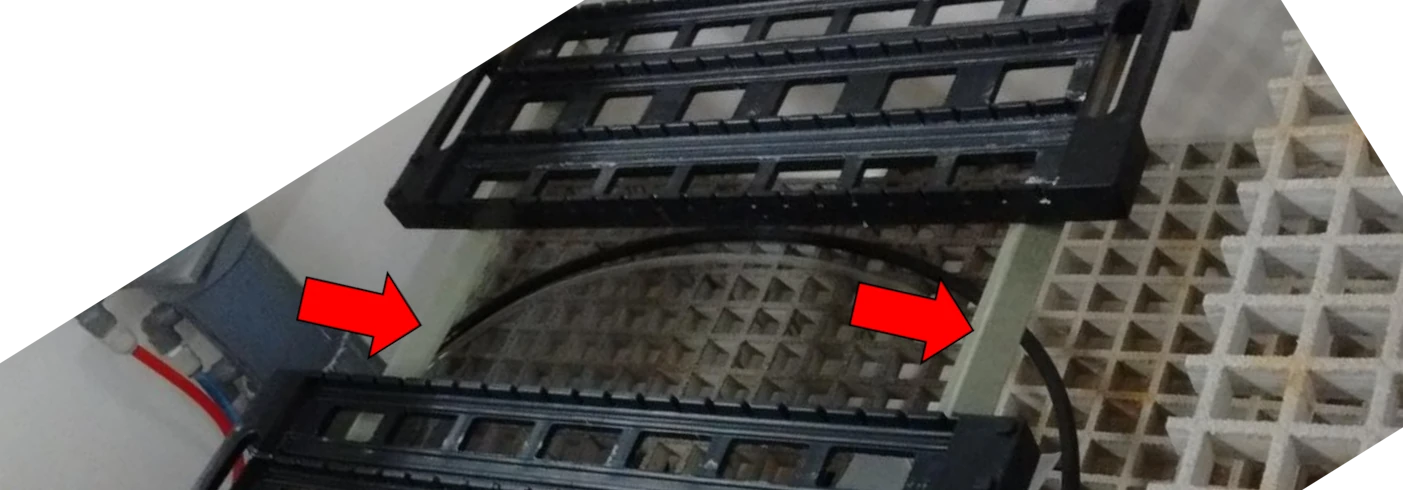
| Fiberglass Support Angles | L-shaped 1 × 1 in fiberglass brackets used for samples, collection tube support, or as support for a slotted rack. Not intended for a total load over 20 lb per bracket. |
|
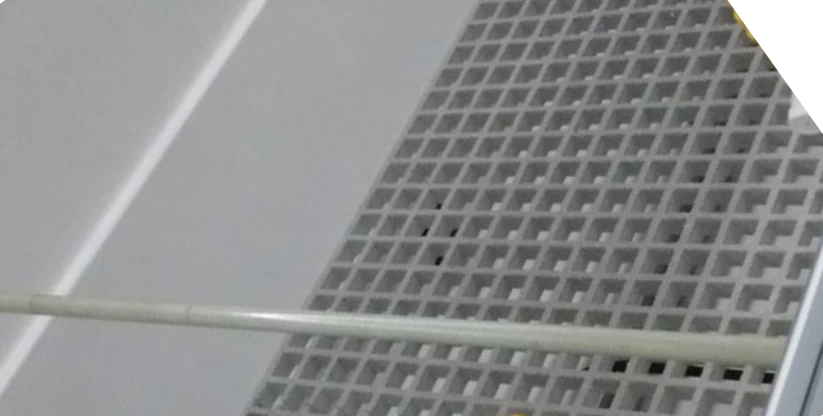
| Fiberglass Support Rods | 1/2 in diameter fiberglass rods used to suspend test samples with plastic ties near the top of the exposure zone. Not intended for a total load over 20 lb per rod. |
|
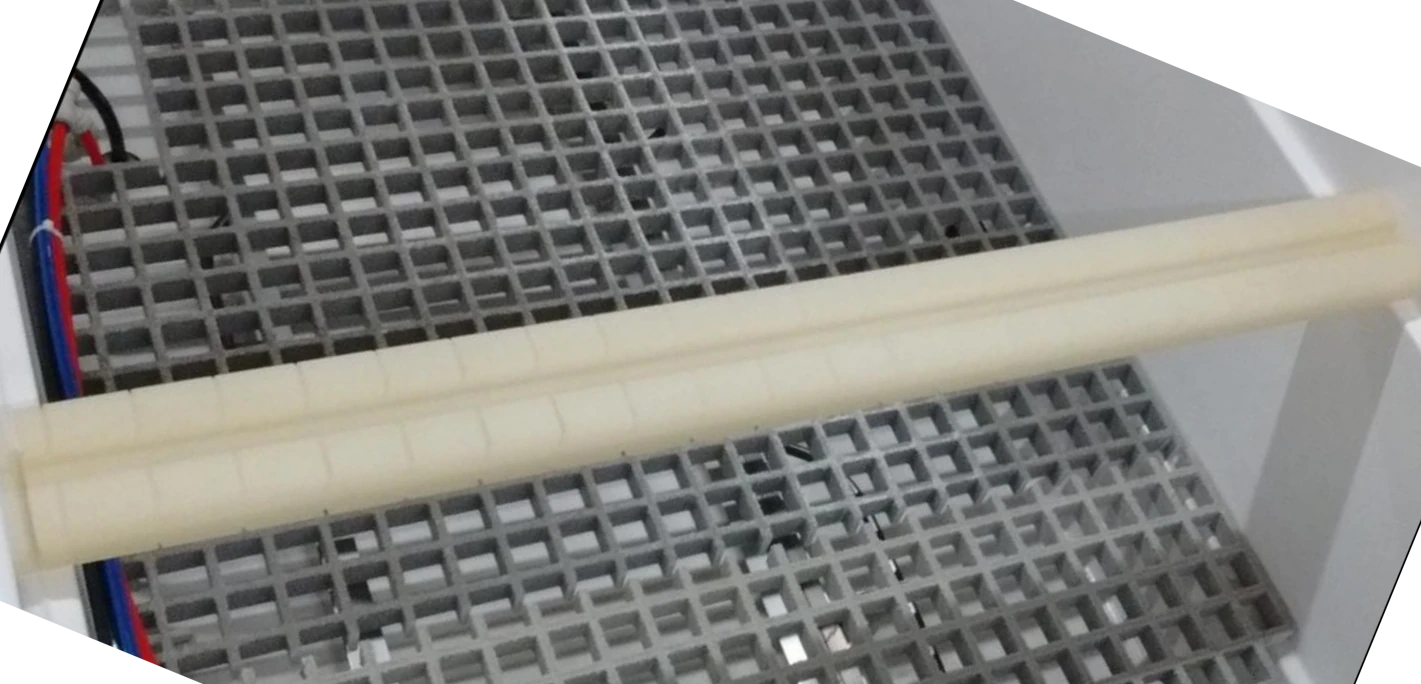
| Slotted Support Bars | Polypropylene bars with drainage channel for 3 × 6 in or 4 × 12 in panels. Available with 15° or 6° saw cuts at 1.5 in spacing. Because the bar material is softer, they are strongly recommended to be used on heavy duty shelves for added support. |
|
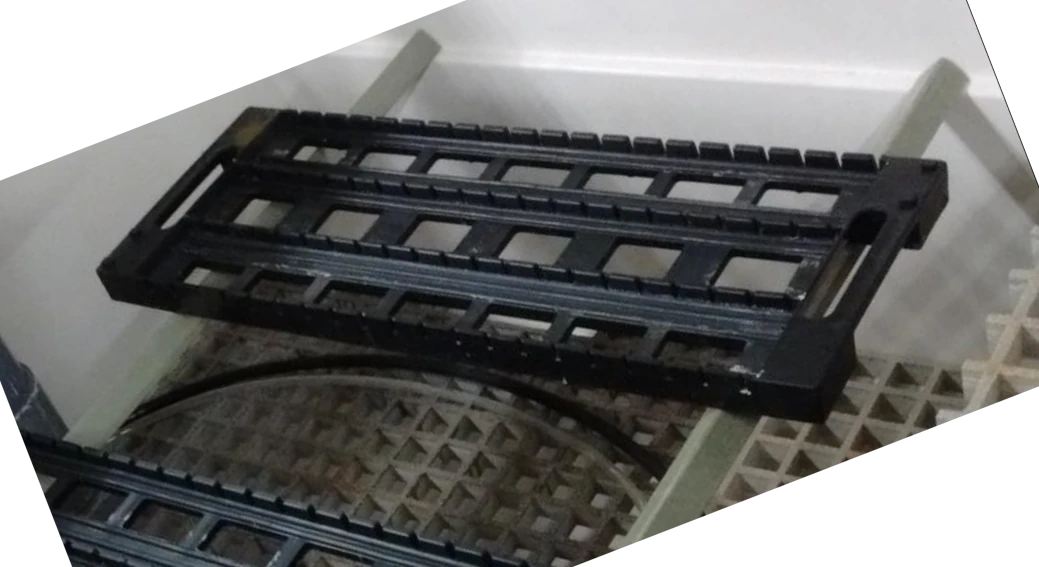
| Slotted Support Rack | Fiberglass rack sized 8.5 × 23 in with two rows of 20 slots for a total capacity of 40 panels. Should be used with fiberglass support angles or heavy duty support shelves. |
|
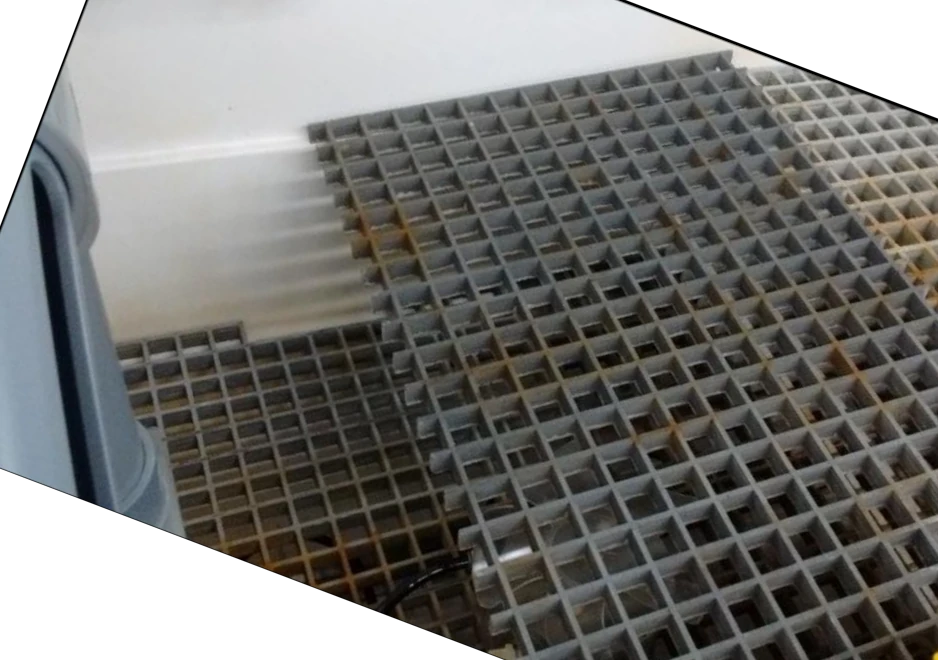
| Heavy Duty Mid-Level Shelves | Fiber-composite shelves that provide added support at mid-level. Useful when added support is needed. |
|
Support matters: If you are using slotted polypropylene bars, Auto Technology strongly recommends placing them on the heavy duty shelves for added support. That helps prevent sagging and keeps panel loading more stable over time.
Consumables and Store Support
Auto Technology also supplies the parts, consumables, and corrosion-test supplies needed to keep the chamber running properly. Customers can buy direct from the Auto Technology equipment parts store.
| Description | Notes |
|---|---|
| ASTM B117 Salt Solution – 55 Gallons | Pre-mixed 5% salt solution supplied for simpler routine chamber operation |
| CASS Salt Solution – 55 Gallons | Pre-mixed solution for copper-accelerated acetic acid salt spray work where the method requires it |
| Deionized Water – 55 Gallons | Bulk DI water supply support where needed |
| Maintenance Kit | Parts kit for routine maintenance |
| pH Meter Kit | Digital pH meter kit to check mixed solution and collected condensate in the cabinet |
| Salt Solution Start-up Kit | Starter kit including salt, funnels, graduates, specific gravity hydrometer, and salinometer hydrometer |
| NIST Calibration Certificate | Official traceable documentation for compliance audits |
| Training Class | Hands-on setup, use, and maintenance training |
Need replacement parts, corrosion test solutions, or chamber supplies now? Visit our equipment parts store to buy direct from Auto Technology.
Installation, Utilities, and Facility Requirements
The C Series is simple to operate, but it still depends on proper installation. Incorrect utilities, poor air quality, improper DI water supply, or bad exhaust routing will directly impact chamber performance and test validity.
Important: Salt spray testing is only as good as the environment inside the chamber. Poor air quality, improper water supply, or incorrect exhaust setup will affect results.
Electrical
- A qualified electrician must provide a lockable fused disconnect switch with slow-blow fuses in full operator view of the chamber
- The disconnect must not be mounted directly to the cabinet
- Run conduit and cable sized appropriately for chamber amperage and voltage
- Where supply quality is poor, a noise / surge suppressor is required
- Final amperage should always be confirmed against the quoted chamber configuration
| Model | 208/1/60 | 208/3/60 | 240/1/60 | 240/3/60 | 460/3/60 |
|---|---|---|---|---|---|
| 20 | 14-24A | 8-14A | 13-21A | 7-12A | 4-7A |
| 40 | 30A | 20A | 30A | 20A | 15A |
Electrical requirements shown above reflect common listed model configurations. Final amperage and utility needs should always be confirmed against the quoted chamber configuration and factory drawings.
Plumbing
- Chamber drain: 1 in hose barb for 1 in I.D. tubing (for chambers manufactured after April of 2026
- DI water supply: 3/8 in O.D. poly tubing from a pressurized DI water source, typically 25–100 psi
- Pressurized DI water is required for chamber operation because the bubble tower uses DI water as part of the salt-fog generation system
- Drain lines should discharge to an open drain
- Do not hard-plumb chamber drains
Compressed Air
- Compressed air supply: 3/8 in O.D. poly tubing from a clean, dry air source
- Typical pressure range: 30–50 psi
- Atomization stability depends directly on air quality
- Contaminated air will affect fog generation and test consistency
- Purge air is supplied through the compressed-air line
- Install filtration and drying upstream if plant air is not controlled
Ventilation Requirements
- Salt fog cabinet exhaust should vent directly to the exterior of the building whenever possible
- Do not connect the chamber exhaust to a shared plenum or duct serving other instruments
- Use 1.25 in PVC piping for the chamber vent connection
- Power vent required when exhaust runs exceed 15 ft
- Salt fog is corrosive — improper exhaust routing can damage surrounding areas and contaminate other equipment
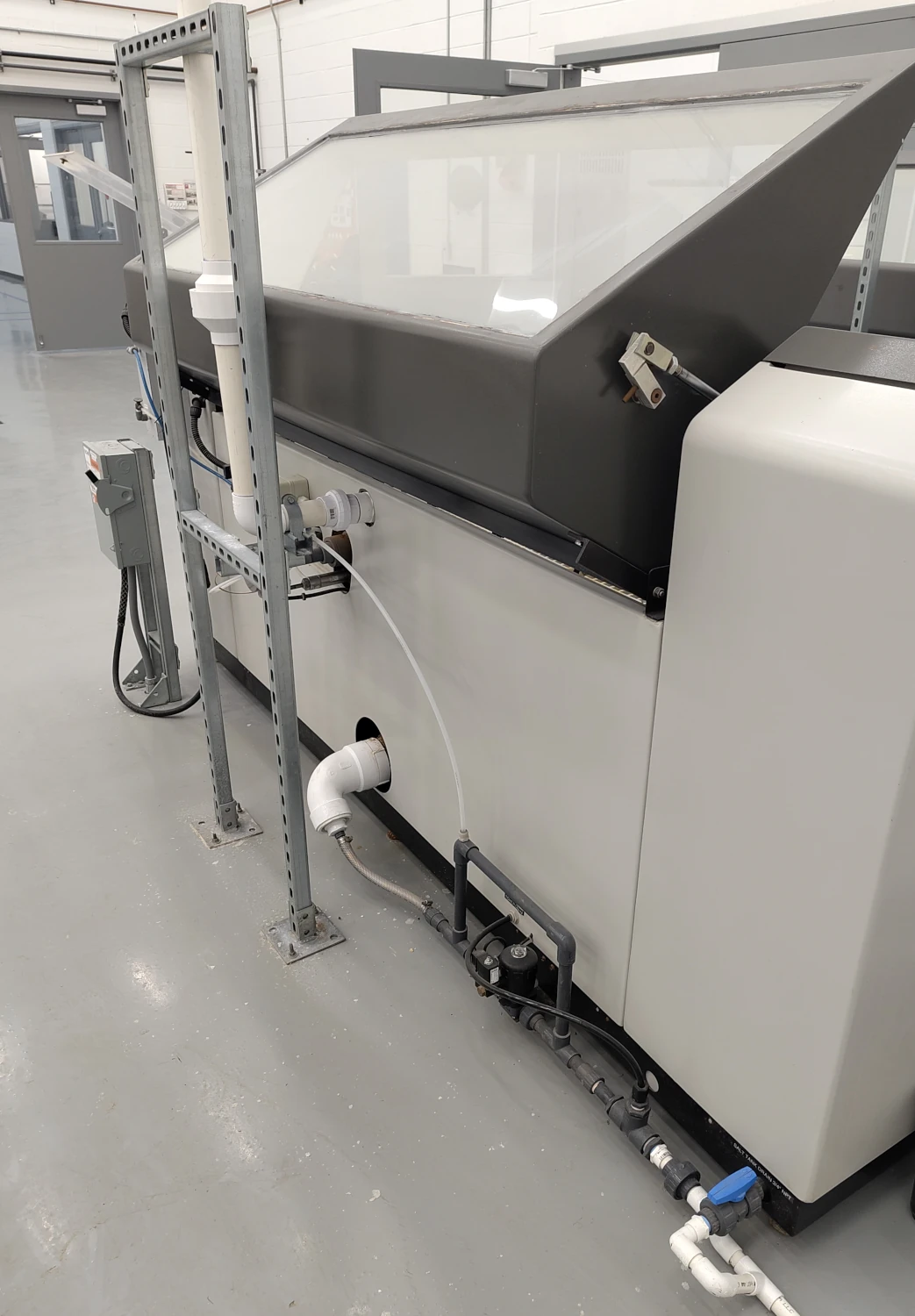
Rear utilities matter: The chamber exhaust vent and gravity drain need to be routed and supported correctly. Maintain proper vent pitch, avoid vibration, and plan rear-service access before final placement.
Facility Environment
- Flat, level floor capable of supporting the installed chamber weight
- Nearby floor drain recommended for condensate and cleaning operations
- Room temperature: 20–25 °C (68–77 °F)
- Room humidity: 45 ±10% RH, non-condensing
- Never allow temperature around the cabinet to approach 0 °C (32 °F) or humidity to exceed 60%
Need room-prep help? See the corrosion chamber room requirements guide for room planning, utility prep, and final placement guidance.
FAQ
What is the C Series built for?
The C Series is built for corrosion testing, including salt spray, salt fog, and steady high-humidity exposures where the method calls for a controlled environment.
Who makes a bigger corrosion chamber?
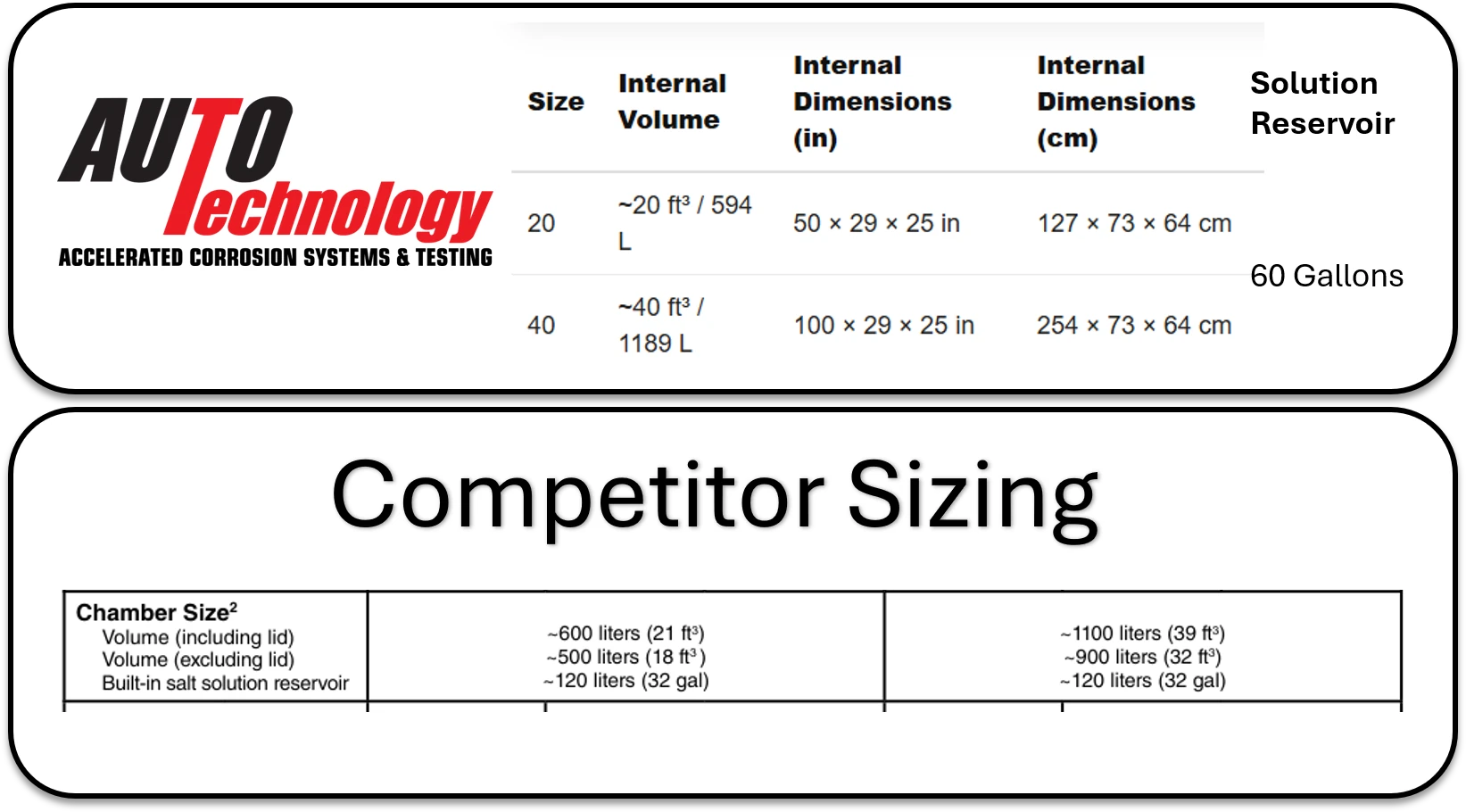
According to published specifications, the 600 tester is approximately 600 liters when lid volume is included, but approximately 500 liters, or 18 ft³, when lid volume is excluded.
The Auto Technology Size 20 provides approximately 594 liters, or 20 ft³, of usable specimen exposure volume and does not include lid volume in its published capacity.
According to published specifications, the 1100 tester is approximately 1100 liters when lid volume is included, but approximately 900 liters, or 32 ft³, when lid volume is excluded.
The Auto Technology Size 40 provides approximately 1189 liters, or 40 ft³, of usable specimen exposure volume and does not include lid volume in its published capacity.
As a result, the Auto Technology chamber provides more usable testing space.
Why does Auto Technology exclude lid volume from chamber capacity?
Because the lid is not testing space.
Corrosion test specimens are placed within the chamber exposure zone, not inside the lid. Including lid volume increases the published chamber size but does not increase usable specimen capacity.
Auto Technology reports the volume of the actual testing area so customers can make meaningful comparisons based on usable exposure space rather than total cabinet geometry.
Does the Auto Technology Size 20 hold more salt solution than competitor chambers?
Yes.
The Auto Technology Size 20 utilizes a 60-gallon solution reservoir compared to approximately 32 gallons.
This provides nearly twice the solution capacity, reducing refill frequency during long-duration corrosion tests and minimizing operator intervention.
Published comparison:
- Auto Technology Size 20 & 40: 60-gallon reservoir
- 600 & 1100: 32-gallon reservoir
For laboratories running extended ASTM B117 or ASTM G85 testing, the larger reservoir can significantly reduce maintenance and downtime associated with refilling solution.
Why doesn't Auto Technology spray specimens directly like competitor chambers?
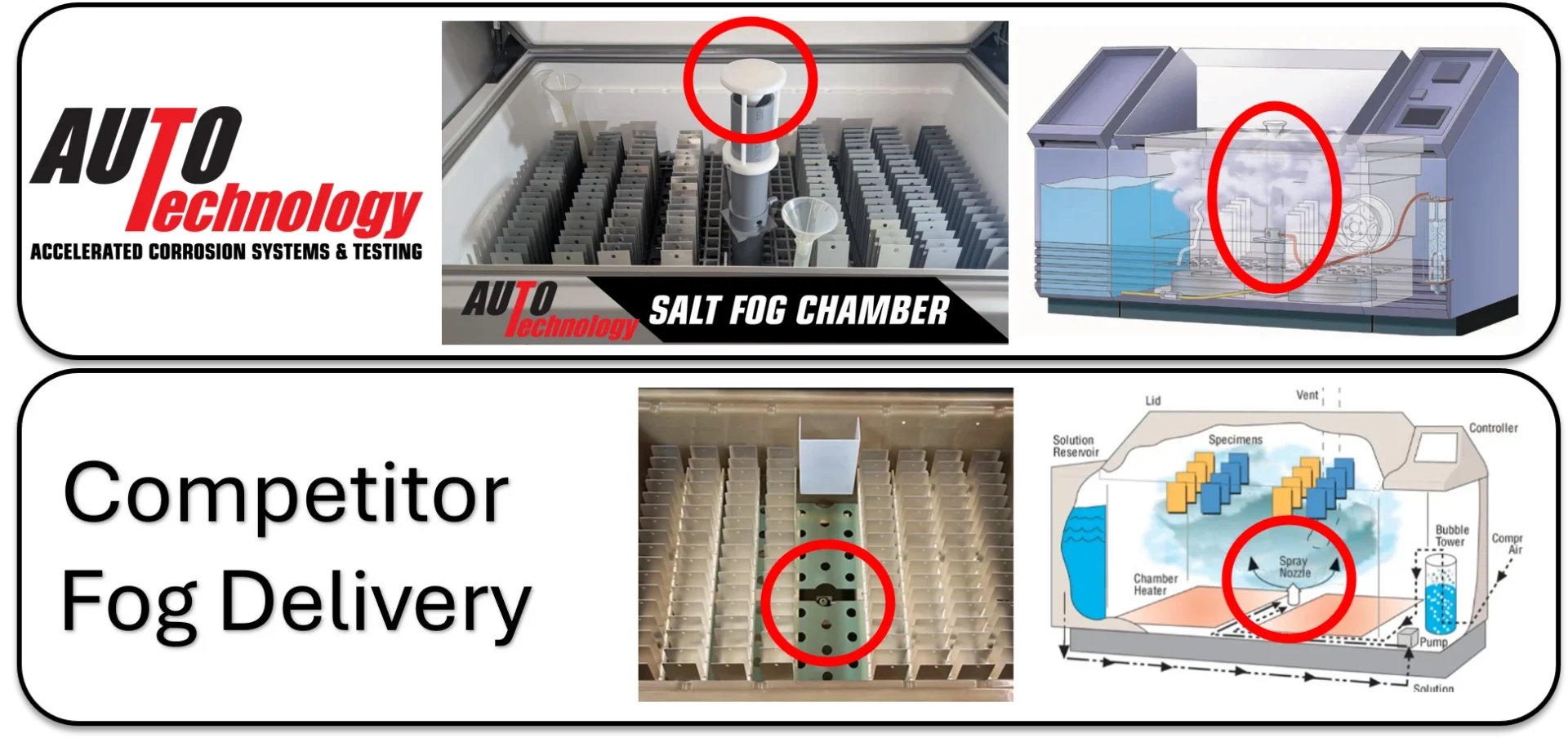
Auto Technology intentionally separates the atomization process from the specimen exposure area using a tall baffled fog tower.
Compressed air and solution are combined within the fog tower, where the resulting fog passes through a baffle before entering the chamber exposure zone. The baffle helps remove large droplets and allows only properly atomized fog to enter the testing area.
This design helps maintain a uniform fog environment while reducing direct droplet impingement on test specimens.
By comparison, other chambers atomize solution directly within the specimen exposure area, placing the spray nozzle below the specimens.
Auto Technology's baffled fog tower design is intended to produce a more uniform exposure environment while minimizing the potential for direct spray contact with specimens.
Why does Auto Technology use a baffled fog tower instead of a spray nozzle in the test area?
Auto Technology uses a tall fog tower with a baffle located above the atomization point.
The baffle helps remove large droplets before they reach the specimen exposure zone and promotes the distribution of a fine fog throughout the chamber.
This approach separates atomization from specimen exposure. In contrast, some corrosion chambers place the spray nozzle directly within the specimen exposure area.
The result is a design intended to improve fog uniformity, reduce droplet impingement, and maintain more usable specimen space throughout the chamber.
Does the Auto Technology fog tower provide more usable testing space than a competitor chamber?
Yes.
The Auto Technology fog tower extends above the specimen exposure area rather than occupying space within it.
This provides additional clearance for larger panels, assemblies, and components without relying on lid volume that is not intended for specimen placement.
Combined with the chamber's baffled fog delivery system, the design maximizes usable specimen space while maintaining proper fog distribution throughout the exposure zone.
Why does Auto Technology keep salt solution inside the chamber exposure zone?
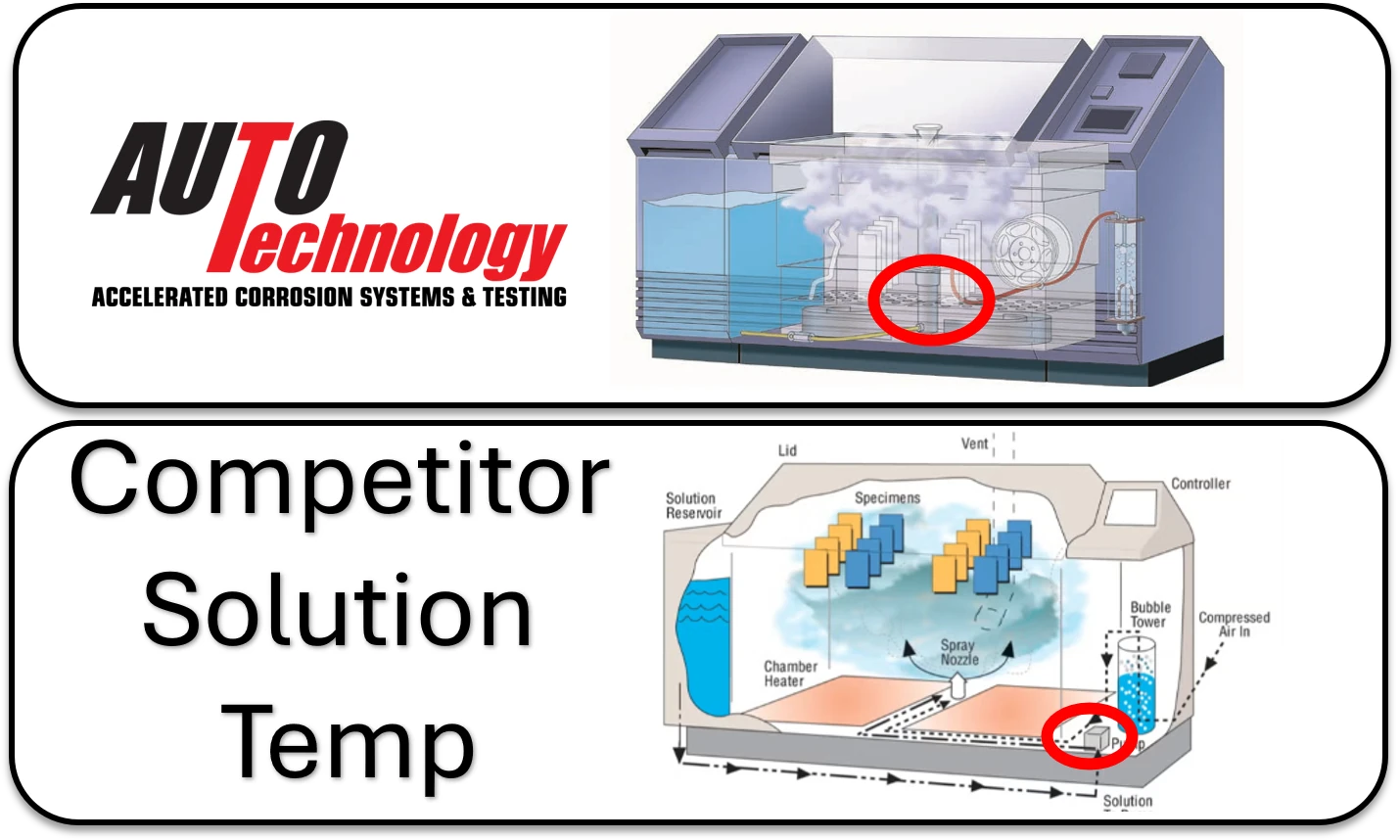
The Auto Technology reservoir is located within the heated chamber environment.
As a result, the salt solution naturally remains at or near chamber temperature before atomization.
This approach follows the traditional ASTM B117 chamber design, where the solution reservoir is maintained within the conditioned chamber environment and exposed to the same thermal conditions as the chamber itself.
By comparison, some corrosion chambers utilize an external solution reservoir and pump the solution into the chamber from outside the heated exposure zone.
Keeping the solution within the chamber environment minimizes temperature differences between the stored solution and the chamber atmosphere before atomization.
Does solution temperature matter during salt fog testing?
Yes.
Salt fog chambers are designed to produce a consistent and repeatable corrosive environment. The temperature of the solution entering the atomizing nozzle can influence fog generation, condensation behavior, and chamber stabilization.
Because the Auto Technology solution reservoir is located within the conditioned chamber environment, the solution remains at or near chamber temperature prior to atomization.
This eliminates the need to introduce solution from a separate external reservoir operating at a different temperature than the chamber.
For this reason, Auto Technology continues to utilize a reservoir arrangement similar to the traditional ASTM B117 chamber architecture that has been used throughout the corrosion testing industry for decades.
How is the C Series different from the M Series?
The biggest differences are the heating method, construction material, and controls. The M Series uses steel construction, water-jacket heating, and legacy-style controls. The C Series uses fiberglass construction with touchscreen controls and a lower-cost platform for straightforward salt fog, salt spray, and stable humidity testing.
Is the C Series only for NSS?
No. The C Series can be used for NSS, AASS, and CASS, along with other salt spray and salt fog procedures where the chamber setup matches the method.
Can the C Series run CASS?
Yes. The C Series can support CASS along with other steady-state corrosion methods. However, CASS introduces aggressive chemistry that can be difficult to fully remove from a chamber after testing. Many laboratories use a dedicated CASS chamber to reduce contamination risk when switching back to NSS or other salt fog procedures.
Can the C Series run high-humidity tests?
Yes. For stable high-humidity testing, the chamber can be run with DI water in the solution tank instead of salt solution. When humidity verification is required, the Wet Bulb option can be added to measure and document chamber humidity conditions.
Can I add options?
Yes. Options include a wet bulb, mixing tank convenience package, recirculating scrubber / jet exhaust system, and power exhaust vent kit.
Is pressurized DI water required?
Yes. The C Series requires a pressurized DI water supply for operation. The bubble tower uses DI water as part of the salt-fog generation system, so DI water quality and pressure must be planned before installation.
Is there a mixing tank convenience package?
Yes. The mixing tank convenience package simplifies solution preparation and transfer with marked levels, fill controls, pumping, and air sparging. If you do not want to mix on site, pre-mixed salt solution is also available through the store.
Are racks, shelves, and consumables available?
Yes. Auto Technology can supply support angles, support rods, slotted support bars, slotted support racks, heavy duty shelves, salt solution, CASS solution, DI water, pH meters, start-up kits, training, and other chamber supplies.
Can Auto Technology help with installation planning and support after purchase?
Yes. Auto Technology supports customers with chamber configuration guidance, installation requirements, calibration documentation, training, parts availability, and long-term service support.