
CORROSION CHAMBER CALIBRATION, SERVICE & PROFICIENCY TESTING

Auto Technology provides salt spray chamber repair, preventive maintenance, and A2LA-accredited corrosion chamber calibration and proficiency testing programs for corrosion testing laboratories and equipment users.
Corrosion Chamber Service & Maintenance
Auto Technology field service technicians can travel directly to your facility to diagnose and repair salt spray chambers, cyclic corrosion chambers, and corrosion test booths. Service is available for Auto Technology equipment as well as many legacy corrosion chambers and related systems.
Scheduled preventive maintenance is also available to inspect, clean, adjust, and replace worn components before they cause equipment problems or downtime.
Chamber Repair
A service technician can diagnose, troubleshoot, repair, and recommission corrosion chambers and salt fog cabinets. Required replacement parts are identified during service and supplied as needed.
Preventive Maintenance
Preventive maintenance includes inspection, cleaning, adjustment, replacement of normal wear items, and operating checks.
Corrosion Chamber Calibration
Auto Technology provides chamber calibration for temperature, humidity, bubble-tower pressure, and elapsed time. The measurements covered depend on the chamber series and installed instrumentation.
Chamber Calibration vs. Individual Instrument Calibration
ATC calibrates the chamber’s measurement system during operation. For temperature, this includes the installed RTD, wiring, and computer or controller displaying the reading. A reference probe measures the temperature at the sensor’s location, and that measurement is compared with the temperature reported by the chamber.
A third-party service that removes the RTD and calibrates it independently against an external temperature source establishes the sensor’s accuracy. That calibration alone does not establish the accuracy of the temperature reported by the chamber. ATC’s calibration includes the equipment used to measure and report conditions during chamber operation.
Calibration by Chamber Series
| Chamber Series | Exposure-Zone Temperature | Bubble-Tower Temperature | Bubble-Tower Pressure | Elapsed Time |
|---|---|---|---|---|
| C Series | RTD Assembly | RTD Assembly | Mechanical Gauge | Computer Clock |
| M Series | RTD Assembly | RTD Assembly | Mechanical Gauge or Pressure Transducer | Electronic Clock with Logging Option |
| A Series | RTD Assembly | RTD Assembly | Pressure Transducer | Computer Clock |
| X Series | RTD Assembly | RTD Assembly | Pressure Transducer | Computer Clock |
Custom chambers, modified control systems, and chambers with additional instrumentation may require additional calibration points.
Calibration Measurements
Exposure-Zone Temperature
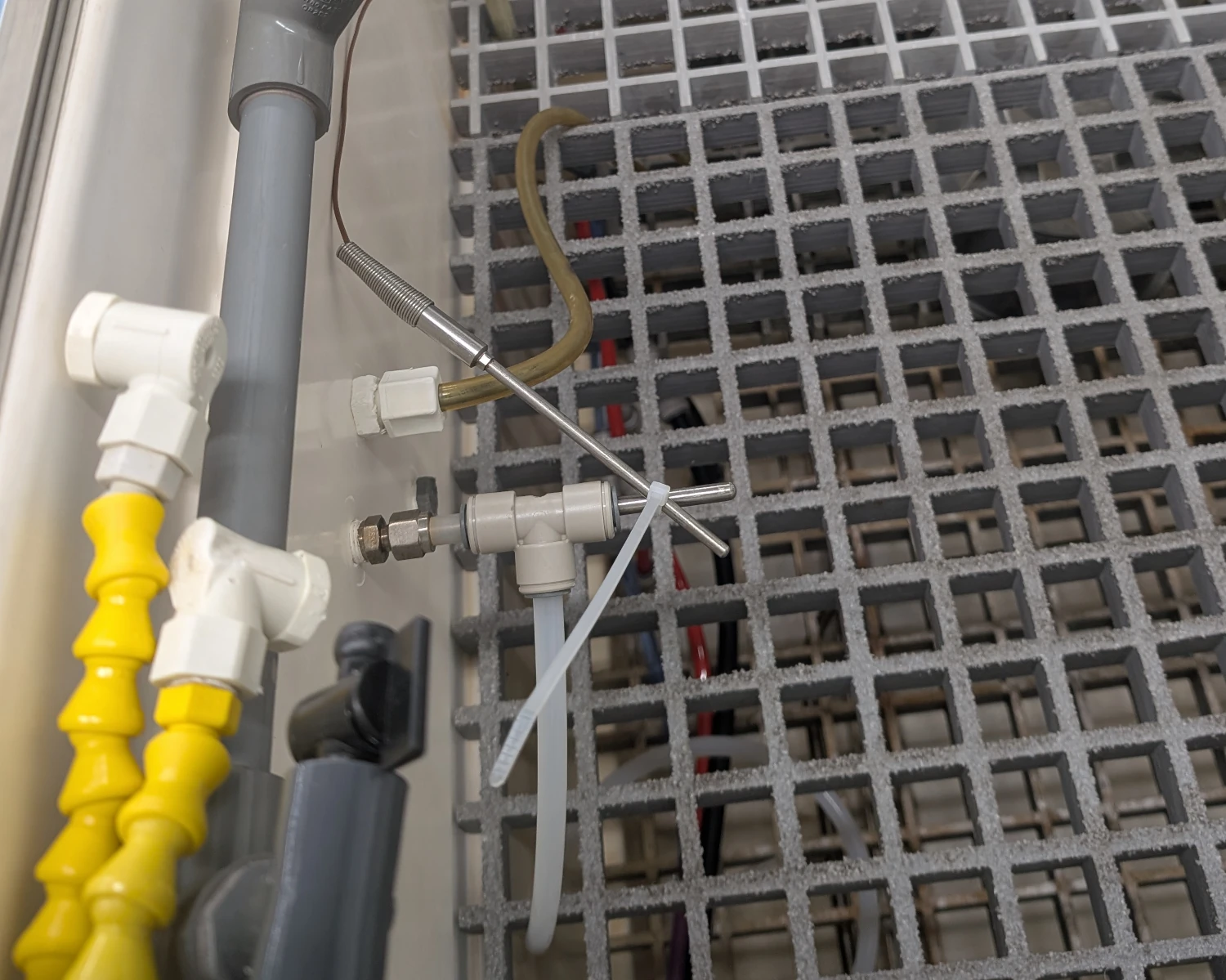
Chamber temperature is calibrated in the specimen exposure zone, where the chamber’s temperature sensor takes its measurement. X Series chambers also have a separate RTD for laboratory ambient temperature, which is calibrated separately.
Bubble-Tower Temperature
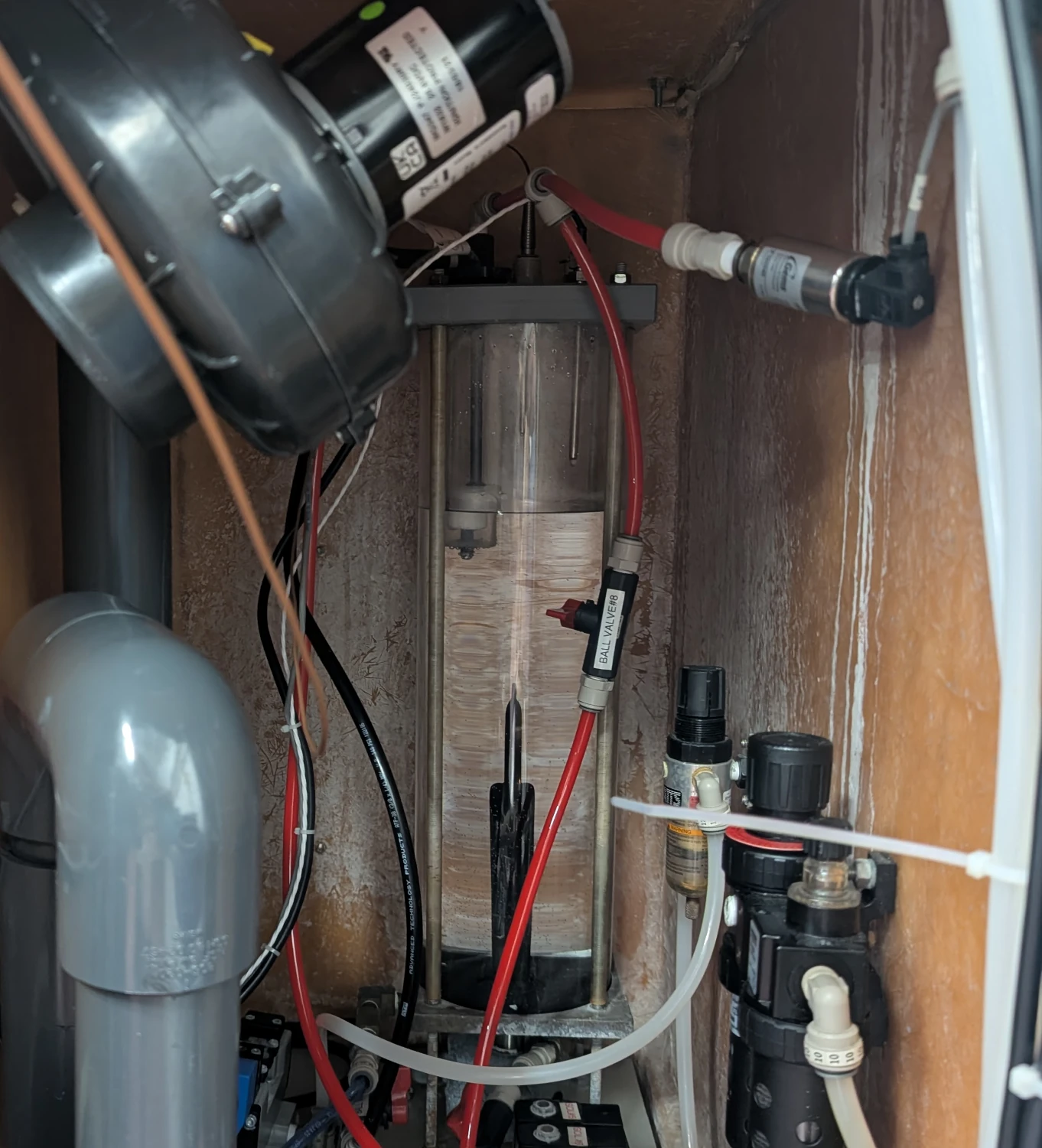
Bubble-tower temperature is calibrated at the tower’s temperature sensor, separately from the exposure-zone temperature.
Exposure-Zone Humidity
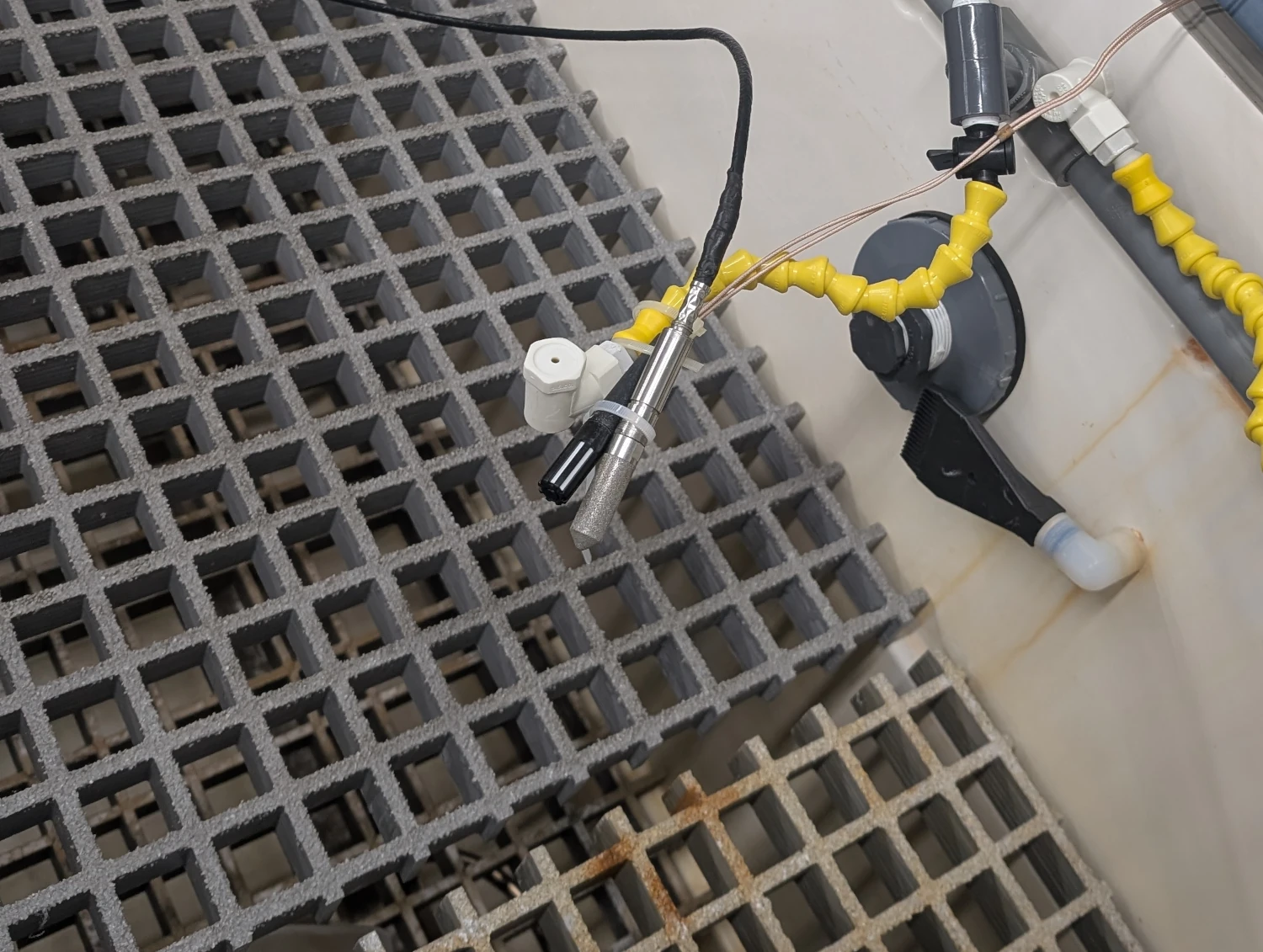
Chambers equipped with wet-bulb or RH measurement are calibrated in the specimen exposure zone. A and X Series use an RH sensor, depending on chamber configuration.
Bubble-Tower Pressure
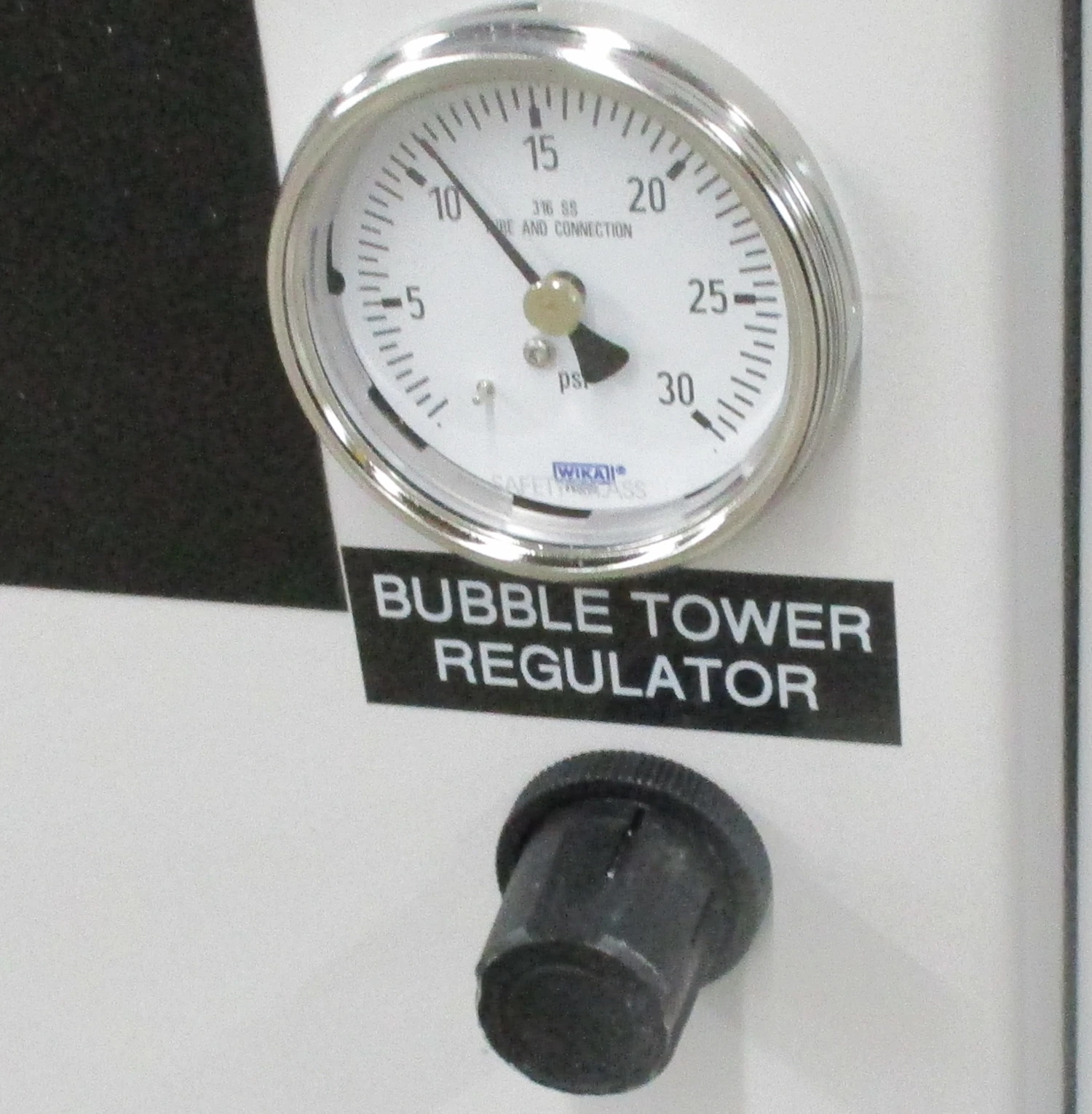
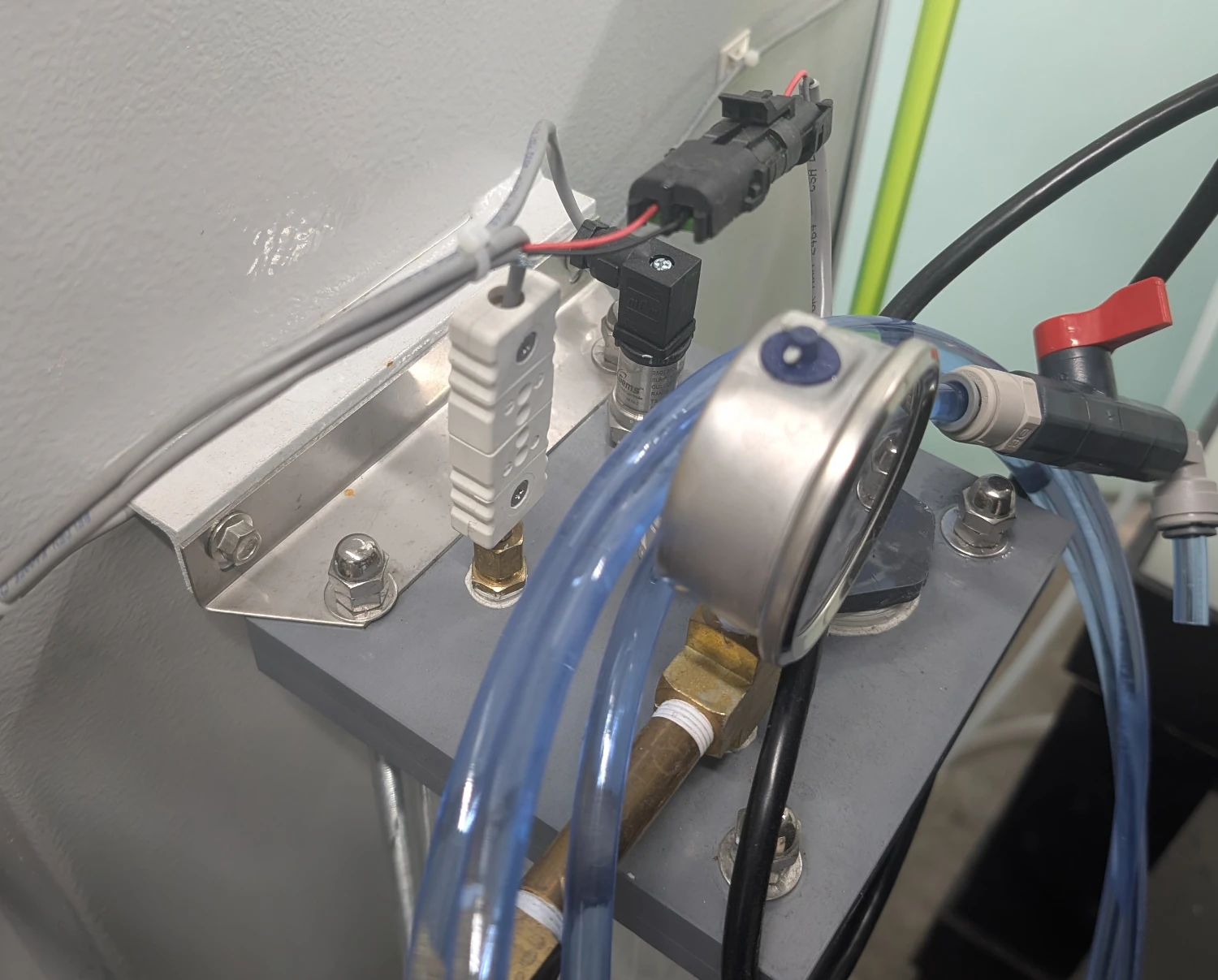
C Series calibration covers the mechanical bubble-tower pressure gauge. M Series calibration covers either the mechanical gauge or the pressure transducer, depending on the installed configuration. A and X Series calibration covers the pressure transducer.
On chambers that log pressure, the record shows whether atomizing-air pressure was present during the fog portion of the test.
Elapsed Time
C, A, and X Series controller timing functions are compared directly with a calibrated stopwatch, and the stopwatch reading is documented. M Series timing calibration applies to chambers equipped with the electronic clock and logging option.
Reference Instruments
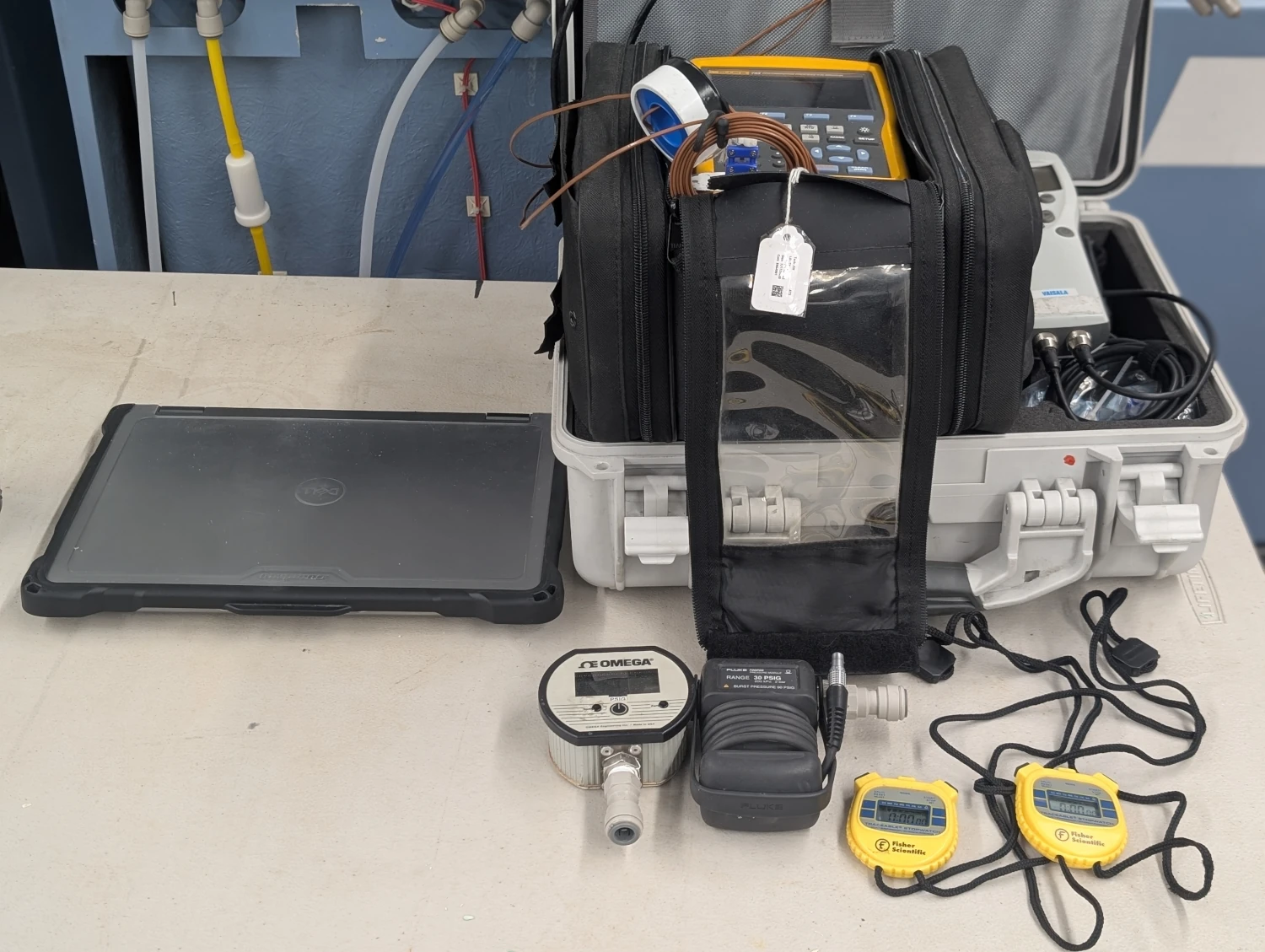
ATC technicians use calibrated temperature, humidity, pressure, and time reference instruments selected for the chamber’s measurement ranges and configuration.
Corrosion Test Lab Proficiency Testing Programs
Proficiency testing compares your corrosion test laboratory's results with results submitted by other participating laboratories performing the same test program. Each participating laboratory receives a confidential report comparing its submitted results with the participant group.
Available Programs
| Program | Description | Store |
|---|---|---|
| 550100 | PT program for ASTM B117 — Salt Spray | View / Order → |
| 550800 | PT program for ASTM B117 including pre- and post-mass cleaning and measurements | View / Order → |
| 550200 | PT program for ASTM B368 — CASS Test | View / Order → |
| 550400 | PT program for GMW 14872 — Cyclic Corrosion | View / Order → |
| 550500 | PT program for SAE J2334 — Cyclic Corrosion | View / Order → |
International orders: Program 550600 covers international shipping and handling.
Custom On-Demand Proficiency Testing
If you need a PT result before the next scheduled reporting cycle, Auto Technology can provide a custom on-demand program. The operator runs the test and submits the completed report. Auto Technology then compares the results with historical PT data.
Request On-Demand PT →Select the proficiency tests in which your laboratory wishes to participate and register for the applicable program.
Test packages are shipped after payment is received. Each package includes the required samples and program instructions.
Submit the requested results by the due date listed in the program instructions.
Auto Technology issues a confidential summary comparing your laboratory's results with the results submitted by the other participating laboratories.
Reporting Schedule
- Reports are published twice per year, in June and December.
- Data received at least six weeks before the reporting date is included in that reporting cycle.
- Later submissions are included in the next reporting cycle.
- Program prices include the required test samples.
Outlier data: Data outside historical ranges appears in the comparison report but is not used to calculate the standard deviation or mean.
Contact Auto Technology
Contact us about salt spray chamber repair, preventive maintenance, calibration, or corrosion laboratory proficiency testing programs.
Auto Technology Company
20026 Progress Drive
Strongsville, OH 44149
United States