
Materials & Corrosion Testing to Global and OEM Standards
Auto Technology’s A2LA-accredited, ISO/IEC 17025-compliant laboratory supports corrosion testing, coatings-performance testing, analytical laboratory work, quality control, accelerated weathering, and failure-analysis-driven investigations for automotive, aerospace, oil & gas, electronics, coatings, infrastructure, and industrial applications. Programs can be aligned with ASTM, ISO, SAE, DIN, military, OEM, and customer-specific requirements.
Send us the standard, material, coating system, service environment, duration, and reporting requirements.
A2LA Accredited
ISO/IEC 17025-compliant procedures and reporting for qualification and audit-ready work.
Global & OEM Test Methods
ASTM, ISO, SAE, OEM, military, and project-specific programs across corrosion and materials testing.
Salt Fog, Cyclic, Gas & Immersion
Environmental exposures selected around the material system, service environment, and test objective.
Performance, QC & Failure Analysis
From coatings evaluation and batch confirmation to FTIR, GC, microscopy, and root-cause investigation.
Independent Materials, Coatings, and Corrosion Testing
Auto Technology provides standards-driven materials, coatings, and corrosion testing for organizations that need reliable, defensible results—not just test hours.
The laboratory supports continuous and modified salt spray, cyclic corrosion, immersion, humidity, condensation, SO2, mixed flowing gas and multi-gas electronics corrosion testing, UV/weathering, and temperature/humidity exposure. Related capabilities include coatings-performance testing, quality control, product characterization, abrasive testing, specialty structural testing, and failure analysis.
Analytical and specialty work includes FTIR analysis, gas chromatography, microscopy, VOC and batch-QC testing, slip-coefficient evaluation, gravelometer chip resistance, Atlas Cell immersion, cathodic disbondment, and comparative or forensic investigation.
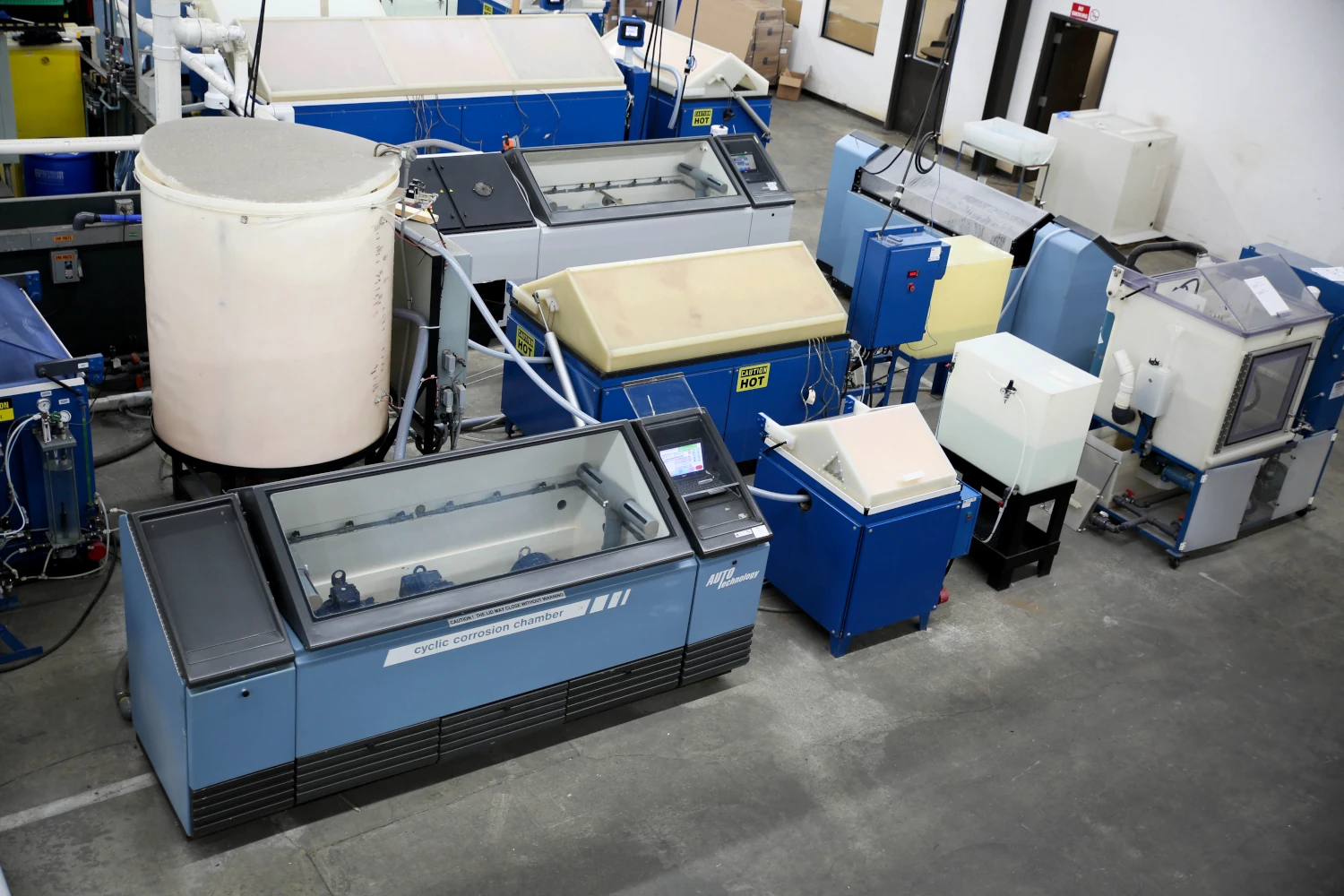


A2LA-Accredited Materials and Corrosion Laboratory
Auto Technology operates an A2LA-accredited corrosion testing laboratory with ISO/IEC 17025-compliant procedures and reporting for customers who need qualification data, repeatability, defensible records, and disciplined control of test conditions.
17,500+ sq ft
Capacity for corrosion, materials, analytical, and environmental programs.
80 Test Systems
Broad environmental and corrosion capability across multiple platforms.
Standards-Driven
Programs built around industry, OEM, military, and project requirements.
Note: Accreditation applies only to the tests and systems identified on Auto Technology’s current scope. Confirm the required method, revision, and accreditation status when requesting a quote.
Testing Types
The lab supports specification-driven testing and broader materials evaluation across corrosion, environmental exposure, coatings performance, quality control, and failure investigation.
Many corrosion programs are built on or derived from standards such as SAE J2334, Ford TM 00.00-L-467 and legacy CETP 00.00-L-467 cyclic corrosion testing, VDA 233-102 and ISO 11997-3 cyclic corrosion testing, ASTM G85 modified salt spray testing, ASTM B117 salt spray testing, and ISO 9227, with program-specific requirements for cycle timing, electrolyte chemistry, environmental sequencing, evaluation, and acceptance criteria.
Corrosion and Environmental Exposure
Salt Spray / Salt Fog
Continuous or modified salt-fog exposure for comparison, qualification, and corrosion evaluation.
Standards: ASTM B117, ISO 9227, ASTM G85 Annexes A1-A5, ASTM B368, and related project-specific fog methods.
Cyclic Corrosion
Controlled wet/dry, humidity, and temperature transitions for transition-driven corrosion programs.
Standards: VDA 233-102 and ISO 11997-3, SAE J2334, GMW 14872, GMW 3172, Ford TM 00.00-L-467 and legacy CETP 00.00-L-467, VW PV 1200 / PV 1210, BMW GS 95024, Volvo VCS 1027 / VCS 1029, and other OEM or project-specific cycles.
Immersion / Solution Exposure
Direct liquid exposure with controlled chemistry and repeatable loading.
Standards: ASTM D870, ASTM D1308, ISO 2812-2, ASTM G8, ASTM G42, ASTM G95, Atlas Cell-related methods, and customer-specific protocols.
Humidity / Condensation
High-humidity and condensation-driven degradation testing.
Standards: ASTM D1735, ASTM D2247, ASTM D4585, ISO 6270, and related humidity exposures.
Gas Corrosion (SO2 / MFG / Multi-Gas)
Electronics corrosion exposure using controlled pollutant gases.
Standards: ASTM G87, DIN 50018, ISO 3231, ISO 6988, IEC 60068-2-60, EIA-364-65, ASTM B827, ASTM B845, ASTM B810, and ISA 71.04.
Weathering / UV Exposure
Light, temperature, and moisture exposure for durability evaluation.
Standards: ASTM G154, ASTM D4587, ASTM D5894, ASTM D4329, SAE J2020, and related weathering methods.
Materials, QC, and Investigation
Coatings Performance Testing
Functional and durability evaluation beyond corrosion exposure alone.
Standards: ASTM D4541, D3359, D6677, D4060, D968, D2794, D3363, D2240, D2244, D523, D2486, SAE J400, and related methods.
Quality Control & Product Characterization
Routine and comparative testing for production and supply-chain decisions.
Standards: ASTM D2196, D4212, D562, D3960, EPA Method 24, ASTM D2369, D1475, D93, D1210, D1338, and related QC methods.
Analytical Characterization
Chemical and material analysis supporting identification and investigation.
Methods include: FTIR, gas chromatography, microscopy, compositional analysis, elemental profiling, and targeted metals screening.
Abrasive & Surface Cleanliness Testing
Preparation and abrasive testing tied to coating quality and contamination control.
Methods include: conductivity, oil content, particle-size distribution, moisture content, and lead or heavy-metals screening.
Specialty / Structural Testing
Additional testing for structural, severe-service, and application-specific requirements.
Methods include: slip coefficient, creep resistance, Atlas Cell immersion, cathodic disbondment, and related specialty programs.
Failure Analysis
Investigation-driven testing to identify material or coating failure mechanisms.
Approach: exposure testing, analytical methods, microscopy, and comparative evaluation selected for the investigation.
Laboratory Equipment and Capacity
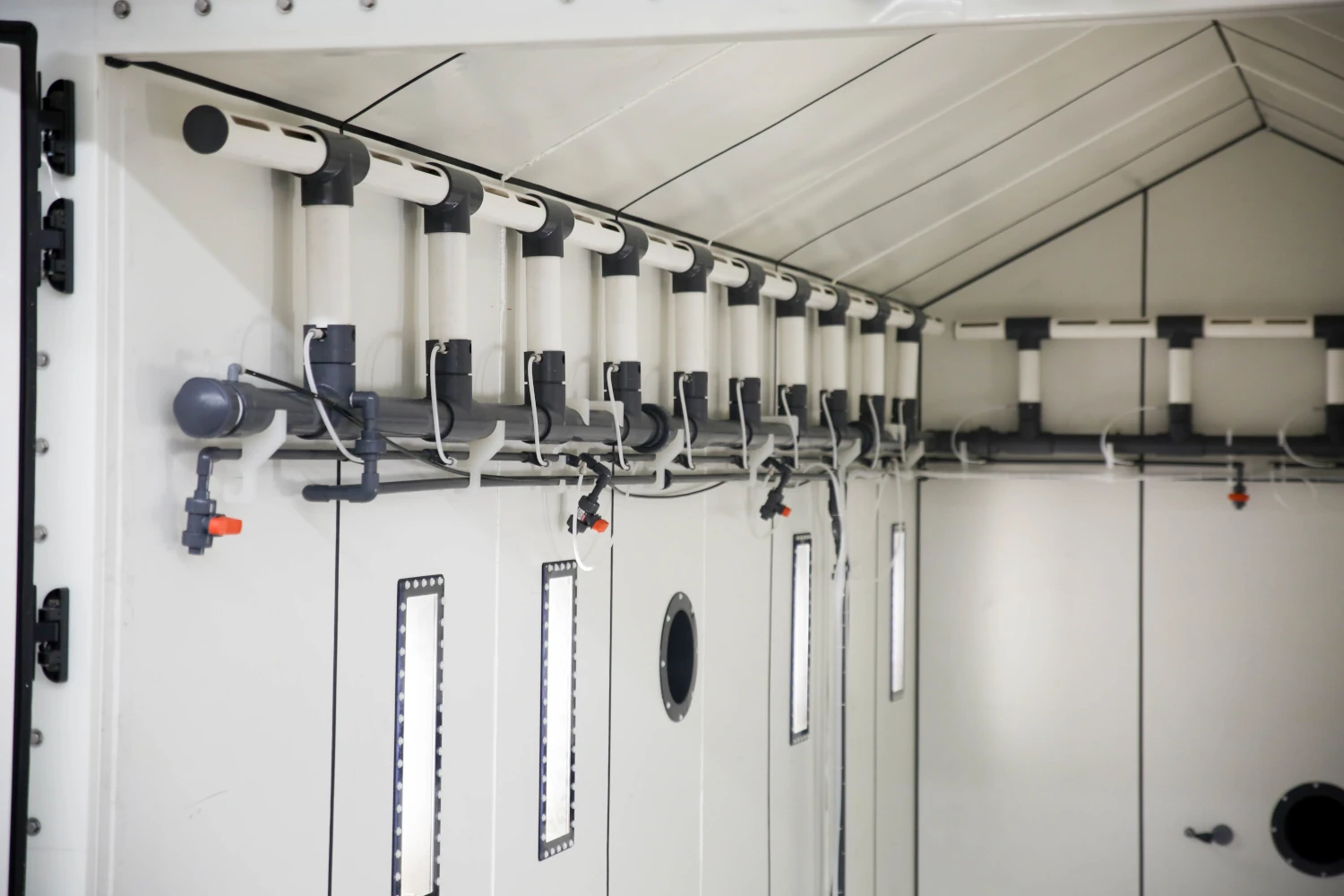
Custom manifold systems support controlled spray distribution in large walk-in chambers.
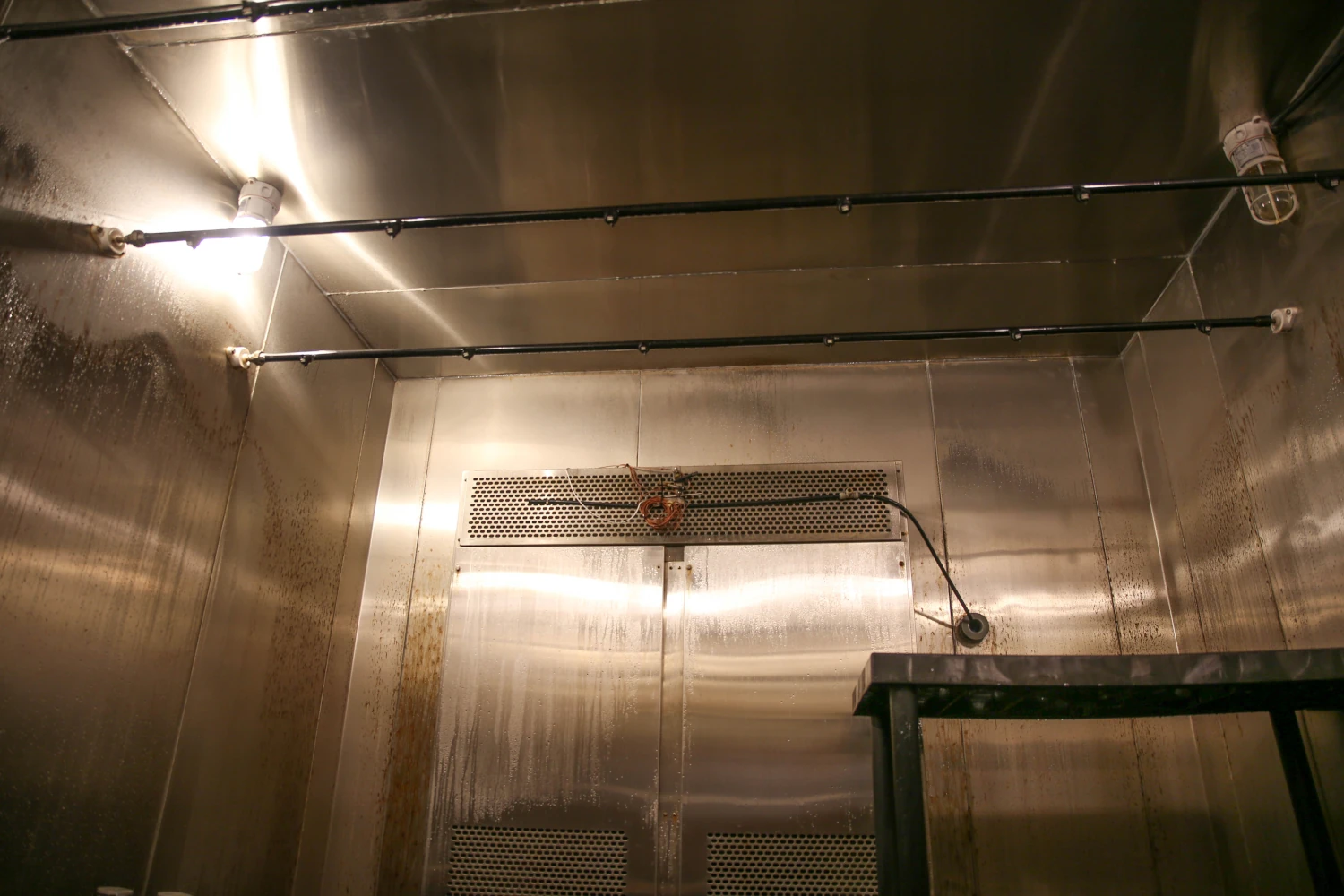
Stainless-steel walk-in chambers accommodate large components and complete assemblies.
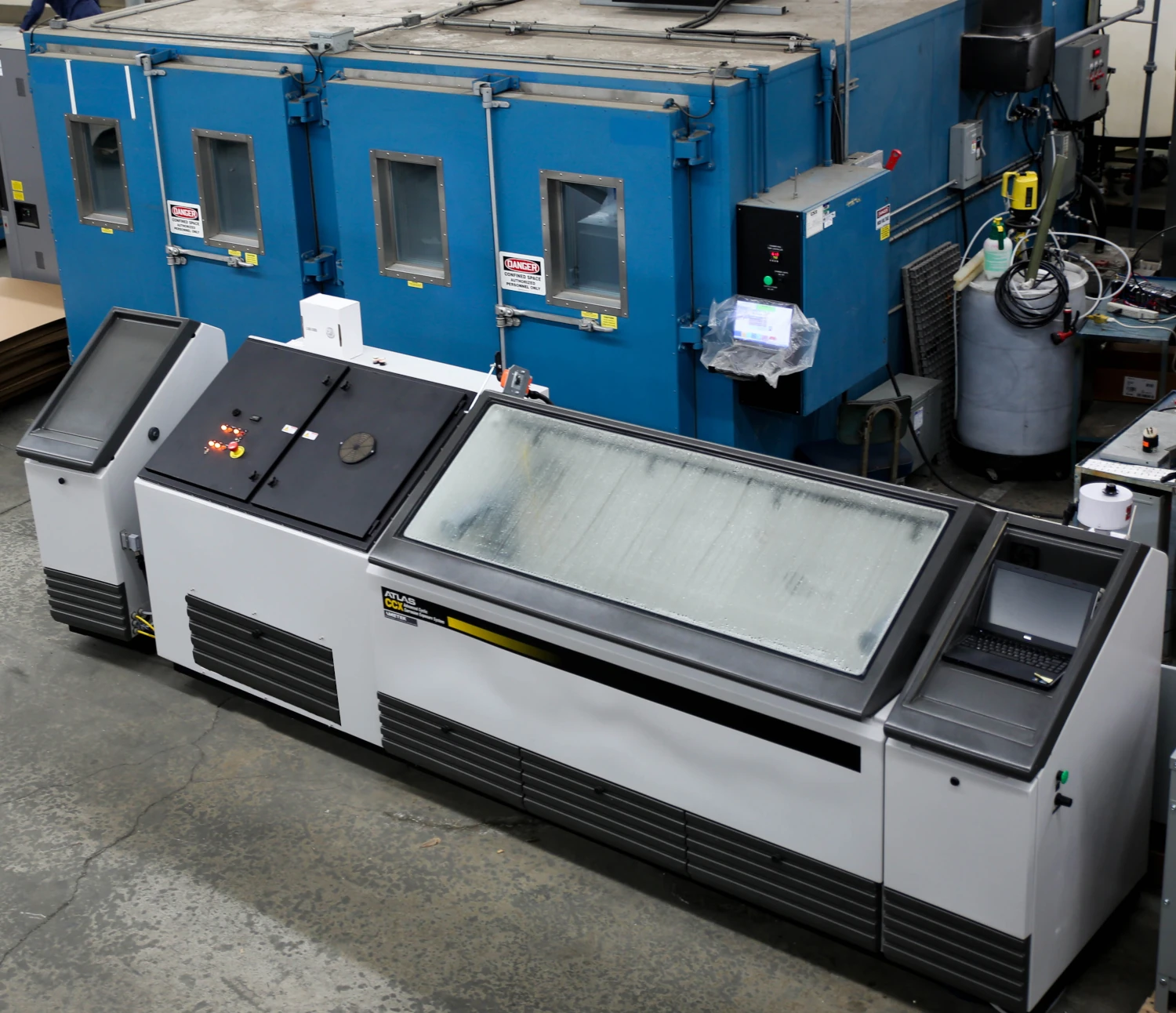
Cabinet and walk-in systems support specimens ranging from panels to large assemblies.
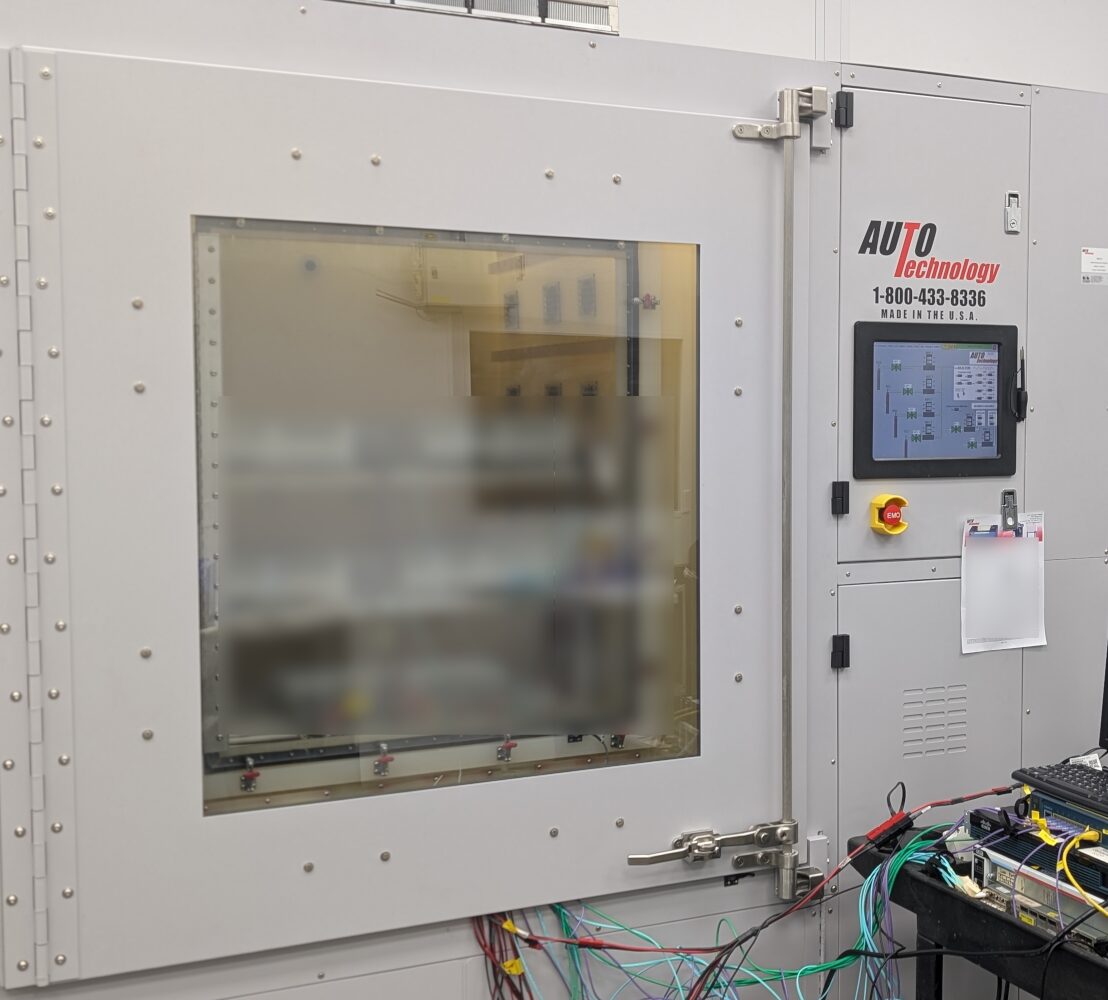
A custom mixed flowing gas chamber can accommodate energized electronic specimens when the program requires it.
Walk-in mixed flowing gas capacity supports large components and assemblies.

Custom walk-in systems provide controlled cyclic corrosion exposure for oversized test articles.
Test Panels, Sample Preparation, and Coating Application
Auto Technology supports panel preparation, substrate sourcing, abrasive blast preparation, coating application, and custom-fabricated specimens so programs begin with samples that reflect the governing requirement.
- Steel, aluminum, and other substrate panels
- Customer-, SSPC-, AMPP-, and ISO-defined preparation
- Abrasive blasting, cleaning, priming, and coating
- Custom panel sizes and geometry-specific specimens
- Controlled masking, edge protection, and scribing when required
Coating Application Capability
- Airless spray
- Single-leg and plural-component heated options
- Conventional spray
- Brush and roller application
- Application tied to customer process requirements
Specimen Preparation and Test Validity
Preparation errors can distort results before exposure begins. Representative substrates, controlled coating application, and documented specimen construction improve the value of the data.
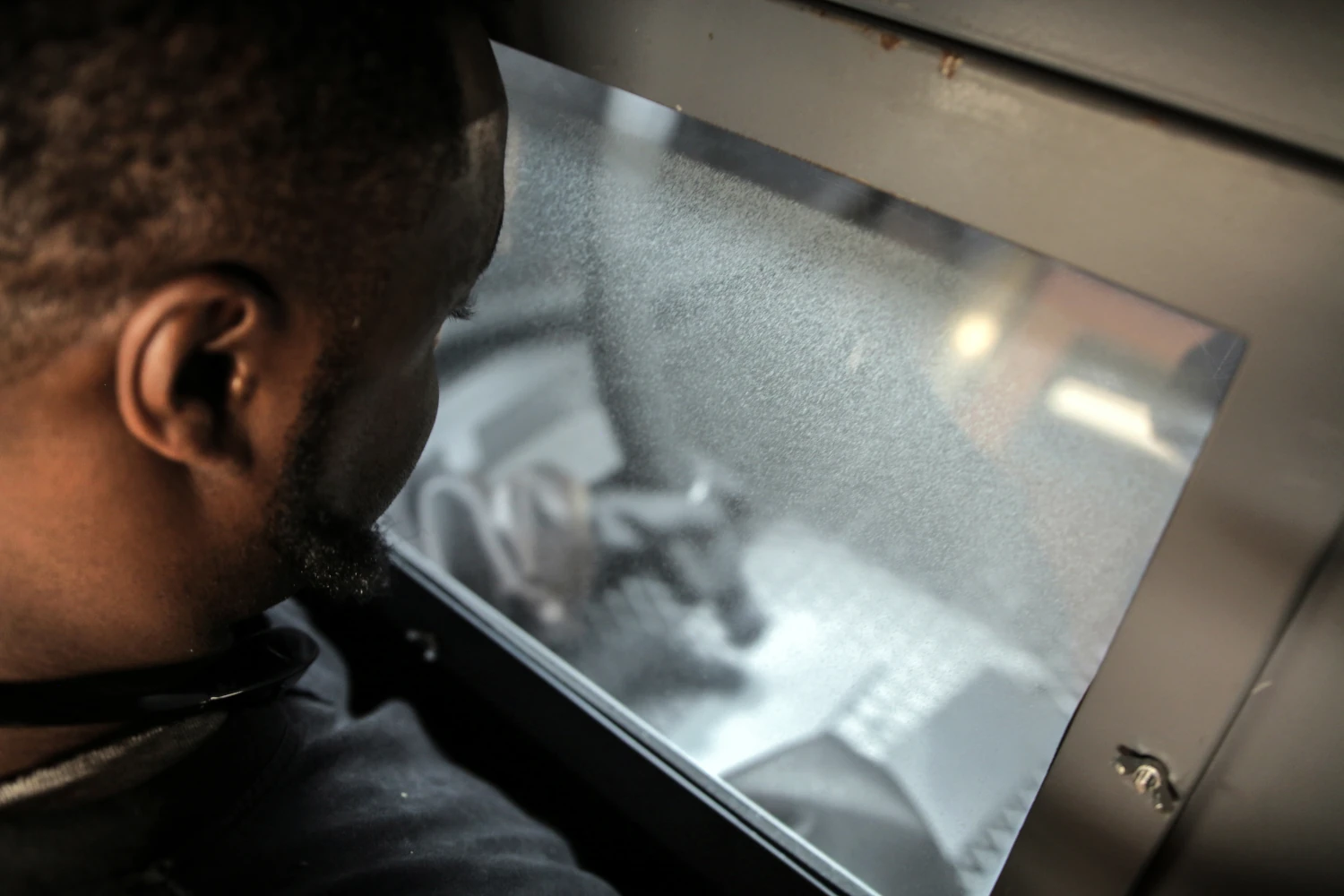
Abrasive blasting prepares substrates to the specified surface condition before coating and testing.
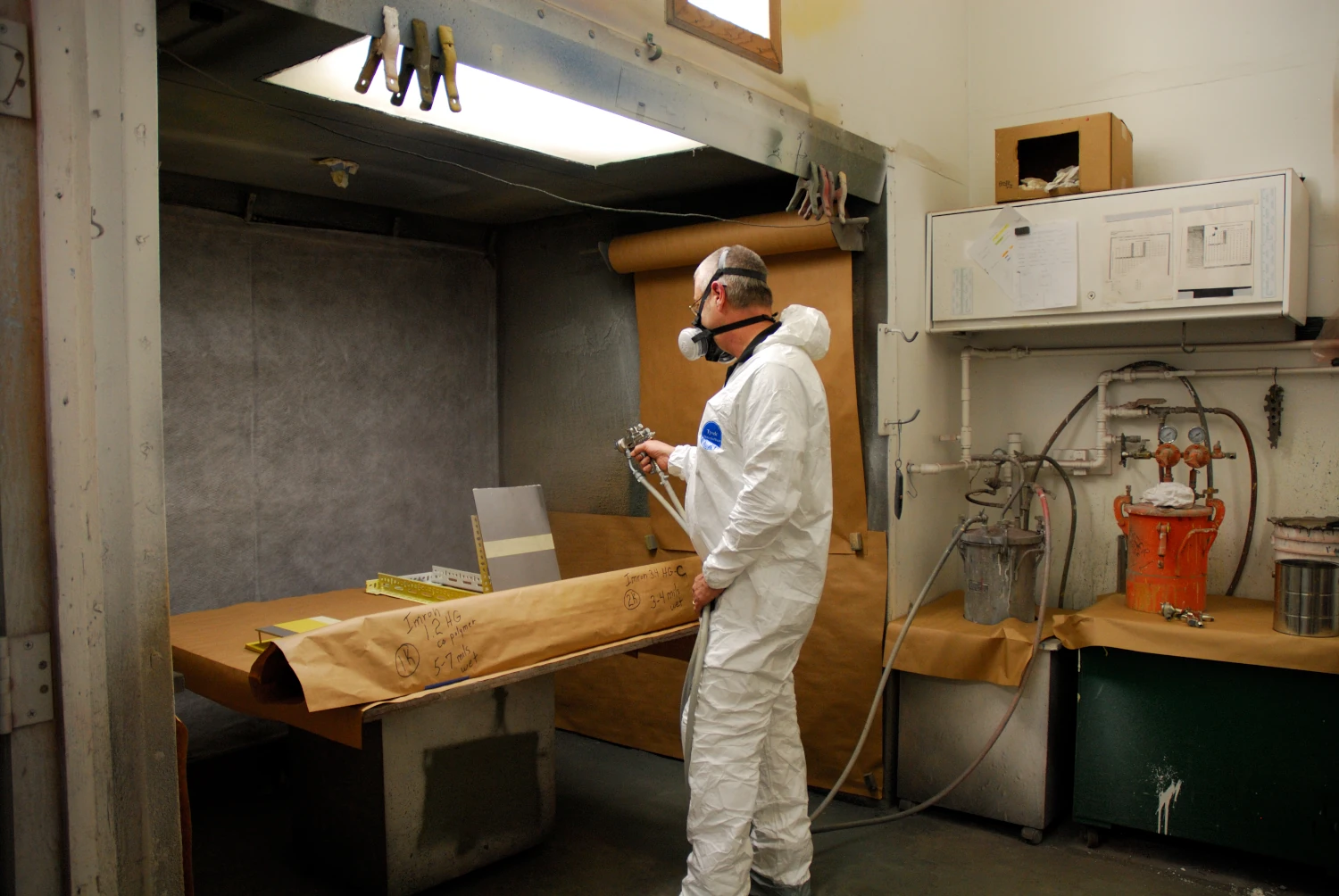
In-house coating application supports controlled film build and representative test specimens.
Test Selection Guide
The applicable method depends on the service environment, material system, failure concern, and governing requirement.
| Test Objective | Applicable Test Type | Exposure or Evaluation Provided |
|---|---|---|
| Basic coating comparison or continuous neutral salt-fog requirement | ASTM B117 Salt Spray Testing | Recognized, repeatable continuous neutral salt-fog exposure |
| Acidified, cyclic, seawater-acidified, SO2, or Prohesion exposure | ASTM G85 Testing | Provides five annex profiles with different chemistries and environmental sequences |
| Automotive cyclic corrosion with controlled RH and a -15°C low-temperature phase | VDA 233-102 / ISO 11997-3 Testing | Combines 1% salt fog, controlled temperature and humidity cycling, inspection periods, and Cycle C freezing |
| Broader wet/dry and transition-driven corrosion exposure | Cyclic Corrosion Testing | Combines defined wetting, drying, humidity, and temperature phases |
| Moisture sensitivity, blistering, or condensation concern | Humidity / Condensation Testing | Focuses on moisture-driven degradation rather than salt exposure alone |
| Acidic industrial atmosphere or sulfur dioxide concern | SO2 / Kesternich Testing | Targets sulfur-dioxide-driven atmospheric corrosion |
| Connector, contact, PCB, component, or electronics corrosion concern | Electronics Corrosion Exposure Guide | Mixed flowing gas, single-gas corrosion, salt mist, cyclic salt, humidity, or combined environmental exposure selected for the product and specification |
| Sunlight, condensation, and weathering durability | Accelerated Weathering / UV Testing | Addresses light- and moisture-driven material degradation |
| Direct fluid or chemical resistance | Immersion / Solution Exposure | Provides controlled contact with the specified liquid environment |
| Impact damage or chip resistance | Impact / Gravelometer Testing | Evaluates coating resistance to defined mechanical impact |
| Structural joint friction or creep | Slip Coefficient Testing | Supports evaluation of coated faying surfaces for structural bolted connections |
| Routine production, supplier, or incoming QC | Quality Control & Product Characterization | Standardizes measurements used for ongoing production and supply-chain decisions |
| Chemistry, identity, contamination, or composition | Analytical Laboratory Testing | Supports FTIR, GC, microscopy, and targeted characterization |
| Severe-service or high-temperature liquid exposure | Atlas Cell / Immersion Testing | Addresses exposure conditions beyond ambient immersion screening |
| Abrasive quality or surface contamination before coating | Abrasive & Surface Cleanliness Testing | Evaluates soluble contaminants, oil, moisture, particle size, and other preparation variables |
| Unknown material or coating failure | Failure Analysis | Combines targeted examination and testing around the observed failure |
For method selection, send the part description, substrate, coating stack, service environment, required standard, performance requirement, and known failure mode.
Post-Exposure Evaluation and Specialty Methods
Beyond chamber exposure, the laboratory supports specimen evaluation, specialty corrosion methods, structural testing, natural weathering, and failure-analysis-driven work.
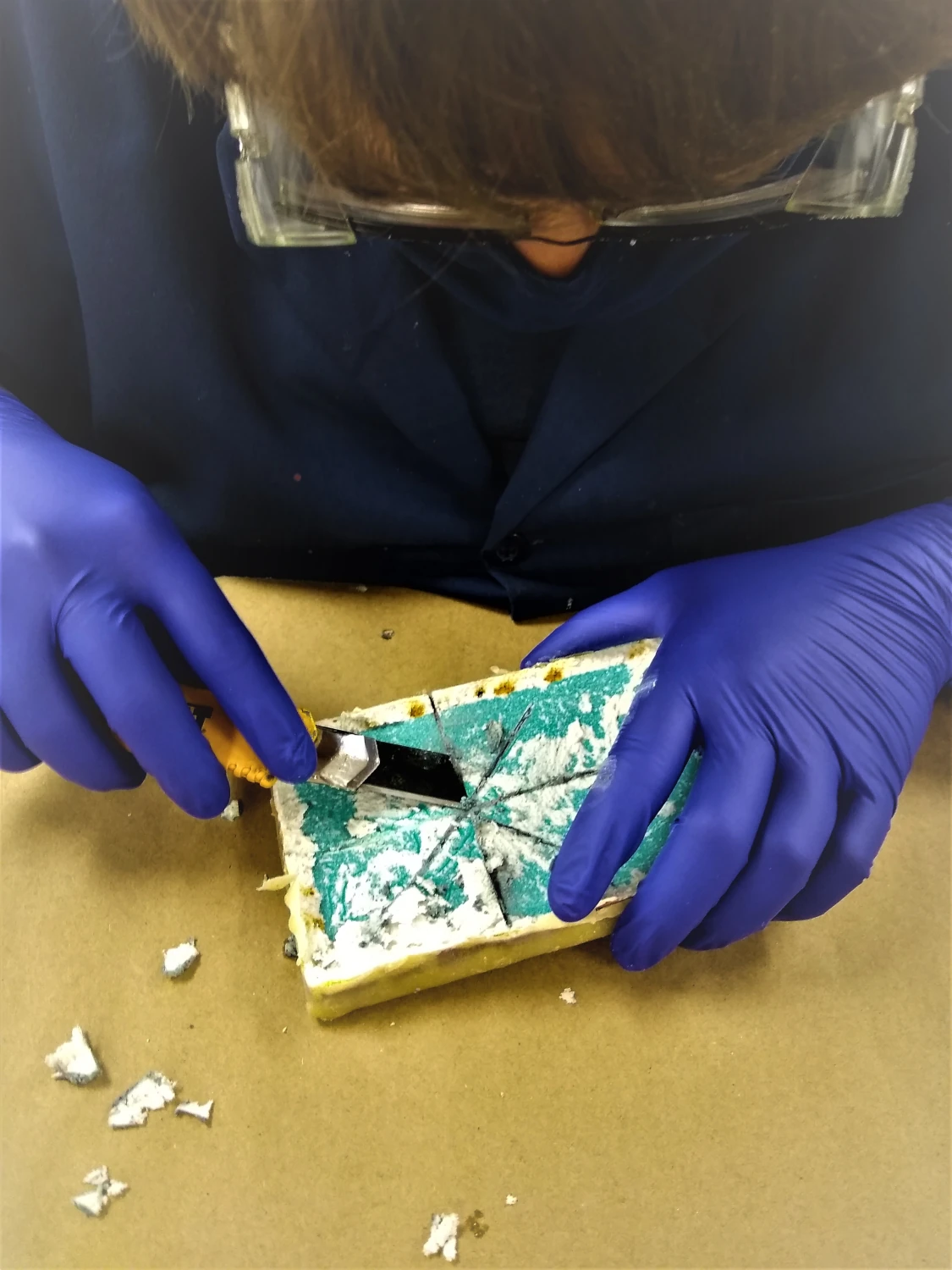
Post-test examination quantifies coating disbondment using the specified evaluation procedure.
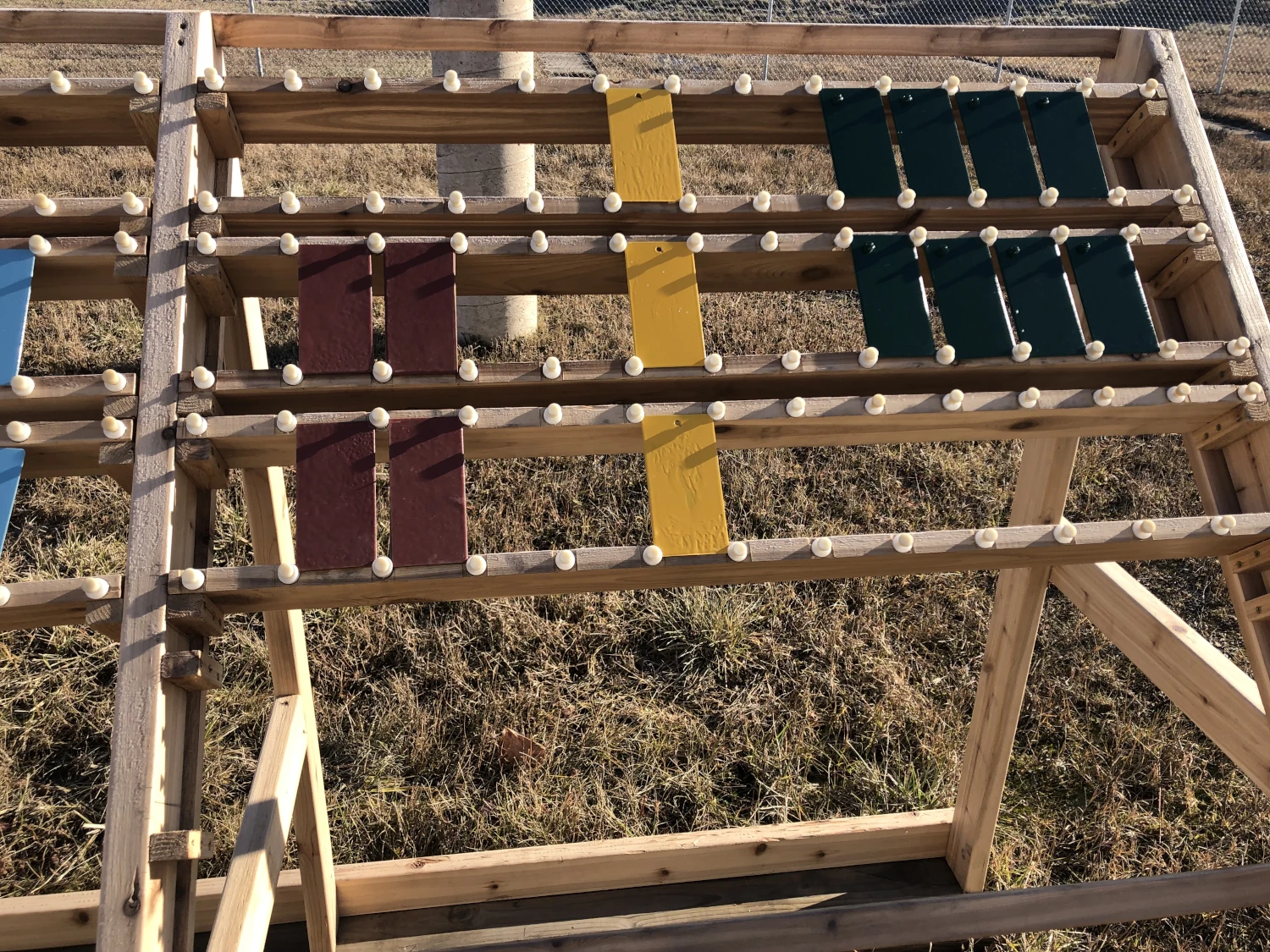
Natural weathering exposes materials to real outdoor light, temperature, and moisture cycles.
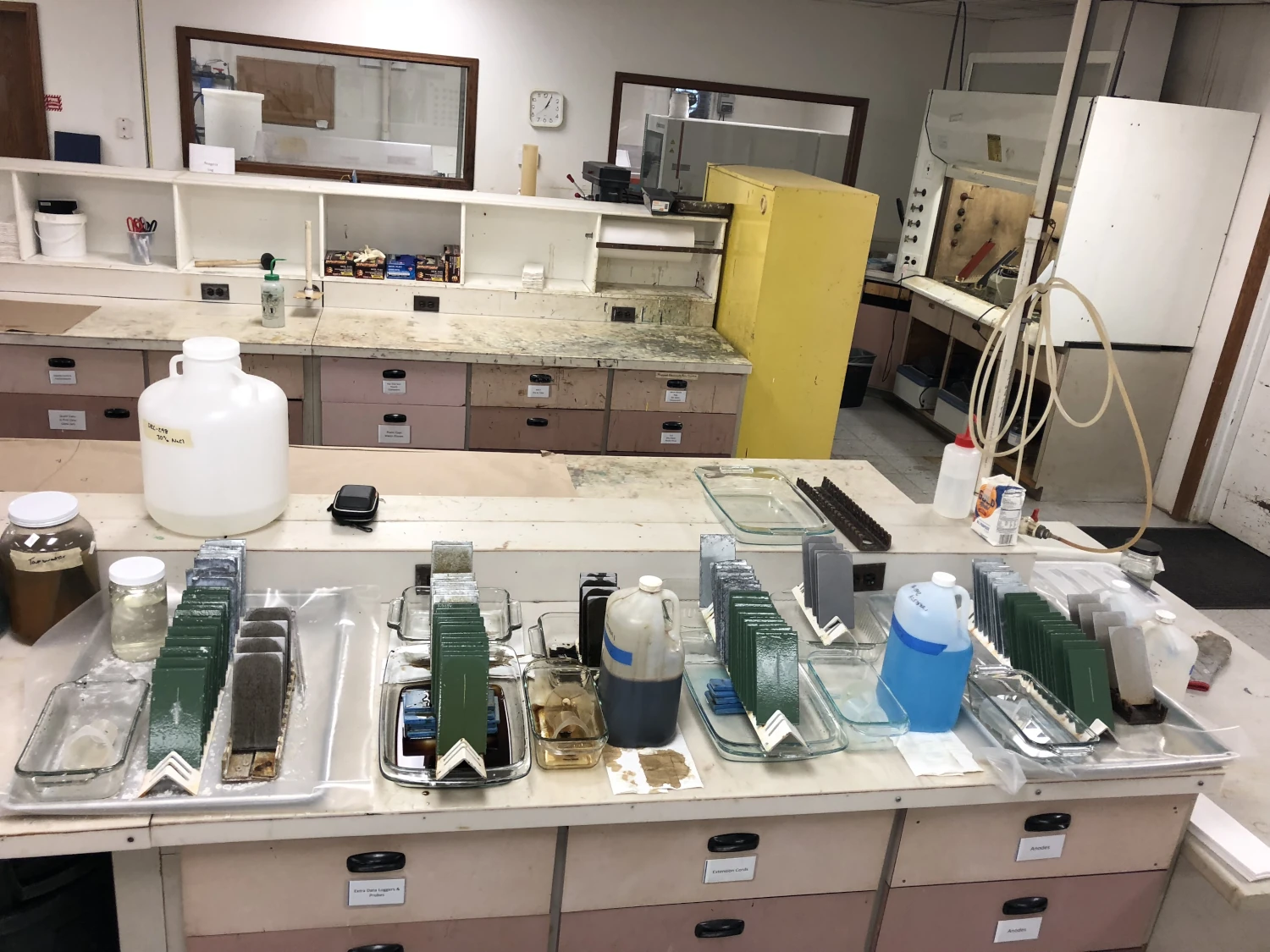
Specimens are organized and examined according to the project’s defined rating and documentation requirements.
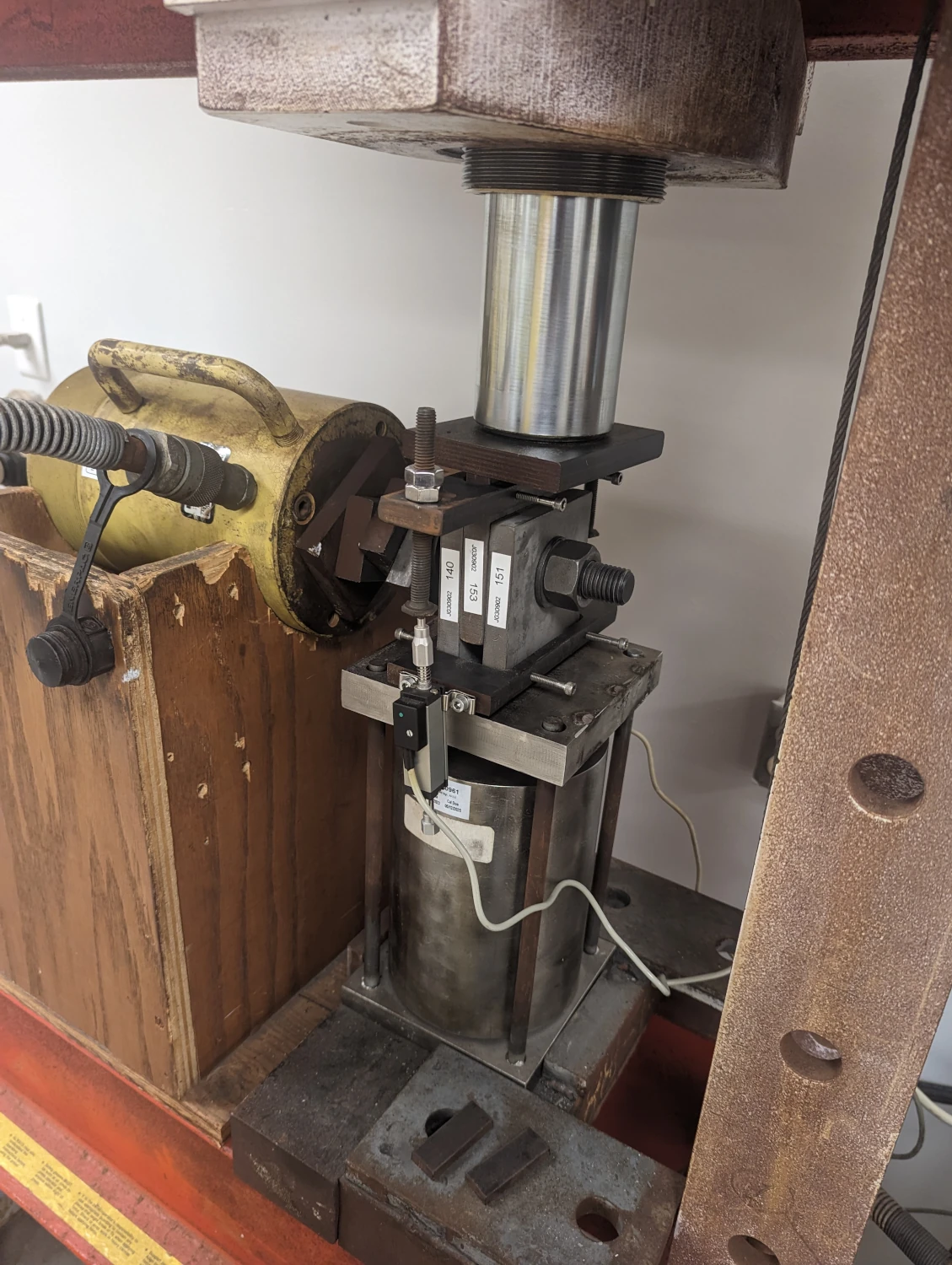
Specialty equipment supports physical and structural evaluations defined by the applicable procedure.
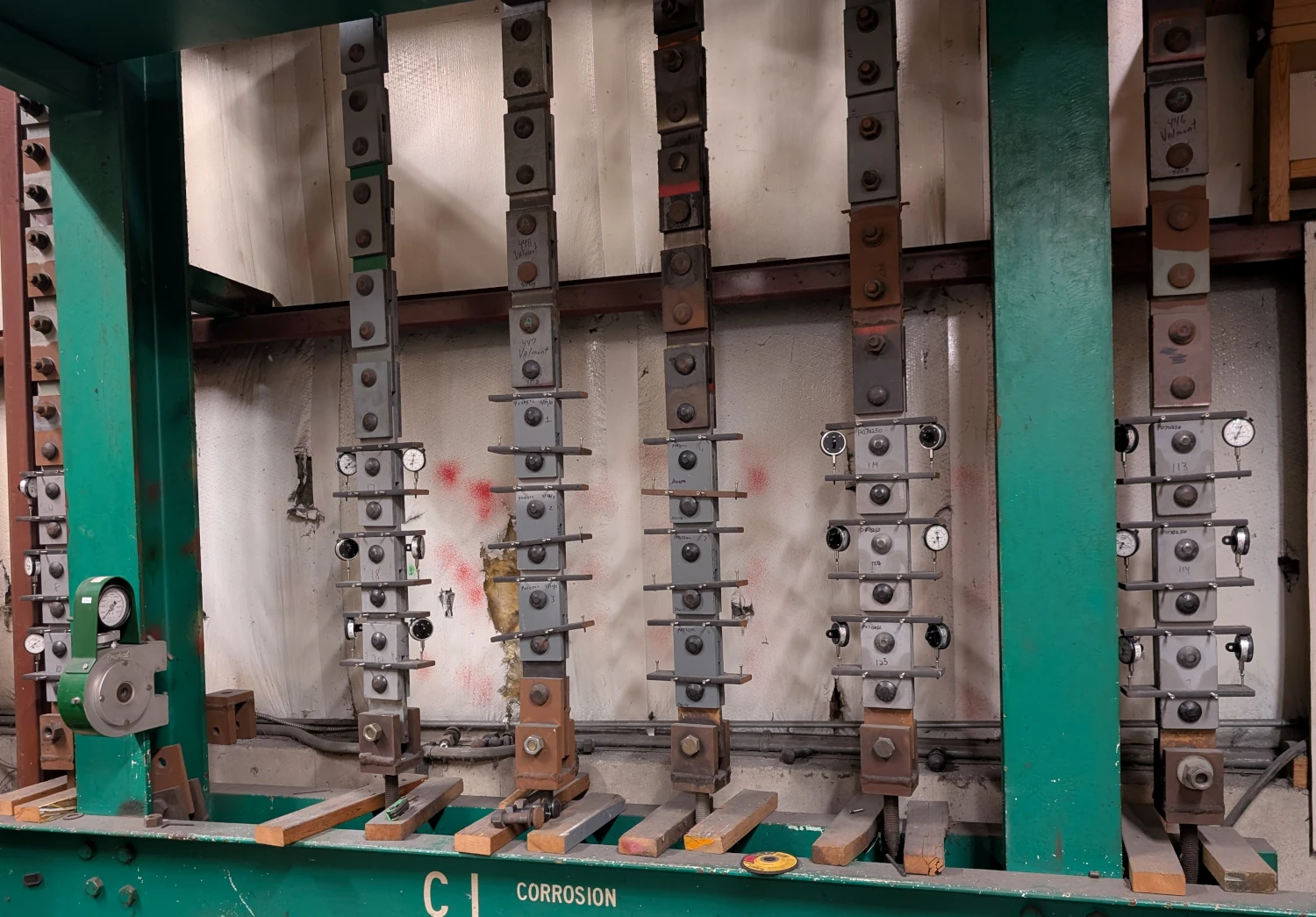
Structural bolting equipment supports slip-coefficient and creep-resistance evaluation of coated faying surfaces.
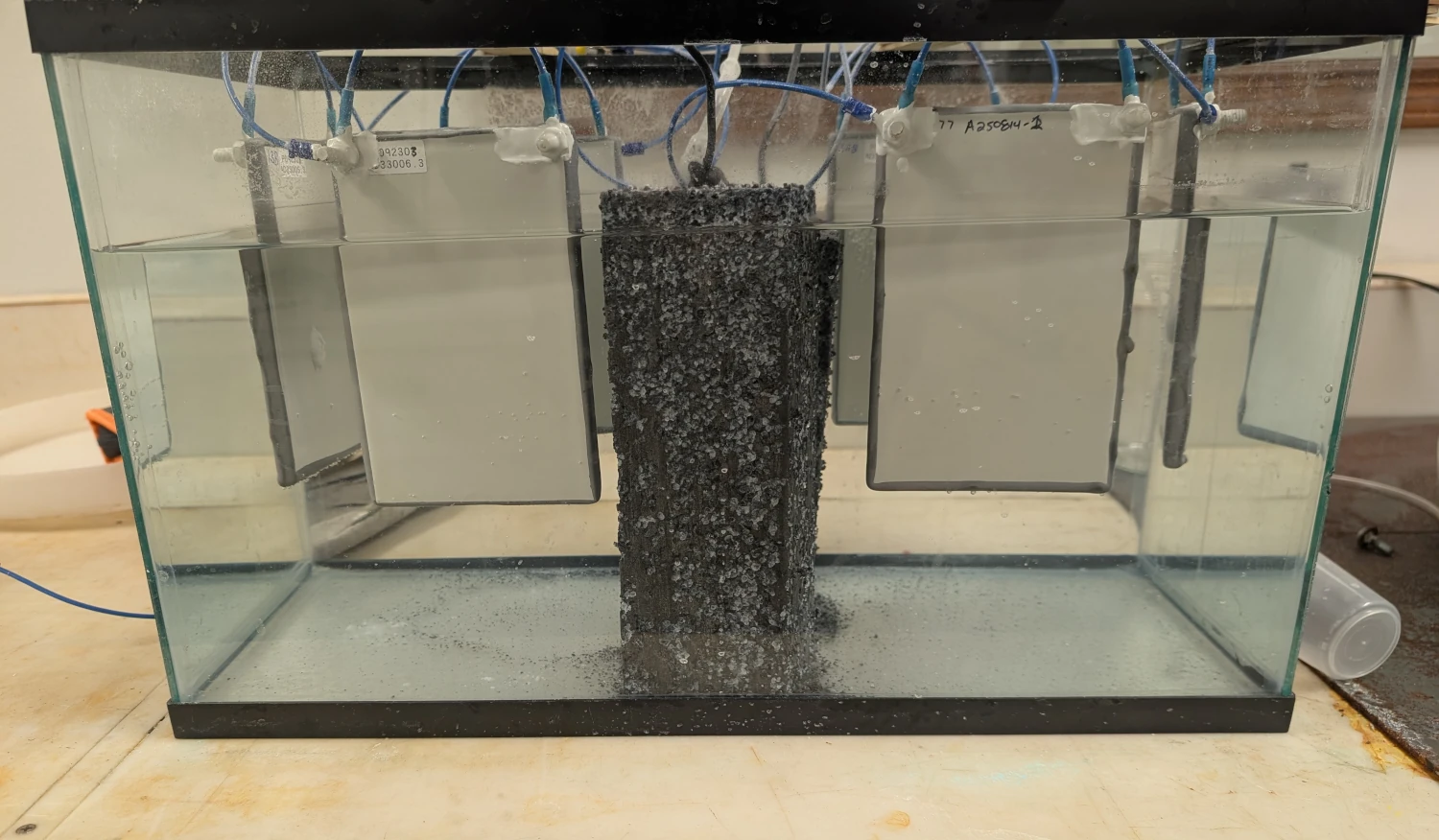
Cathodic disbondment testing evaluates protective coating performance under an applied electrochemical condition.
Industries and Application Areas
Aerospace & Defense
Specification-driven testing of coatings, finishes, hardware, fasteners, metallic components, and assemblies for severe service.
Coatings Manufacturers
Corrosion performance, weathering, adhesion, abrasion, characterization, QC, and comparative formulation evaluation.
Plating & Metal Finishing
Neutral and modified salt fog, CASS, AASS, humidity, and corrosion evaluation of plated and conversion-coated systems.
Electronics & Electrical Equipment
Connectors, terminals, housings, controls, printed circuit assemblies, semiconductor packages, and mixed-metal systems evaluated with appropriate salt, humidity, mixed flowing gas, or other gas-corrosion methods. For equipment used to automate these exposures, see Auto Technology’s electronics corrosion test chambers.
Oil, Gas & Energy
Protective coatings, immersion, Atlas Cell, cathodic disbondment, chemical resistance, and corrosion evaluation.
Marine & Offshore
Coatings, metallic materials, fasteners, and assemblies exposed to salt-bearing and cyclic environments.
Infrastructure & Industrial
Protective coatings, fabricated products, structural systems, industrial equipment, and construction products. For equipment used to automate environmental exposures for drinking-water and wastewater materials, see Auto Technology’s water and wastewater infrastructure test chambers.
Automotive & Transportation
OEM qualification, supplier screening, Ford L-467 cyclic corrosion testing, GMW 14872 cyclic corrosion testing, VDA 233-102 and ISO 11997-3 cyclic corrosion testing, coated panels, plated parts, fasteners, and assemblies.
Failure Investigation
Microscopy, analytical characterization, comparison studies, targeted exposure, and root-cause-focused testing.
Testing Resources, Chamber Guides & Laboratory Partners
Auto Technology partners with GPI Labs for testing in Michigan.
- ASTM G85 A1-A5 testing for acidified salt fog, SWAAT, SO2 salt spray, and Prohesion.
- GMW 14872 testing with complex salt solution application and mass-loss coupon control.
- Ford TM 00.00-L-467 and legacy CETP testing with gauge-loss panel chamber verification.
- VDA 233-102 and ISO 11997-3 testing with controlled RH and Cycle C freezing.
- Electronics corrosion test chambers and exposure methods covering MFG, programmed gas dosing, salt, humidity, and combined environments.
- Water and wastewater infrastructure test chambers for immersion, humidity, water fog, freeze/thaw, thermal cycling, and severe wastewater exposure.
Send the standard, product description, substrate, coating stack, target environment, failure concern, and required reporting.
Frequently Asked Questions
What is the difference between ASTM B117 and ASTM G85 testing?
ASTM B117 creates a continuous neutral salt-fog exposure. ASTM G85 contains five modified salt-spray annexes with acidified chemistry, cyclic phases, synthetic sea salt, sulfur dioxide, or dilute-electrolyte Prohesion conditions. The governing product specification or test objective determines which method applies.
Can Auto Technology run every ASTM G85 annex?
Yes. Auto Technology offers laboratory testing for ASTM G85 Annexes A1 through A5. Different profiles require different chamber capabilities, chemistry, gas dosing, temperature ranges, and transition performance.
What is the difference between salt spray and cyclic corrosion testing?
Continuous salt spray maintains a fog exposure. Cyclic methods introduce defined changes in wetting, drying, humidity, temperature, or solution application. Select the method required by the governing specification or best aligned with the investigation objective.
Do you support industry and OEM corrosion standards?
Yes. The laboratory supports ASTM, ISO, SAE, DIN, OEM, military, and project-specific corrosion, environmental, coatings, and materials methods, including Ford TM 00.00-L-467 and legacy CETP 00.00-L-467 testing and VDA 233-102 and ISO 11997-3 testing. Submit the exact designation and revision for capability and scope confirmation.
Can you prepare test panels and apply coatings?
Yes. ATC supports substrate preparation, blasting, custom panel fabrication, coating application, masking, edge protection, scribing, and related specimen-preparation steps.
What testing is useful for electronics or connectors?
Mixed flowing gas is often appropriate for low-concentration atmospheric pollutant corrosion, while salt mist, single-gas exposure, cyclic salt, humidity, condensation, or combined environments may apply depending on the materials, service environment, and governing specification. See Auto Technology’s electronics corrosion test chamber guide for the different exposure types, standards, and chamber configurations used for electronics and connector testing.
Do you offer analytical or failure-analysis support?
Yes. Available work includes FTIR, gas chromatography, microscopy, compositional analysis, elemental profiling, targeted metals screening, comparative investigation, and failure-analysis-driven testing.