
Materials & Corrosion Testing to Global and OEM Standards
Auto Technology’s A2LA-accredited, ISO 17025-compliant laboratory supports corrosion testing, coatings performance testing, analytical laboratory work, quality control, accelerated weathering, and failure-analysis-driven investigations for automotive, aerospace, oil & gas, electronics, coatings manufacturers, infrastructure, and industrial OEMs, including programs aligned with GM, Ford, Volkswagen, Audi, BMW, Volvo, Mercedes-Benz, Toyota, Honda, Nissan, Hyundai, Kia, Tesla, and other customer-specific validation requirements.
Send us the standard, material, coating system, service environment, duration, and reporting requirements.
A2LA Accredited
ISO 17025-compliant procedures and reporting for qualification and audit-ready work.
Global & OEM Test Methods
ASTM, ISO, SAE, OEM, military, and project-specific programs across corrosion and materials testing.
Salt Fog, Cyclic, Gas & Immersion
Environmental exposure testing built around real-world corrosion mechanisms, not just chamber hours.
Performance, QC & Failure Analysis
From coatings evaluation and batch confirmation to FTIR, GC, microscopy, and root-cause investigation.
Independent Materials, Coatings, and Corrosion Testing
Auto Technology provides standards-driven materials, coatings, and corrosion testing for automotive, aerospace, oil & gas, electronics, coatings manufacturers, infrastructure, and industrial OEMs who need reliable, defensible results—not just test hours.
The laboratory supports corrosion and environmental exposure testing including salt spray, cyclic corrosion, immersion, humidity, SO2, mixed flowing gas, multi-gas, UV/weathering, water immersion, and temperature/humidity exposure, alongside coatings performance testing, quality control, product characterization, analytical investigation, abrasive testing, specialty structural testing, and failure analysis.
That includes work such as FTIR analysis, gas chromatography, VOC and batch QC testing, slip coefficient evaluation, gravelometer chip resistance, Atlas Cell immersion, cathodic disbondment, and broader comparative or forensic investigation.
The lab also supports OEM corrosion and environmental programs derived from or aligned with global automotive requirements, including validation work tied to GM, Ford, Stellantis, Volkswagen / Audi, BMW, Mercedes-Benz, Volvo, Toyota, Honda, Nissan, Hyundai, Kia, Tesla, and other internal customer specifications.
Some customers come with a defined standard. Others need to understand why a coating, substrate, plated part, connector, or assembly is failing in service. Our approach is the same in both cases: match the test method to the real-world environment and the actual question being asked.
Whether the goal is qualification, supplier approval, comparative evaluation, batch confirmation, or failure investigation, the lab is built to deliver repeatable, standards-aligned results that hold up under scrutiny.
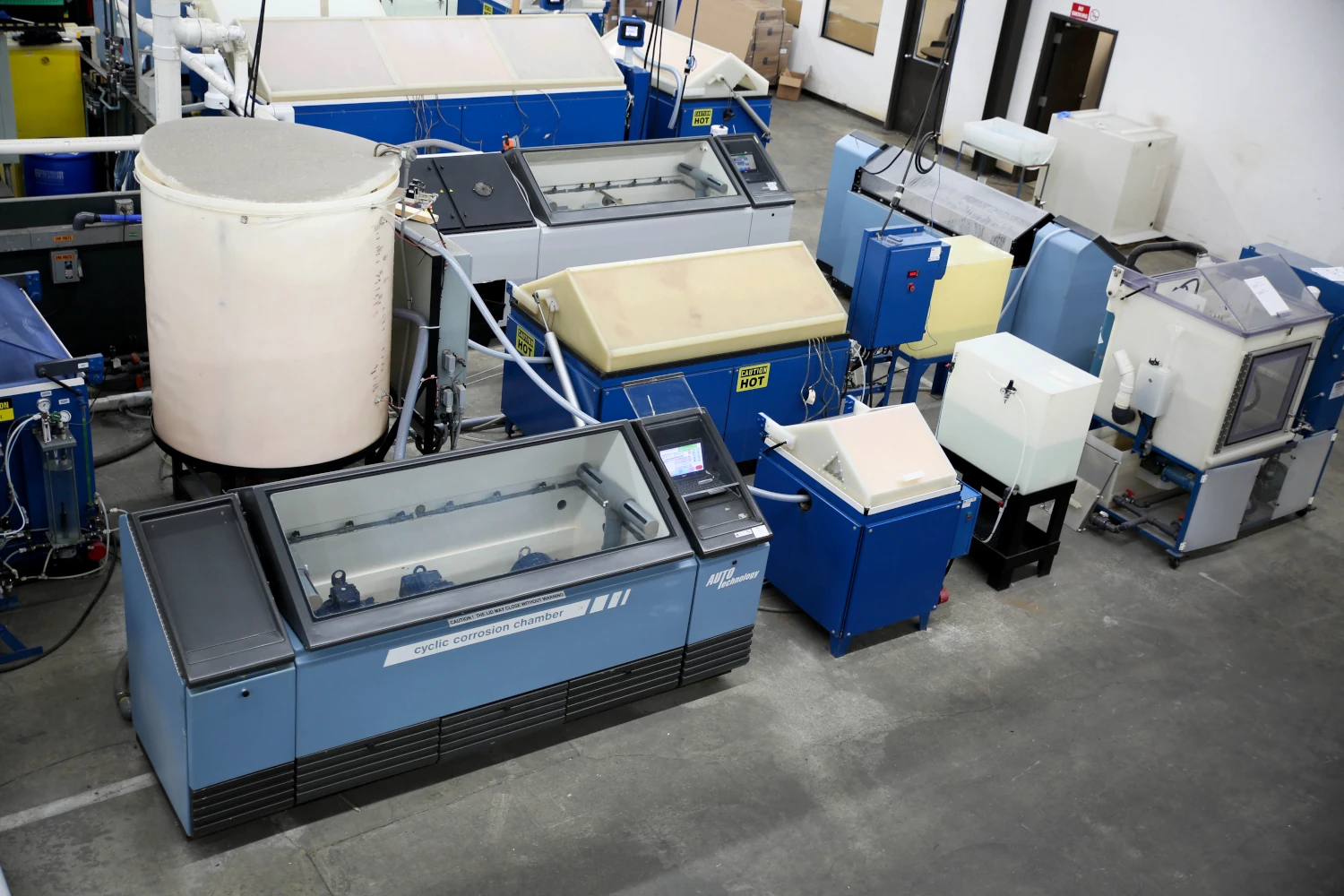
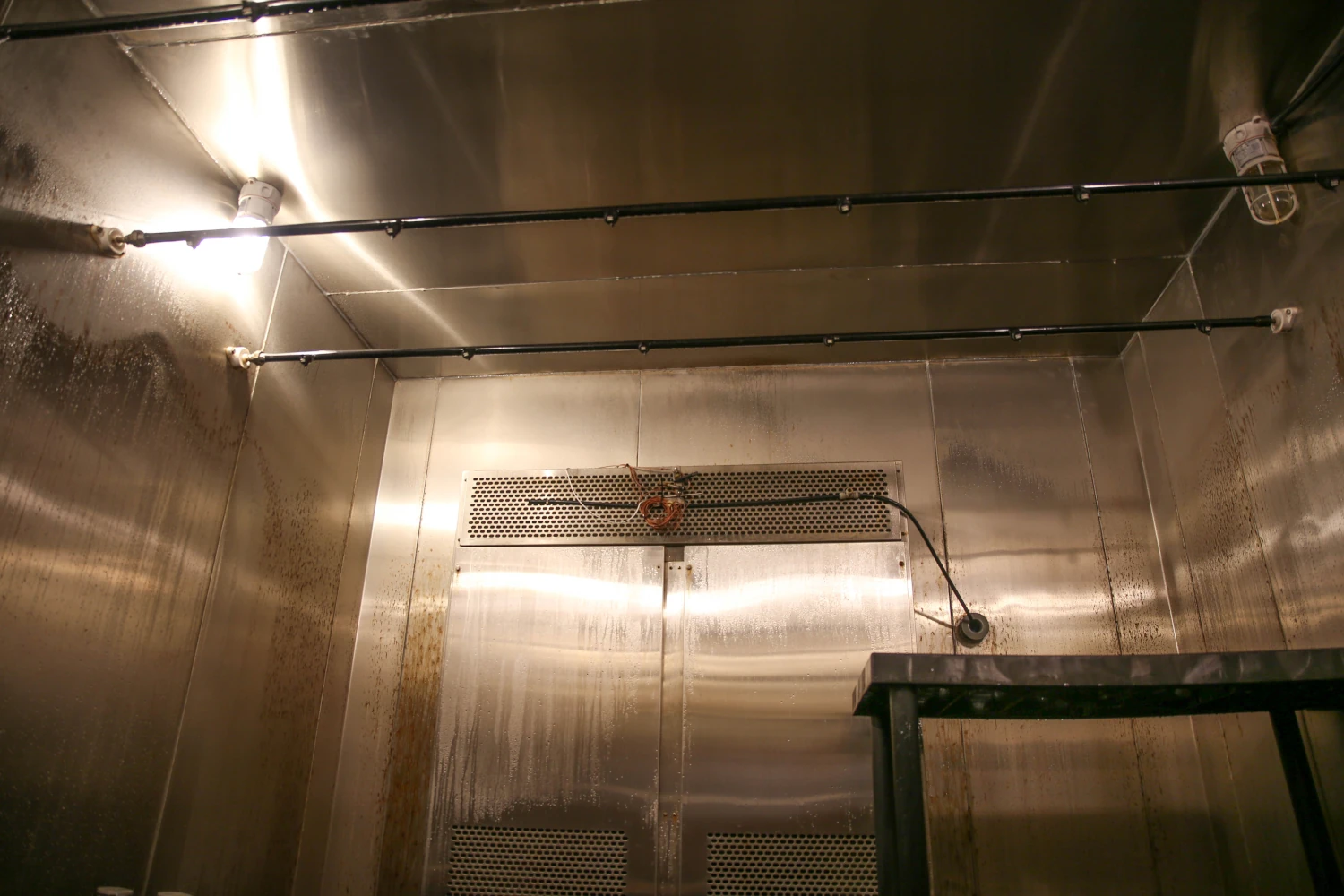

Important: Continuous salt fog, cyclic corrosion, immersion, humidity, UV/weathering, temperature/humidity exposure, SO2, mixed flowing gas, and multi-gas testing do not create the same stress conditions. The correct method depends on the material system, service environment, failure mode, and whether the work is tied to an industry standard or an OEM-specific validation requirement.

A2LA Accreditation Supporting Real Laboratory Work
Auto Technology operates an A2LA-accredited corrosion testing laboratory with ISO 17025-compliant procedures and reporting for customers who need qualification data, repeatability, defensible records, and a laboratory structure aligned with real quality-system expectations.
That includes support for industry, military, and OEM-driven programs where repeatable execution, disciplined records, and controlled test conditions matter for internal approval, supplier qualification, and comparative validation work.
17,500+ sq ft
Laboratory capacity supporting corrosion, materials, analytical, and environmental exposure programs.
80 Test Systems
Broad environmental and corrosion capability across multiple testing platforms.
Standards-Driven
Programs built around industry, OEM, military, and project-specific test requirements.
Note: A2LA accreditation applies to select tests and systems within the laboratory scope. Not every chamber or service offering is necessarily included within that accreditation scope. Some services are provided through Auto Technology affiliates.
Testing Types
The lab supports specification-driven testing and broader materials evaluation across corrosion, environmental exposure, coatings performance, quality control, and failure investigation.
Many OEM corrosion programs are built on or derived from industry standards such as SAE J2334, ASTM G85, ASTM B117, and ISO 9227, with customer-specific modifications to cycle timing, electrolyte chemistry, environmental sequencing, and acceptance criteria.
Corrosion and Environmental Exposure
Salt Spray / Salt Fog
Continuous salt fog exposure for baseline comparison and corrosion screening.
Standards: ASTM B117, ISO 9227, ASTM G85, ASTM B368, and related industry and project-specific fog methods, including customer and OEM-derived salt spray requirements.
Cyclic Corrosion
Controlled wet/dry, humidity, and temperature transitions to better simulate real-world exposure.
Standards: SAE J2334, GMW 14872, GMW 3172, Ford CETP 00.00-L-467, VW PV 1200 / PV 1210, BMW GS 95024, Volvo VCS 1027 / VCS 1029, Mercedes-Benz DBL-series corrosion programs, Hyundai / Kia corrosion and environmental specifications, and other OEM and project-specific cyclic programs.
Immersion / Solution Exposure
Direct liquid exposure with controlled chemistry and repeatable loading.
Standards: ASTM D870, ASTM D1308, ISO 2812-2, ASTM G8, ASTM G42, ASTM G95, Atlas Cell-related immersion methods, and customer-specific immersion protocols tied to coatings, pipeline, and OEM durability requirements.
Humidity / Condensation
High-humidity and condensation-driven degradation testing.
Standards: ASTM D1735, ASTM D2247, ASTM D4585, ISO 6270, and related humidity exposure methods, including programs used within broader OEM validation sequences.
Gas Corrosion (SO2 / MFG / Multi-Gas)
Controlled gas exposure for atmospheric corrosion simulation.
Standards: ASTM G87, DIN 50018, ISO 3231, ISO 6988, IEC 60068-2-60, EIA-364-65, ASTM B827, ASTM B845, ASTM B810, ISA 71.04, and related connector, electronics, telecom, and OEM atmospheric corrosion programs.
Weathering / UV Exposure
Light, temperature, and moisture exposure for long-term durability evaluation.
Standards: ASTM G154, ASTM D4587, ASTM D5894, ASTM D4329, SAE J2020, and related ASTM / ISO weathering methods used for coatings, trim, plastics, and OEM durability screening.
Specialty Environmental Exposure
Application-specific environmental testing beyond standard corrosion methods.
Standards: GM 9103P, JIS 0203, IEC 68-2-18, customer-defined programs, and broader OEM-specific validation methods where the exact sequence, chemistry, or exposure condition is defined by internal standards.
Materials, QC, and Investigation
Coatings Performance Testing
Functional and durability evaluation beyond corrosion exposure alone.
Standards: ASTM D4541, ASTM D3359, ASTM D6677, ASTM D4060, ASTM D968, ASTM D2794, ASTM D3363, ASTM D2240, ASTM D2244, ASTM D523, ASTM D2486, SAE J400, and related methods used for qualification, comparative screening, and customer / OEM durability evaluation.
Quality Control & Product Characterization
Routine and comparative testing to support production and supply-chain decisions.
Standards: ASTM D2196, ASTM D4212, ASTM D562, ASTM D3960, EPA Method 24, ASTM D2369, ASTM D1475, ASTM D93, ASTM D1210, ASTM D1338, and related QC methods.
Analytical Characterization
Chemical and material analysis to support identification and investigation.
Standards: ASTM E1252 (FTIR), EPA 6010D, ASTM D3335, ASTM D3718, and related analytical and metals methods.
Abrasive & Surface Cleanliness Testing
Surface-preparation and abrasive-related testing tied to coating quality and contamination control.
Methods include: Water-soluble contaminants / conductivity, oil content, particle size distribution, moisture content, and lead / heavy metals screening.
Specialty / Structural Testing
Additional testing for structural, severe-service, and application-specific requirements.
Methods include: Slip coefficient / creep resistance, Atlas Cell immersion, cathodic disbondment, and related specialty programs.
Failure Analysis
Investigation-driven testing to determine root cause of material or coating failure.
Approach: Combines exposure testing, analytical methods, microscopy, and comparative evaluation.
OEM coverage includes: GM, Ford, Stellantis, Volkswagen, Audi, BMW, Mercedes-Benz, Volvo, Toyota, Honda, Nissan, Hyundai, Kia, Tesla, and other customer-defined internal programs that build on or modify established ASTM, ISO, SAE, DIN, and related methods.
Representative Chamber and Facility Images
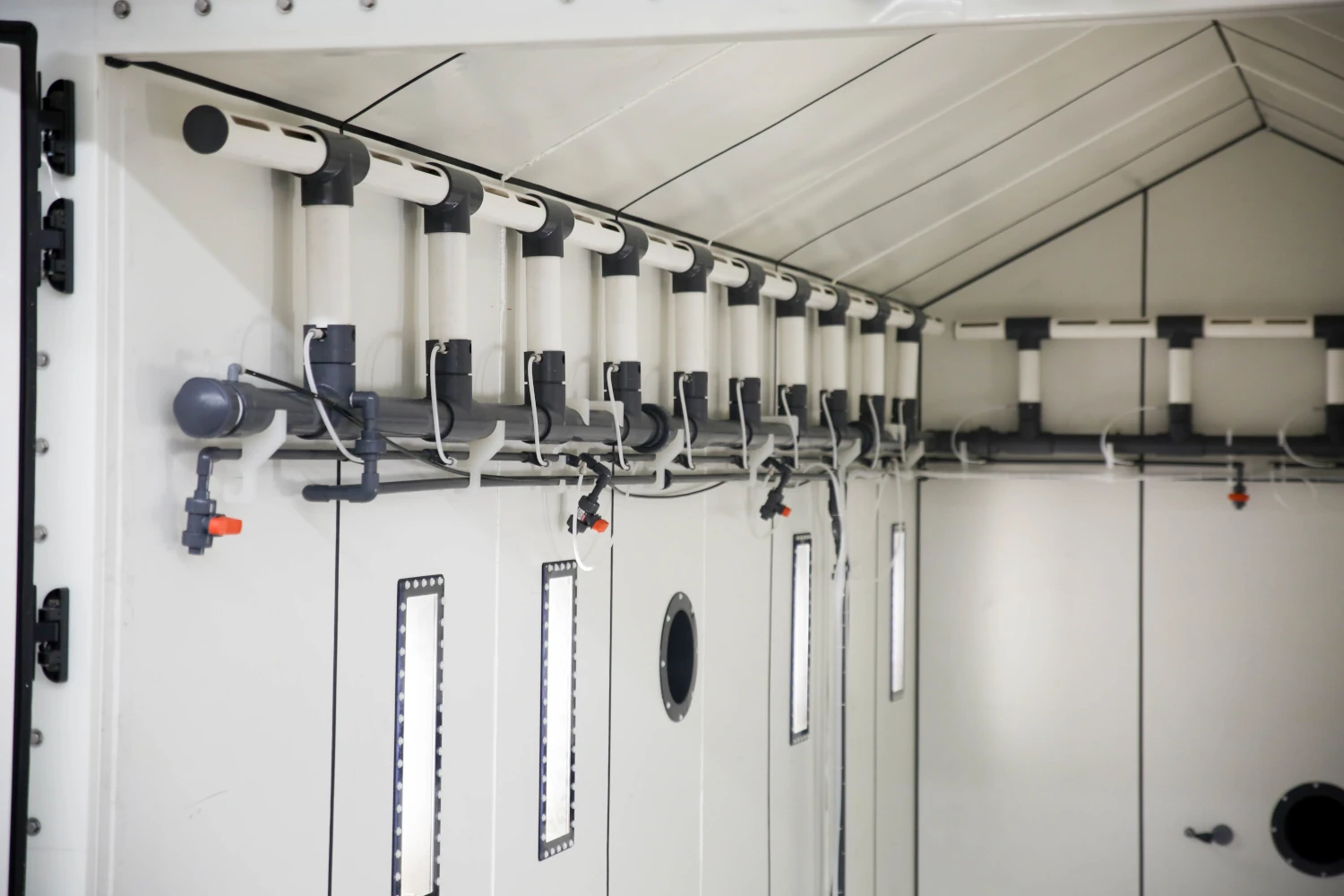
The interior of our walk-in chambers utilizes custom manifold systems to ensure consistent spray distribution across large-scale test samples.
For aggressive testing environments, our stainless steel walk-in chambers provide the durability and precision needed for long-term exposure cycles.
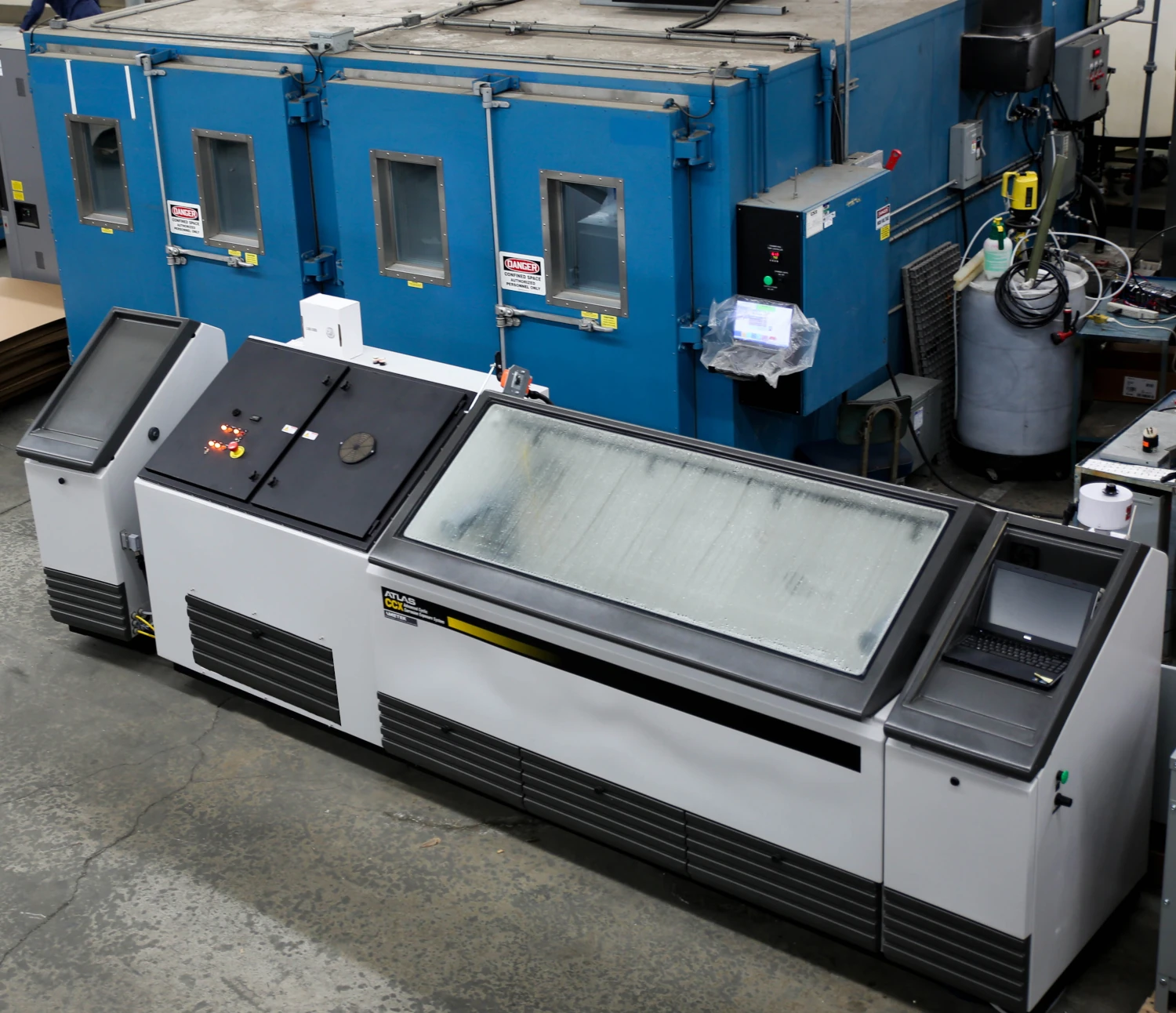
From benchtop cyclic chambers to full-scale walk-in units, we provide versatile corrosion testing solutions for components of all sizes.
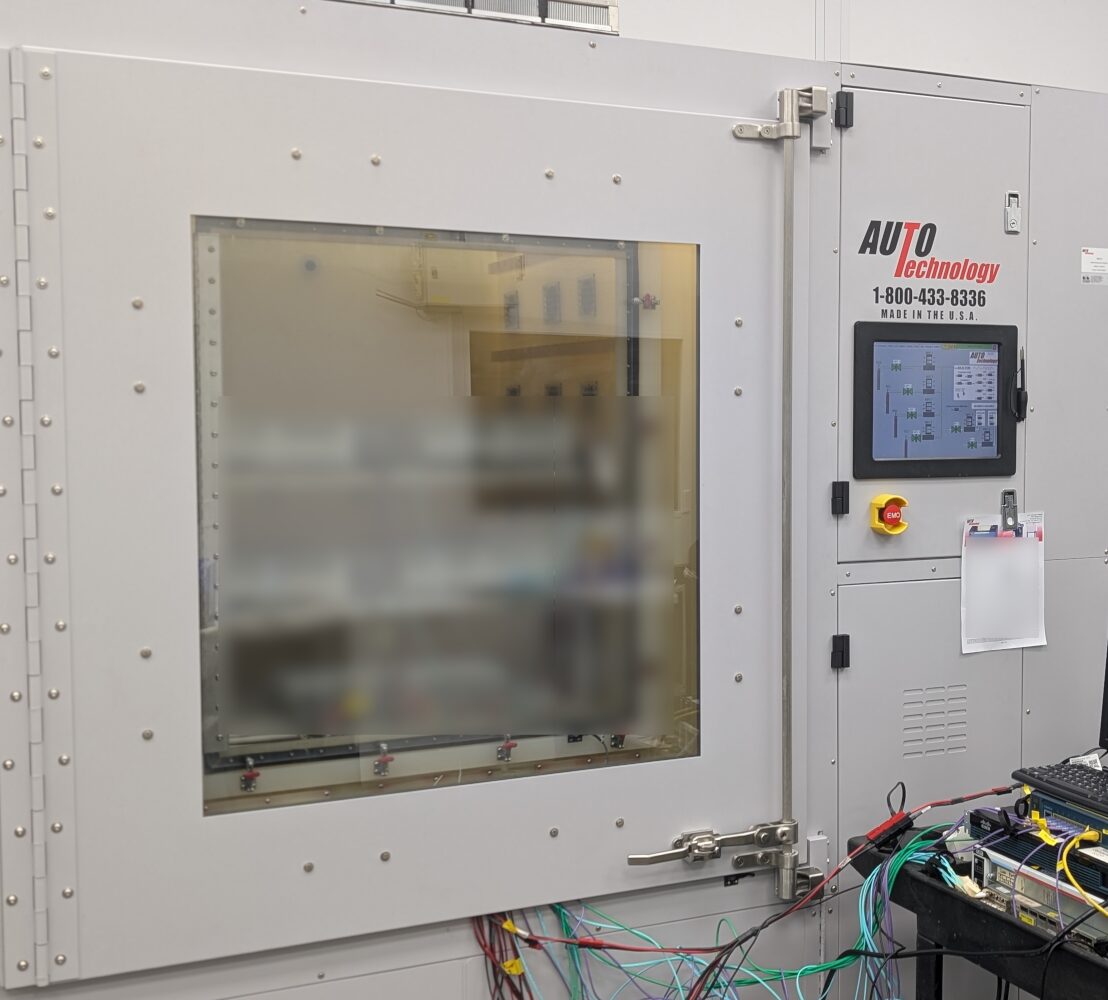
This custom-configured 36 cubic foot MFG chamber is designed to accommodate complex testing requirements, including live-wired electronics under controlled corrosive gas exposure.
Auto Technology walk-in mixed flowing gas chamber designed for large-scale automotive corrosion testing with precise temperature, humidity, and gas control.

Auto Technology custom stainless-steel walk-in corrosion chamber engineered for large-scale cyclic corrosion testing, including SAE J2334, GMW14872, and Ford L-467 full-assembly practices.
Test Panels, Sample Preparation, and Paint Application
Many customers do not just need exposure time. They need properly prepared samples. Auto Technology supports panel preparation, substrate sourcing, abrasive blast preparation, coatings application, and custom fabricated sample work so test programs start with samples that reflect the actual requirement.
- Steel, aluminum, and other substrate panels
- Prepared to customer, SSPC, NACE, AMPP, and ISO cleanliness requirements
- Abrasive blasted, cleaned, primed, or coated to specification
- Custom panel sizes for qualification and comparison work
- Weldments, weld beads, bolts, holes, and geometry-specific samples
- Show panels and display panels
Coating Application Capability
- Airless spray
- Single-leg and plural-component heated options
- Conventional spray
- Brush and roller application
- Application support tied to customer process requirements
Why This Matters
Sample preparation errors can distort the result before testing even begins. Properly prepared substrates, coatings application, and controlled specimen construction improve the value of the data.
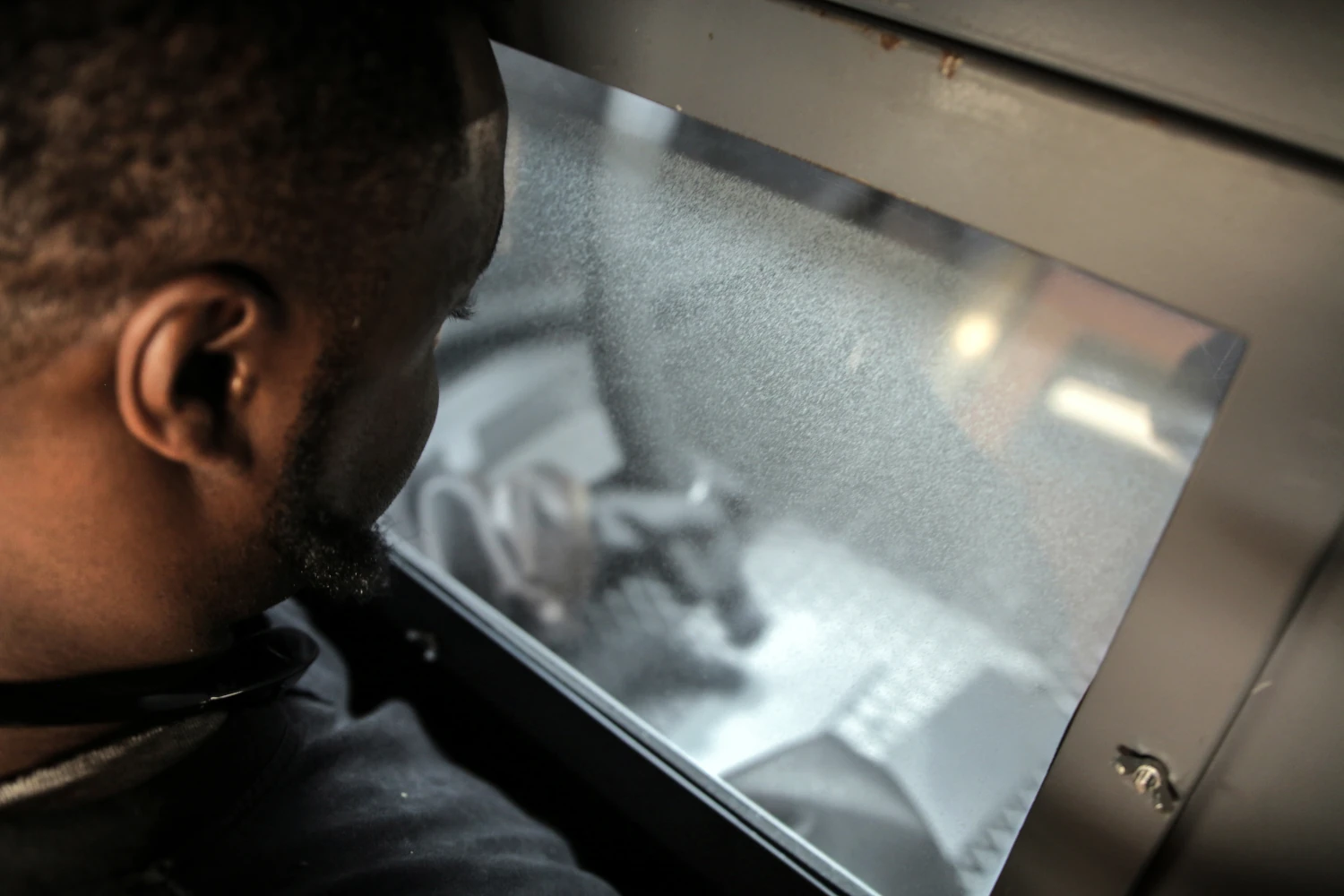
Proper surface preparation is critical for accurate results; our abrasive blasting services ensure substrates meet specific profile requirements before testing begins.
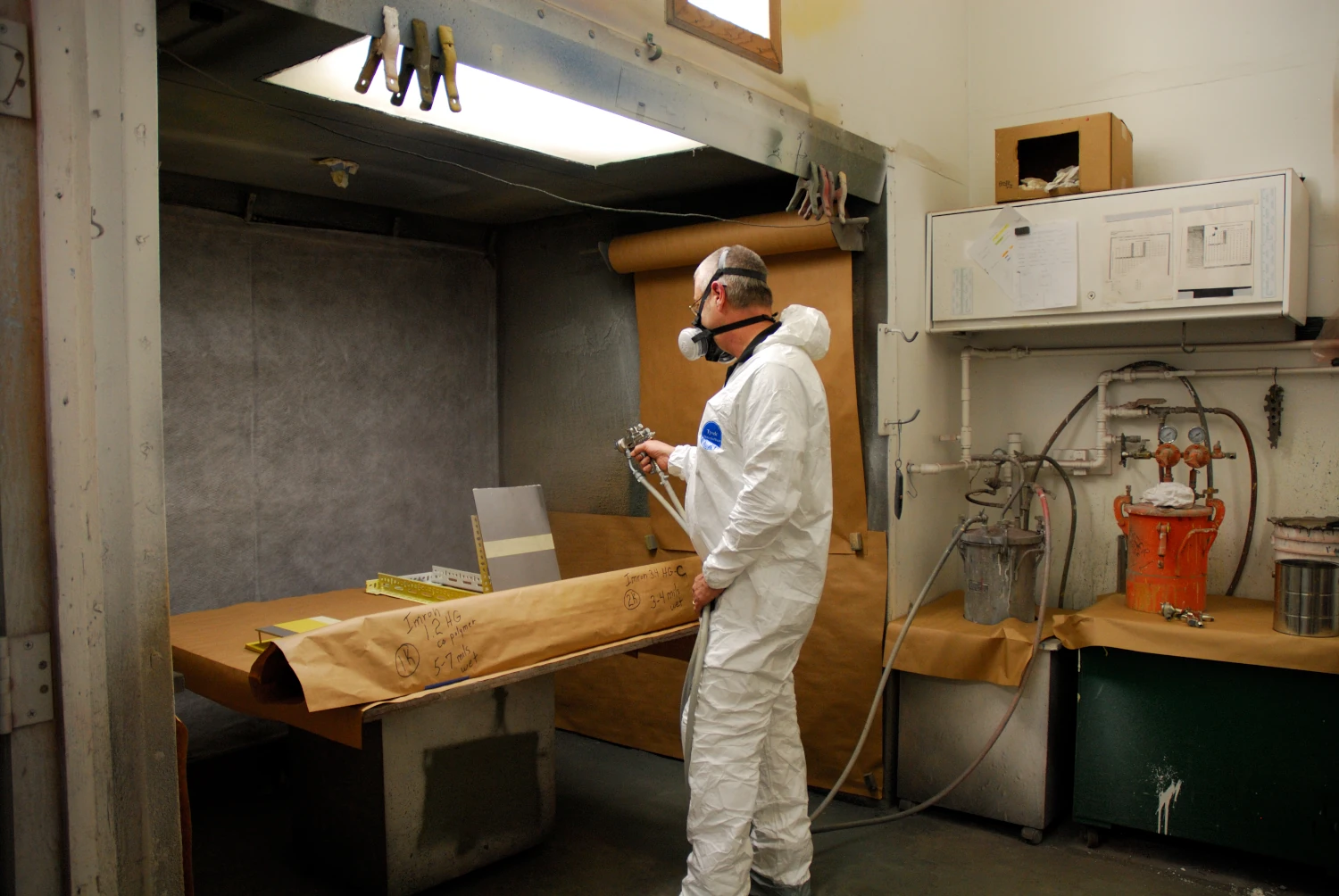
Our in-house coating application services ensure that every test panel is prepared with precise film thickness and uniformity for highly repeatable test outcomes.
Test Selection Guide
Start with the environment, the failure concern, or the decision you need to make. Then match that need to the right testing type.
| What Are You Trying to Evaluate? | Best Starting Test Type | Why It Usually Fits |
|---|---|---|
| Basic coating comparison or screening | Salt Spray / Salt Fog Testing | Fast, recognized, repeatable baseline exposure for coatings and finishes |
| Need AASS or CASS-type corrosive salt fog conditions | Acidified / Copper-Accelerated Salt Spray Testing | Useful when decorative or plated systems require more aggressive salt fog conditions than neutral fog alone |
| Need cyclic or field-representative corrosion exposure | Cyclic Corrosion Testing | Better reflects wet / dry and transition-driven mechanisms than continuous fog alone and is commonly used for OEM automotive validation programs |
| Need tighter control of solution or electrolyte application | Immersion Testing | Provides more repeatable solution loading than incidental fog wetting |
| Moisture sensitivity, blistering, or condensation concern | Humidity / Condensation Testing | Useful where moisture is the key driver rather than salt-only exposure |
| Acidic industrial atmosphere or sulfur dioxide concern | SO2 / Kesternich Testing | Accelerates sulfur dioxide-driven atmospheric corrosion |
| Connector, terminal, or electronics reliability concern | Mixed Flowing Gas (MFG) Testing | Simulates corrosive atmospheric pollutant exposure for sensitive assemblies |
| Need a broader or more customized gas-corrosion environment | Multi-Gas Testing | Supports wider gas combinations and broader atmospheric simulation needs |
| Need broader environmental or weathering durability insight | Accelerated Weathering / UV Testing | Useful where sunlight, condensation, and broader exposure conditions are part of the performance risk |
| Need immersion, fluid, or solution resistance data | Water / Chemical Immersion Testing | Useful where liquid contact, splash, or direct solution exposure is part of service |
| Need to evaluate chip resistance or surface damage susceptibility | Impact / Gravelometer Testing | Useful where coating damage resistance is part of the service condition, including OEM and supplier durability evaluation |
| Need structural joint friction or creep evaluation | Slip Coefficient Testing | Useful where coated bolted connections must meet structural performance requirements |
| Need broader material or coating performance data beyond corrosion alone | Physical and Performance Testing | Supports wider comparative, qualification, and specification questions |
| Need routine production, supplier, or incoming QC support | Quality Control & Product Characterization | Helps standardize evaluation for ongoing quality and supply-chain decisions |
| Need chemistry or composition insight | Analytical Laboratory Testing | Useful for FTIR, GC, heavy metals, resin identification, and materials characterization |
| Need severe-service immersion or high-temperature fluid exposure insight | Atlas Cell / Immersion Testing | Useful where chemical exposure conditions go beyond simple ambient immersion screening |
| Need abrasive or surface cleanliness evaluation before coating work | Abrasive & Surface Cleanliness Testing | Useful where contamination, particle size, oil, moisture, or lead may affect preparation and coating performance |
| Need testing tied to a named internal automotive program | OEM-Specific Corrosion / Environmental Testing | Useful when validation must align to customer-defined GM, Ford, VW / Audi, BMW, Mercedes-Benz, Volvo, Toyota, Honda, Nissan, Hyundai / Kia, Tesla, or similar internal requirements |
Need help choosing? Send us the part description, substrate, coating stack, service environment, required standard, performance requirement, known failure mode, and any OEM or customer-specific test reference. We can help align the laboratory method to the actual question.
Representative Methods, Evaluation, and Support Work
Beyond chamber exposure alone, the laboratory supports sample evaluation, specialty corrosion methods, structural testing, and broader weathering and failure-analysis-driven work.
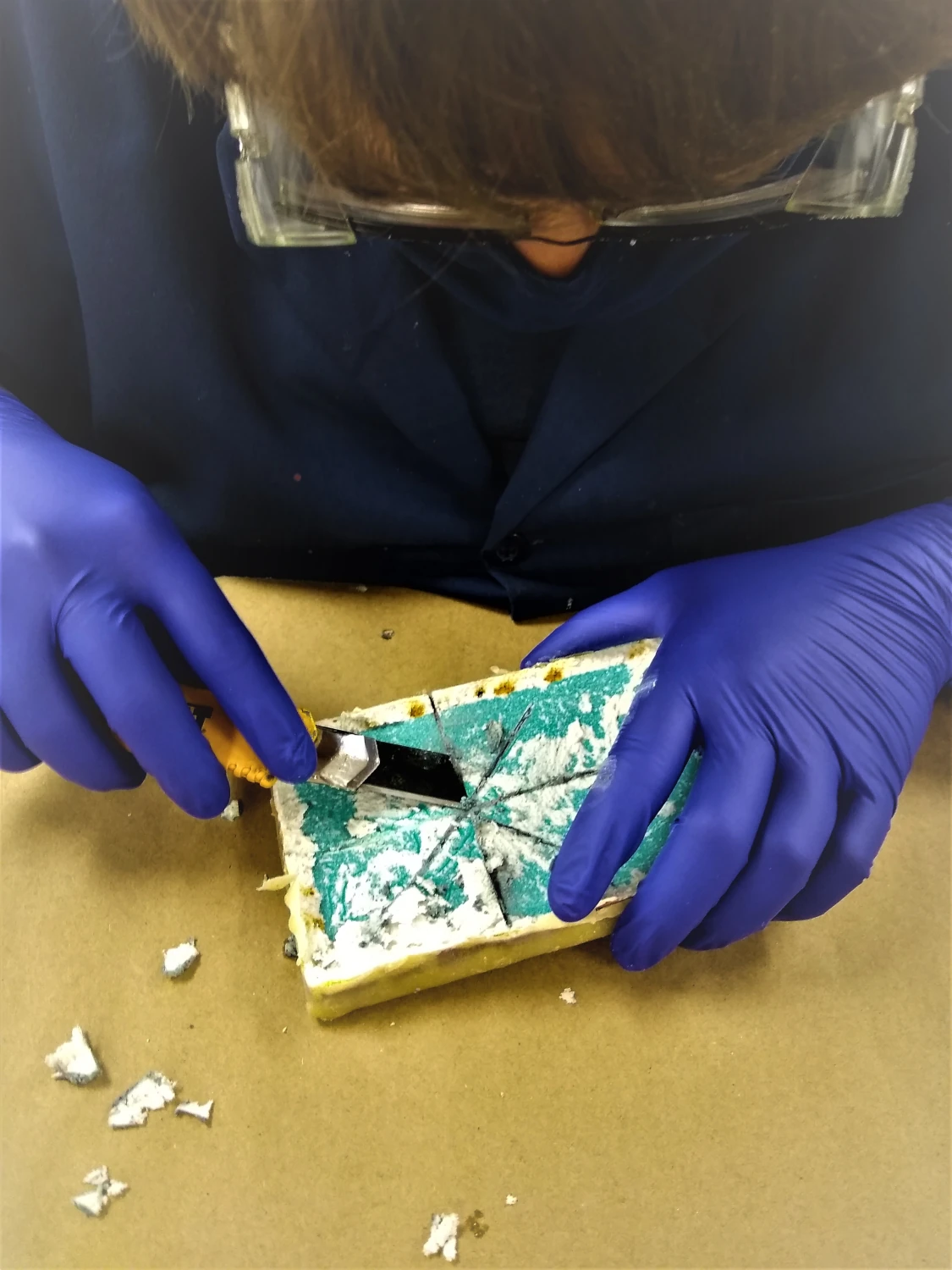
Post-test physical evaluation allows our technicians to quantify the extent of coating disbondment and determine the effectiveness of corrosion protection systems.
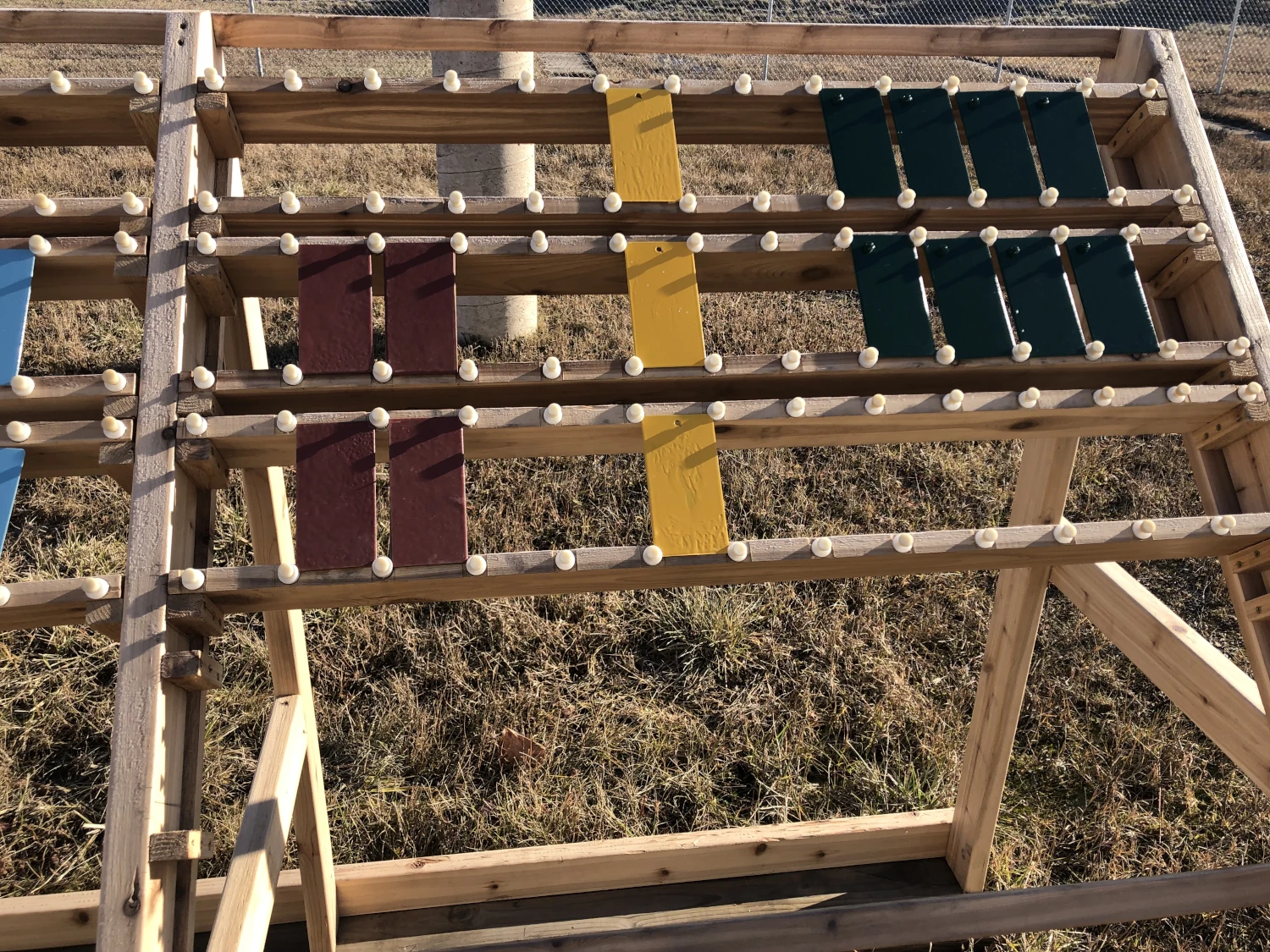
Natural weathering studies utilize outdoor exposure racks to evaluate how coatings and materials stand up to real-world UV, temperature, and moisture cycles over time.
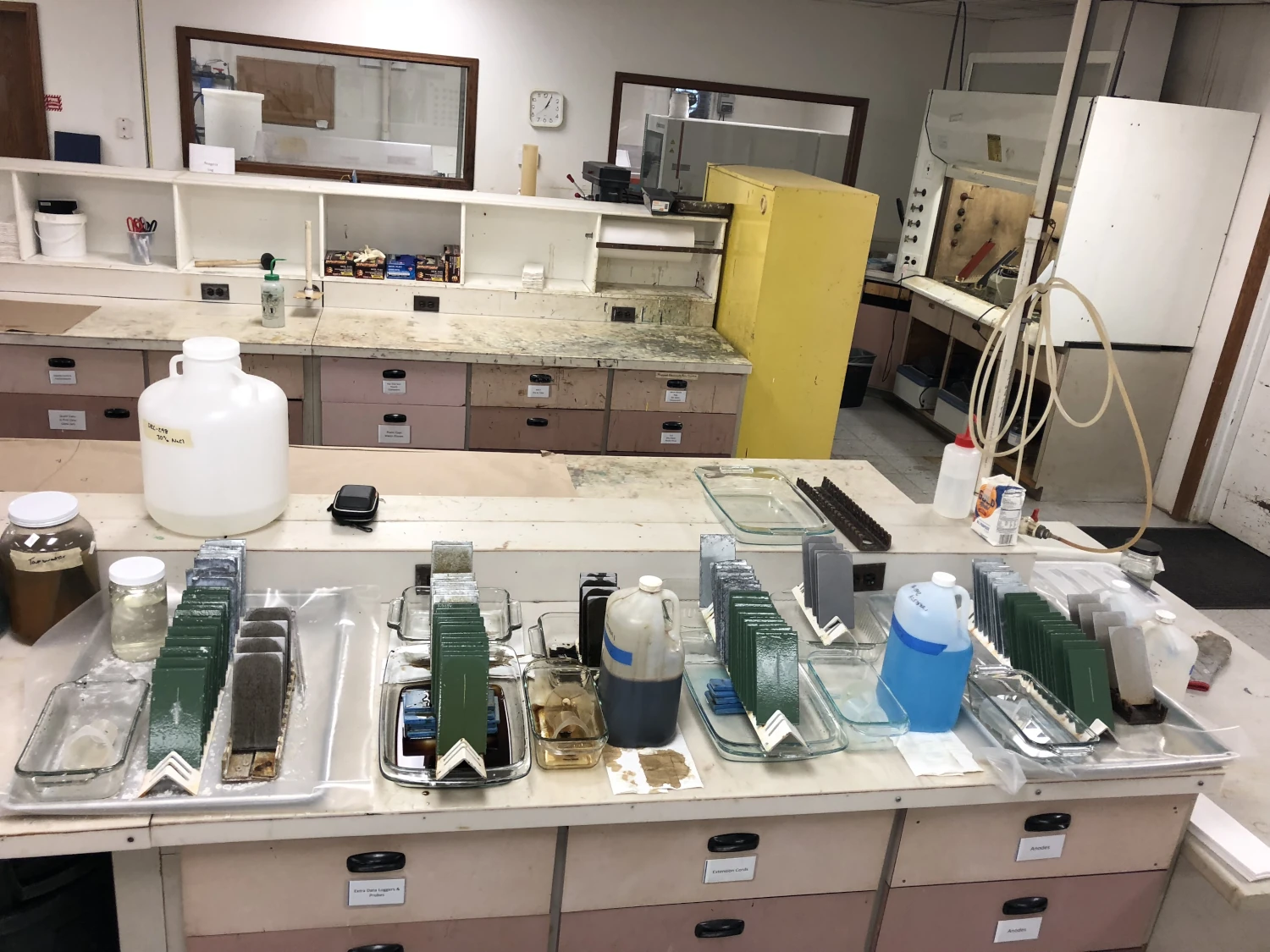
After environmental exposure, samples are meticulously organized and evaluated in our analytical lab to document corrosion rates, blistering, and adhesion loss.
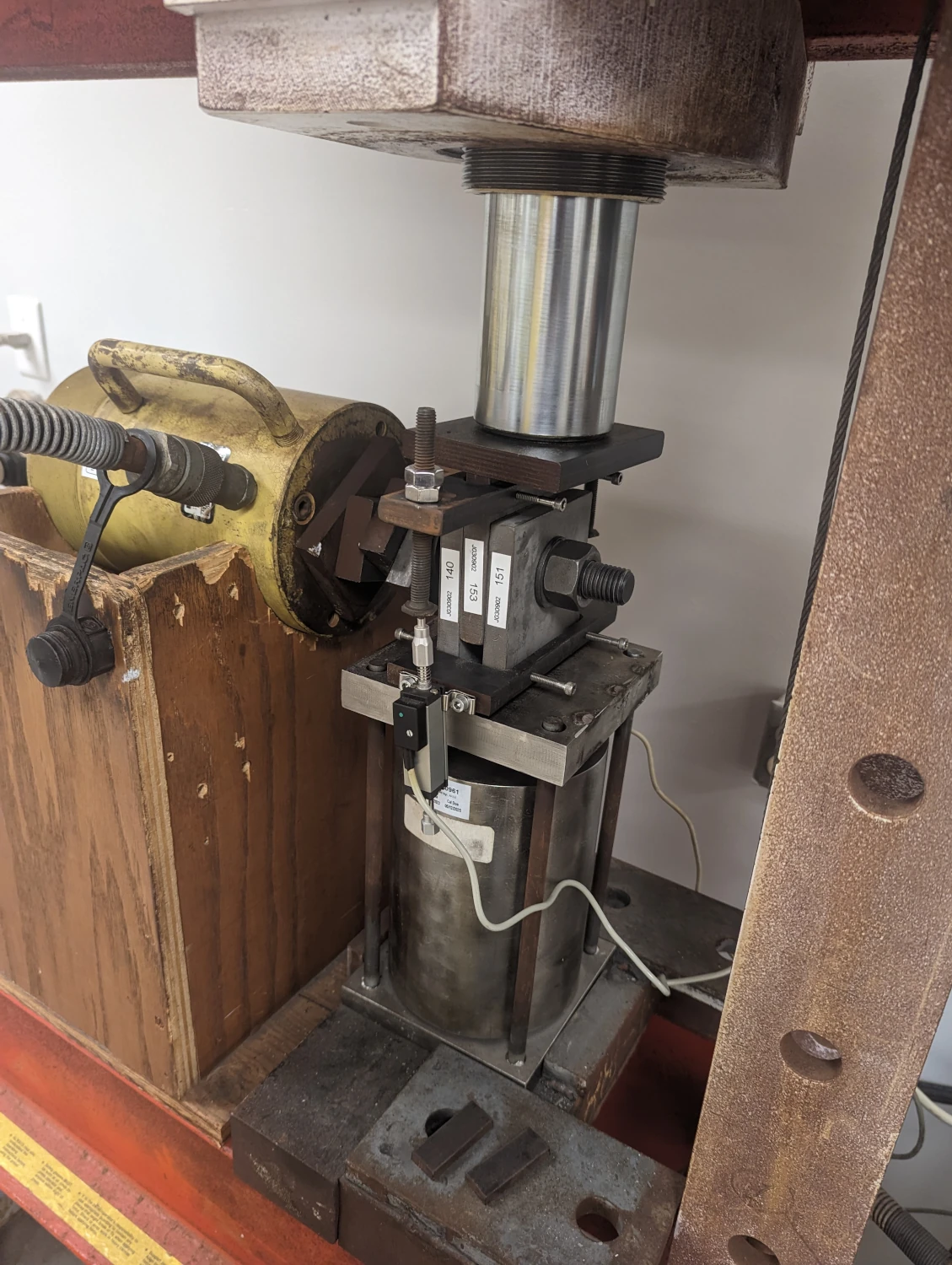
Specialized hydraulic equipment is used to determine slip coefficients and coating integrity, ensuring structural assemblies meet safety and engineering specifications.
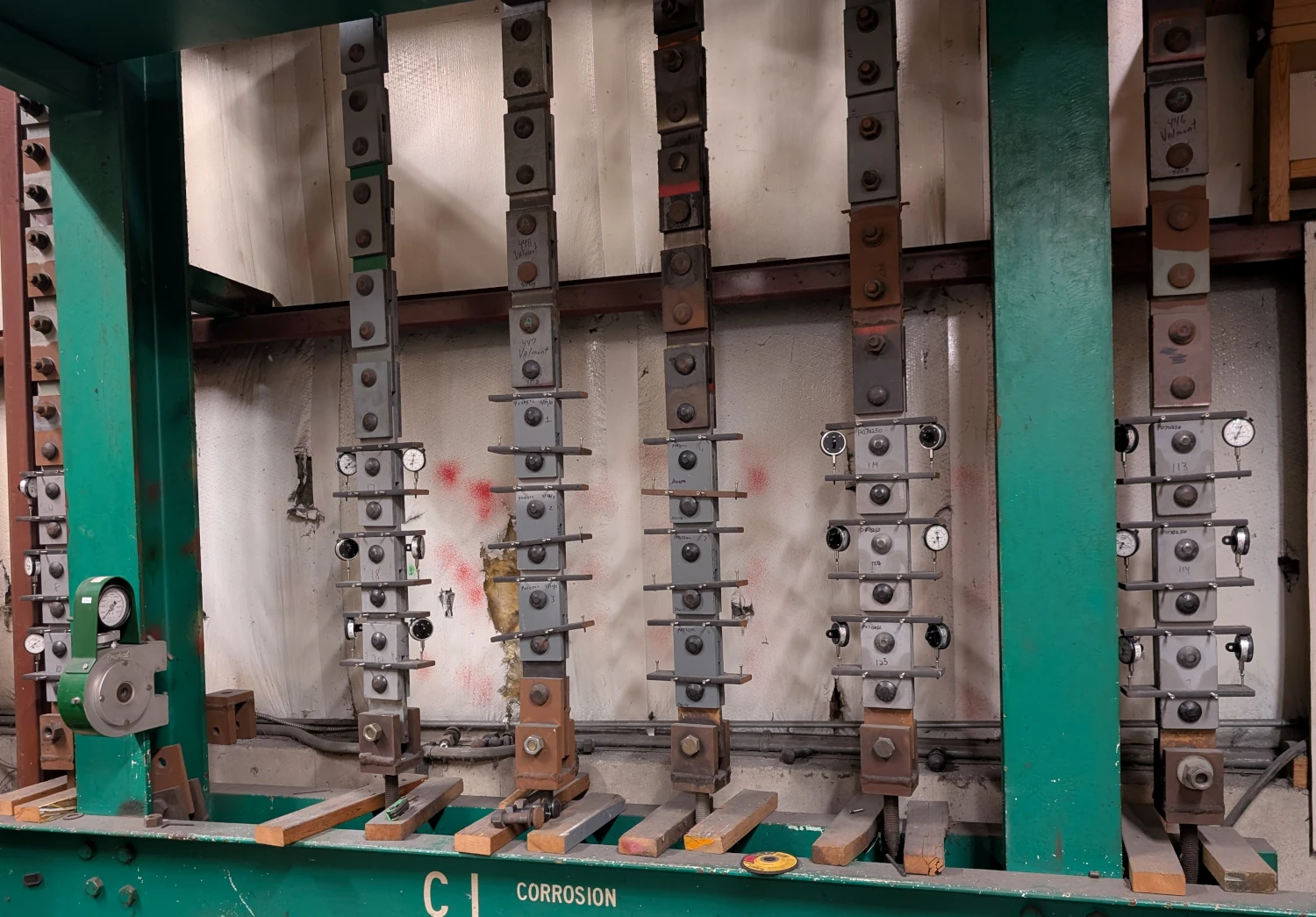
High-strength structural bolts are subjected to rigorous tension and corrosion-fatigue analysis in our ASTM F3125 testing frames.
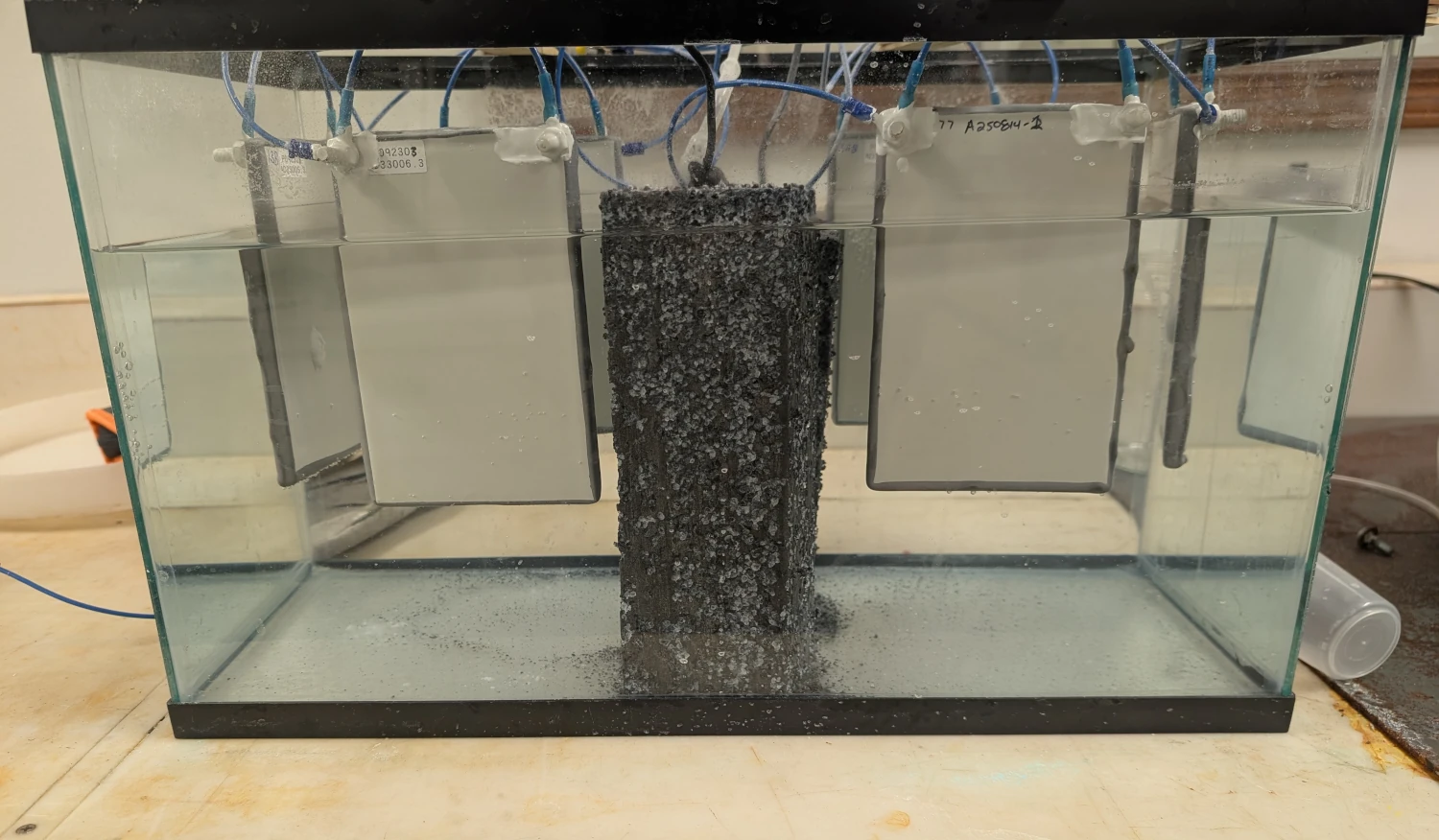
Our ASTM G95 testing services evaluate the resistance of pipeline coatings to cathodic disbondment under accelerated laboratory conditions.
Industries and Application Areas
Automotive
OEM qualification, supplier screening, cyclic corrosion, gravelometer work, coated panels, plated parts, trim, fasteners, underbody systems, and related assemblies across programs tied to GM, Ford, Stellantis, Volkswagen / Audi, BMW, Mercedes-Benz, Volvo, Toyota, Honda, Nissan, Hyundai, Kia, Tesla, and other internal OEM requirements.
Aerospace
Corrosion-sensitive finishes, metallic materials, environmental exposure, and specification-driven qualification work for severe service environments.
Coatings Manufacturers
Performance testing, weathering, adhesion, abrasion, product characterization, QC support, and comparative coating evaluation.
Plating & Finishing
Salt fog, CASS, AASS, humidity, corrosion evaluation, and screening of plated or conversion-coated systems.
Electronics
Connectors, terminals, assemblies, and pollutant-driven atmospheric corrosion testing using mixed flowing gas and related gas-corrosion methods.
Oil & Gas
Protective coatings, immersion testing, Atlas Cell and cathodic disbondment work, chemical resistance, and corrosion evaluation for pipelines, tanks, process equipment, and related infrastructure.
Infrastructure & Industrial
Protective coatings, structural slip coefficient support, immersion and weathering evaluation, durability qualification work, and prep-related testing tied to field exposure concerns.
Government & Defense
Programs requiring standards-driven environmental exposure, corrosion evaluation, and disciplined documentation practices.
Failure Investigation
Troubleshooting support, comparison studies, service-environment simulation, and investigation-driven testing where the right method must be selected carefully.
Start with the Right Test Program
Whether you need an accredited corrosion testing laboratory for a defined specification, broader materials and coatings testing, panel preparation, analytical support, or help determining which method best matches the actual service environment, Auto Technology can help structure the right program.
That includes work tied to ASTM, ISO, SAE, DIN, military, and OEM-specific requirements, as well as customer-defined internal validation programs where the exact standard or sequence must be confirmed before testing begins.
Send us the standard, product description, substrate, coating stack, target environment, failure concern, and any applicable OEM or customer-specific test requirement.
Frequently Asked Questions
What is the difference between salt spray and cyclic corrosion testing?
Salt spray is a continuous fog exposure. Cyclic corrosion testing introduces controlled wetting, drying, humidity, and environmental transitions that better reflect many real-world service conditions.
Do you support industry and OEM corrosion standards?
Yes. The lab supports widely used ASTM, ISO, SAE, DIN, OEM, military, and project-specific methods across corrosion, environmental exposure, coatings, and materials testing.
That includes programs tied to GM, Ford, Stellantis, Volkswagen / Audi, BMW, Mercedes-Benz, Volvo, Toyota, Honda, Nissan, Hyundai, Kia, Tesla, and other customer-specific internal requirements where the exact method or sequence must be confirmed.
Can you support coatings performance testing beyond corrosion exposure?
Yes. The laboratory also supports adhesion, abrasion, impact, hardness, gloss, color, scrubability, chemical resistance, physical property testing, Atlas Cell work, gravelometer evaluation, and related coatings performance testing.
Do you prepare test panels and apply coatings?
Yes. We support substrate preparation, blasting, custom panel fabrication, coatings application, and other sample-preparation steps needed to build representative test specimens.
What testing is best for electronics or connectors?
Mixed flowing gas testing is often appropriate where atmospheric pollutant corrosion is the concern. The right method still depends on the material system, target environment, and applicable specification.
Do you offer analytical or failure-analysis support?
Yes. The lab supports FTIR, gas chromatography, microscopy, heavy metals analysis, comparative investigation, and broader failure-analysis-driven laboratory work.
Can you support structural or severe-service testing needs?
Yes. In addition to conventional coatings and corrosion work, the lab supports slip coefficient evaluation, cathodic disbondment, Atlas Cell immersion, abrasive / cleanliness-related testing, and other specialty programs tied to demanding service environments.