
THE DEFINITIVE GUIDE TO ASTM B117

Why the two names? Because the practice calls for a spray of salt solution to create a fine fog. The spray is the mechanism; the fog is the atmosphere.
It is important to understand that ASTM B117 is not really a “test” at all. As the title states, it is a Standard Practice for Operating Salt Spray (Fog) Apparatus. Without the right chamber, built the right way, you cannot run B117.
The Backbone of Corrosion Exposure
The official scope of ASTM B117 explains:
“This practice provides a controlled corrosive environment which has been utilized to produce relative corrosion resistance information for specimens of metals and coated metals exposed in a given test chamber.”
In other words, B117 provides a common yardstick. It creates a continuous, aggressive fog so that coatings, platings, or materials can be compared under the same exposure conditions.
The practice is also clear about its limits.
“The results obtained from the practice are not intended to be taken as a direct guide to the corrosion resistance of the tested materials in all environments where these materials might be used.”
“This practice does not prescribe the type of test specimen, the exposure periods, or the interpretation of results.”
These three statements form the backbone of B117. The practice defines the environment. Other standards define the test duration and how corrosion damage is evaluated.
Salt Spray Apparatus Requirements
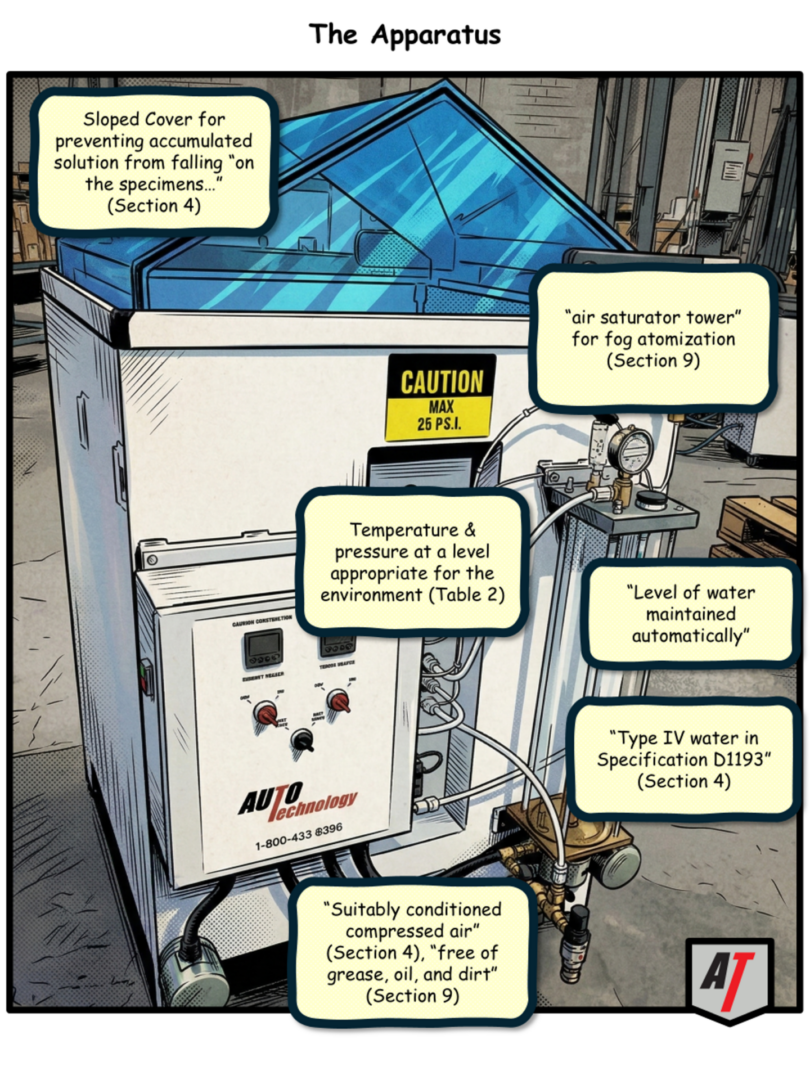
Annotated Auto Technology salt spray chamber highlighting key ASTM B117 apparatus requirements.
Running ASTM B117 correctly depends on the right chamber, built to the exact requirements of the practice. The standard does not simply say “create a fog.” It specifies how the apparatus must be constructed and operated.
The chamber must be constructed of inert materials that do not influence corrosion results, and the cabinet ceiling must be sloped so condensate cannot drip onto specimens.
Auto Technology chambers are built this way, with corrosion-resistant interiors and sloped lids designed specifically to prevent drip contamination.
The Exposure Zone
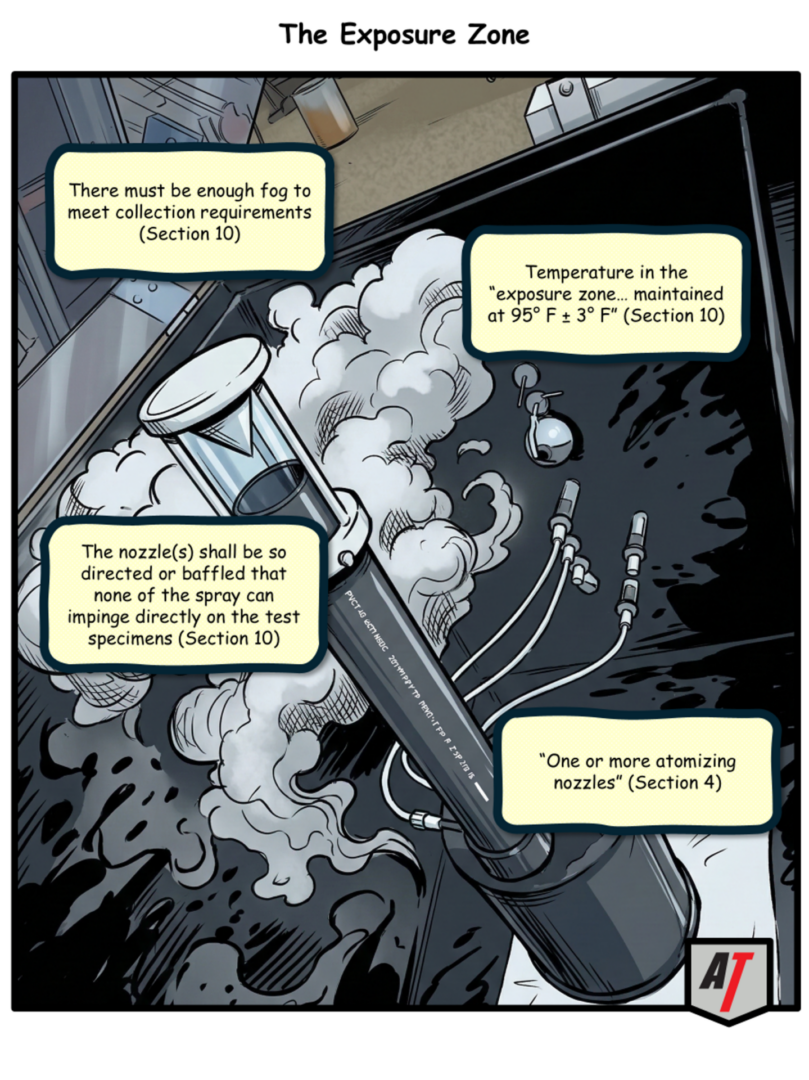
Illustration of the ASTM B117 exposure zone showing fog generation and temperature control.
ASTM B117 requires the exposure zone to be maintained at:
- 35 ± 2 °C (95 ± 3 °F)
The practice’s appendix notes that temperature stability can be achieved by surrounding the chamber with a water jacket. This design provides uniform heating across the exposure zone.
Auto Technology chambers use the same water-jacket approach described in the practice because it delivers stable conditions even during extremely long corrosion exposures.
Fog Collection Verification
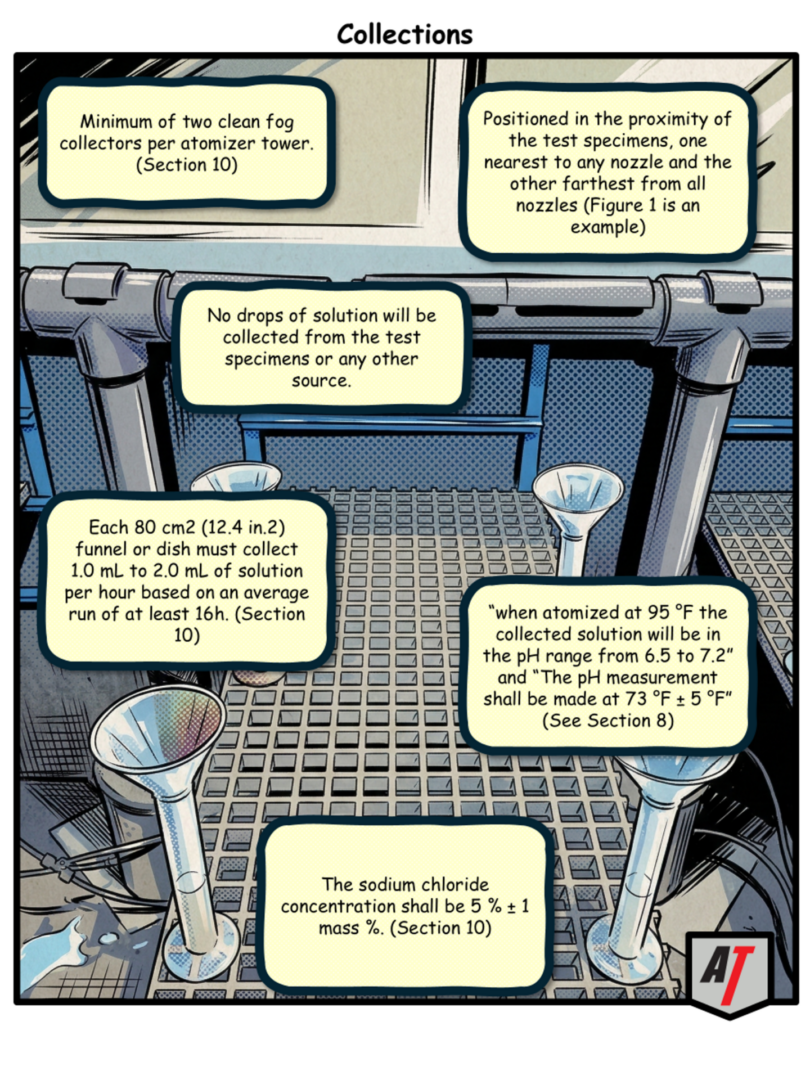
Fog collection funnels used to verify spray rate, pH, and salt concentration.
B117 verifies chamber performance using collection funnels placed near the specimens. These collectors confirm that the fog environment remains within the required parameters.
- Collection rate: 1–2 mL per hour
- pH range: 6.5 – 7.2
- Solution concentration: approximately 5% NaCl
These measurements confirm that the chamber is producing the correct corrosion environment.
Specimen Preparation and Placement
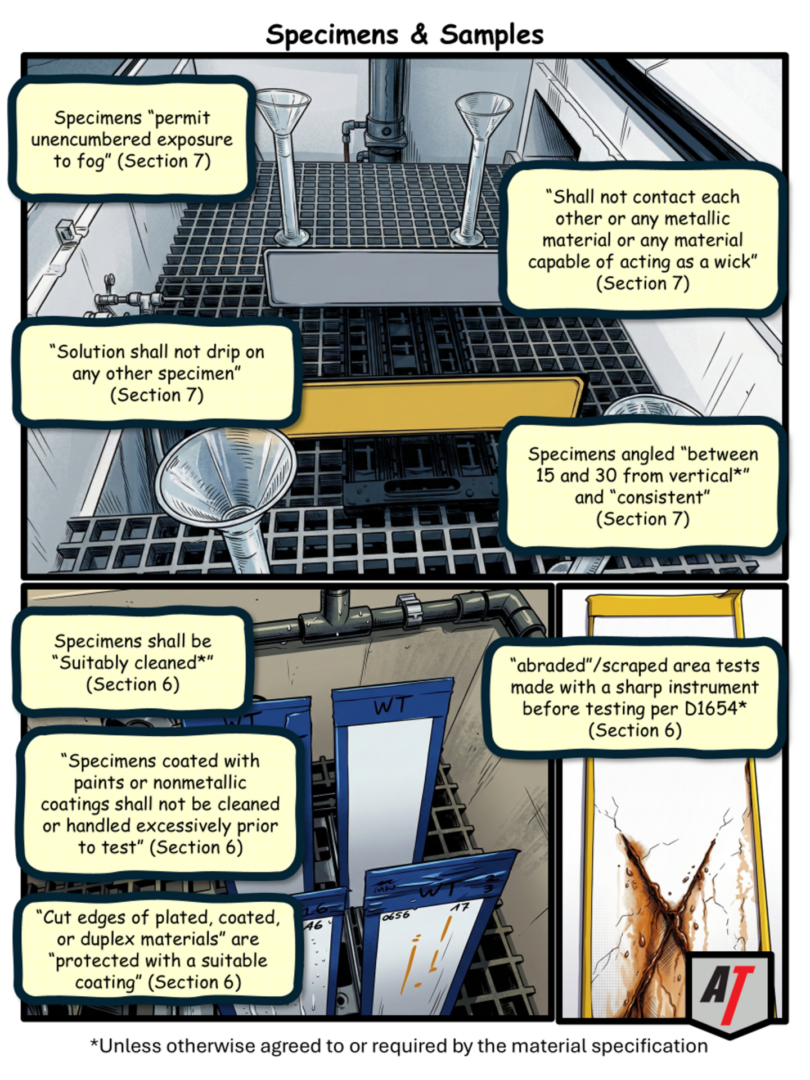
Specimens must be cleaned, mounted properly, and angled within the chamber.
- Clean specimens according to applicable coating standards
- Mount specimens between 15° and 30° from vertical
- Ensure specimens do not contact each other
- Prevent drip contamination from other panels
Specimen preparation and evaluation are not defined by B117 itself. Those details are established by the governing coating or product standards.
The Salt Solution
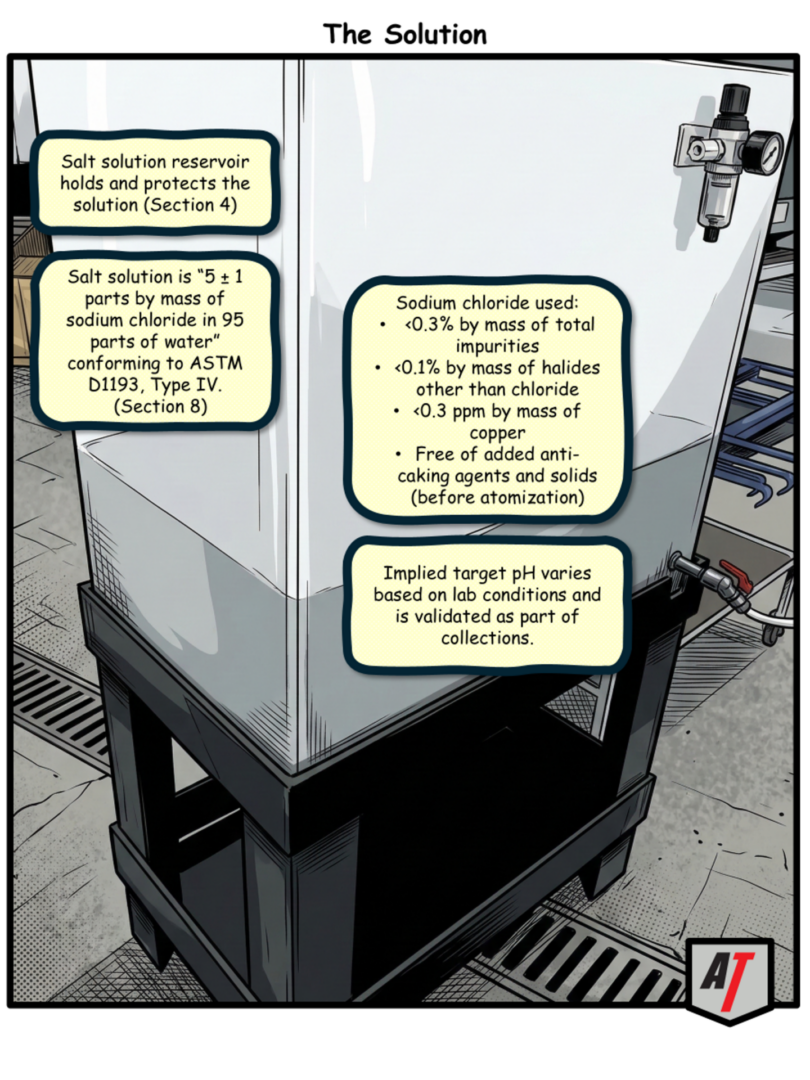
The B117 salt solution uses 5% sodium chloride mixed with high-purity water.
ASTM B117 defines the exposure solution as a mixture of sodium chloride and purified water.
- 5 ±1 % sodium chloride
- pH between 6.5 and 7.2
- Prepared using ASTM D1193 Type IV water
Maintaining the correct solution chemistry is essential for producing consistent corrosion exposure.
Operating an ASTM B117 Chamber
- Prepare specimens and clean surfaces.
- Mount specimens between 15° and 30°.
- Start fog generation using humidified compressed air.
- Maintain chamber temperature at 35°C.
- Verify fallout rate and pH daily.
- Continue exposure for the duration defined by the governing specification.
A chamber running B117 has a rhythm of its own. The bubble tower gurgles, the nozzle whispers, and a fine mist drifts across the panels — the same sound corrosion laboratories have relied on for more than 80 years.
Need to Run ASTM B117?
If you need to operate a B117 salt spray exposure environment, the first requirement is a chamber built to the practice.
- Corrosion resistant chamber construction
- Sloped lids preventing specimen contamination
- Precision atomizing spray nozzles
- Bubble tower humidification
- Water-jacket temperature control
Need Corrosion Exposure But Don’t Want to Buy a Chamber?
Auto Technology operates a corrosion test laboratory capable of performing ASTM B117 exposures for product qualification and research programs.
- Product qualification exposures
- Research corrosion programs
- Long duration corrosion exposure
- Independent third-party verification
Frequently Asked Questions
Where do I buy an ASTM B117 chamber?
Auto Technology manufactures Salt Fog & Humidity Chambers designed specifically for ASTM B117 corrosion environments.
Where do I get salt solution?
Auto Technology supplies high purity sodium chloride and premixed corrosion solutions suitable for B117 environments.
Can ATC run B117 exposures for me?
Yes. Our corrosion test laboratory performs ASTM B117 exposures for product qualification and research.