
CONTINUOUS IMMERSION CHAMBERS

Auto Technology Continuous Immersion Chambers are designed for laboratories that need temperature-controlled, continuous liquid immersion exposure for coatings, materials, corrosion coupons, and customer-specific immersion testing programs. The chamber design uses an immersion heater, RTD temperature feedback, DI water fill, air-sparged agitation, and built-in level protection to support repeatable immersion testing without spray, fog, or cyclic dry-down.
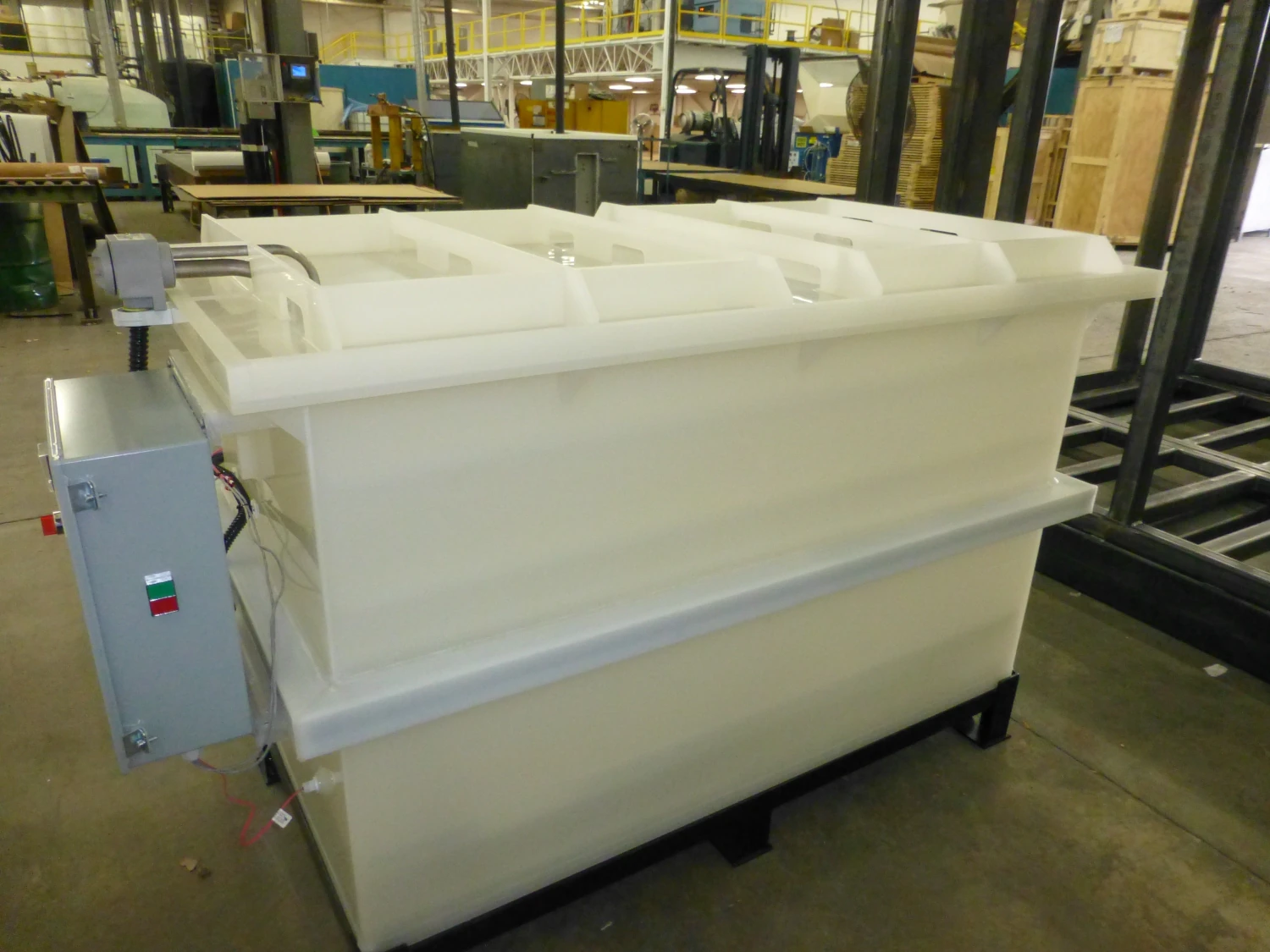
Complete Auto Technology D.I. Water Immersion Chamber ready for installation and utility connection.
Continuous Immersion Exposure
Designed for tests where specimens remain submerged in a controlled liquid environment for the duration of the program.
Temperature Control with Air Agitation
Uses an immersion heater, RTD feedback, and air sparging to maintain stable solution conditions during testing.
Built to Order
Chamber sizing depends on customer requirements including part size, liquid volume, and test program needs.
Tell us your immersion standard, target temperature, part size, and utility availability so the chamber can be configured correctly.
Continuous Immersion Testing
Auto Technology Continuous Immersion Chambers are designed for steady-state immersion testing in which the specimen remains continuously submerged in a controlled liquid environment. This chamber style is suited for coatings, materials, corrosion coupon, and customer-specific immersion testing programs that require stable temperature and consistent liquid contact.
The chamber uses an immersion heater to heat the tank solution from ambient to the quoted temperature, an RTD temperature probe to report actual tank temperature to the controller, and an air agitation sparger below the floor grate to provide solution agitation.
This chamber is intended for continuous immersion exposure rather than alternating wet and dry. If your application requires repeated fill-and-drain cycling, see our Cyclic Immersion Chambers .
Key Features
The chamber design centers on a heated immersion tank, RTD-based temperature feedback, air agitation, automatic DI water fill, and built-in level protection.
Chamber Design
Air Agitation Sparger
The air agitation sparger is located below the floor grate and provides agitation to the solution in the immersion tank. Air pressure is adjusted at the front-mounted regulator and read on the gauge.
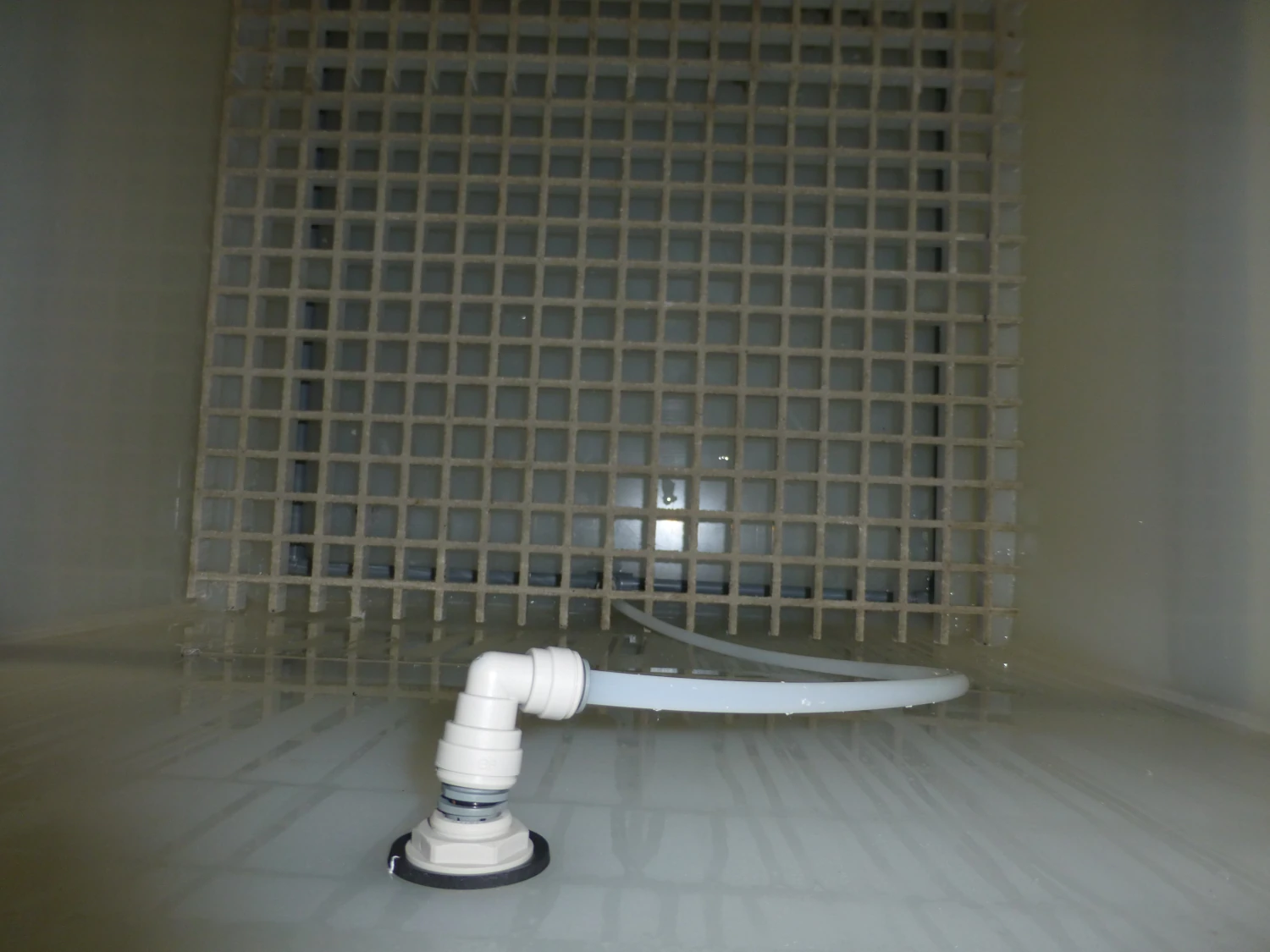
Internal air sparger assembly designed to provide consistent agitation to the test solution.
RTD Temperature Probe
The RTD temperature probe reads the current temperature in the immersion tank and reports that value to the controller. The controller compares the actual temperature to the set point and activates the heater as needed.
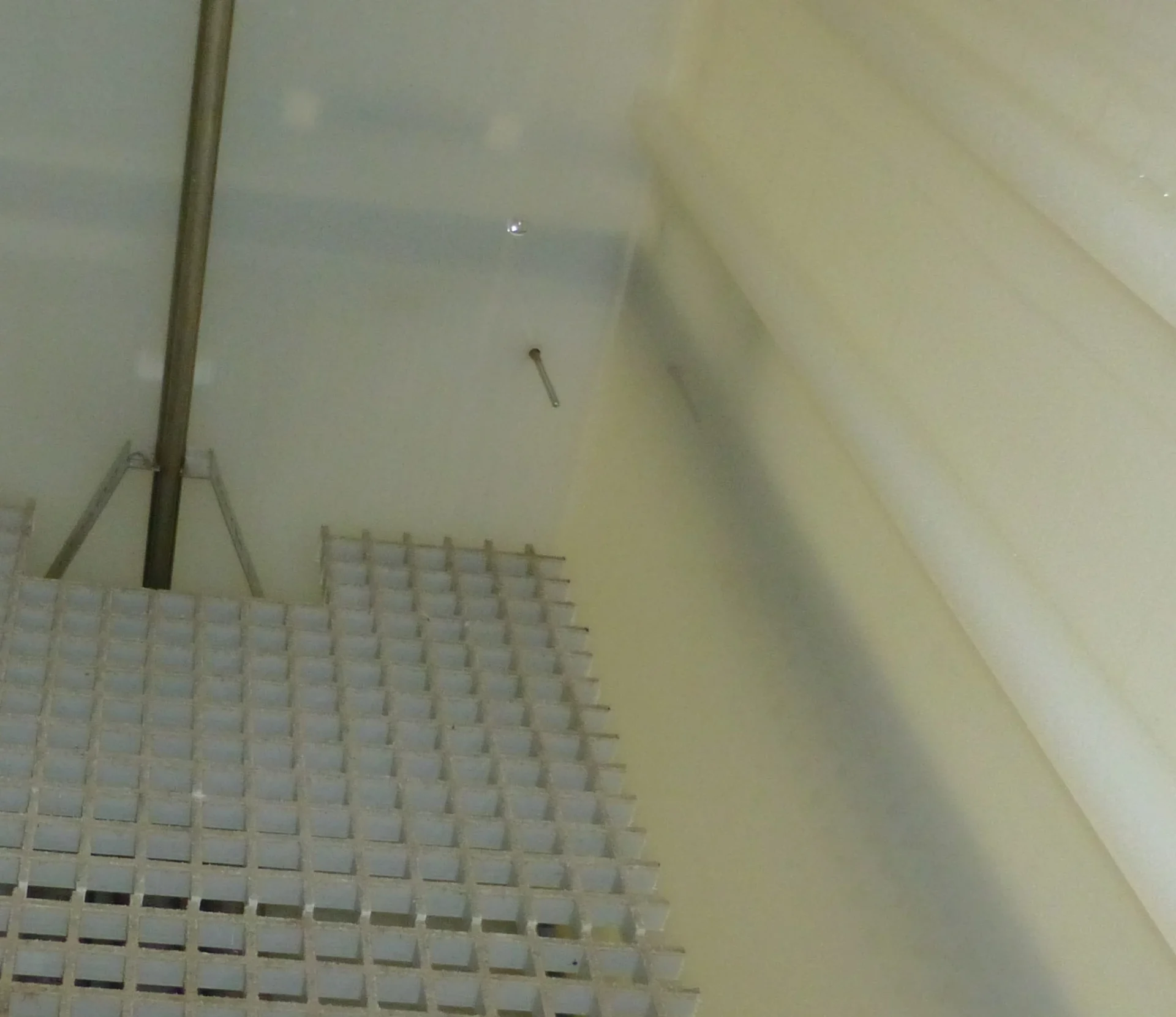
The RTD temperature probe visible inside the tank along with the heater plumbing.
Electrical Control Panel
The electrical control panel is mounted on the front upper right side wall of the immersion tank and controls the immersion tank’s electrical functions including the float switches, solenoids, heater, temperature, and electrical safeties.
The panel includes the digital temperature controller, Tank Heat ON-OFF switch, and Start/Stop controls.
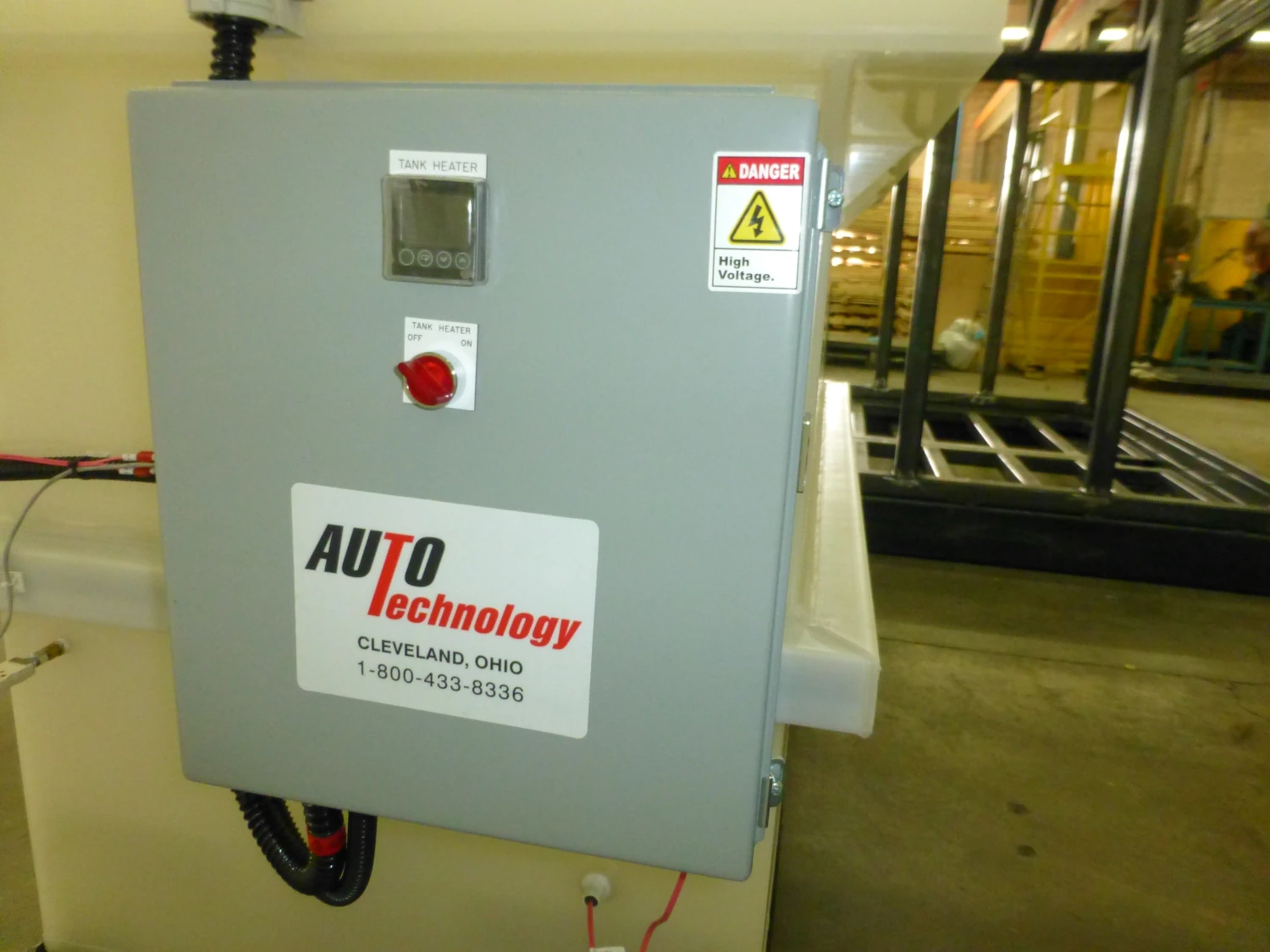
Main control interface featuring the digital temperature controller and heater safety switches.
Drain Connection
The chamber uses a 2 inch diameter drain connection located at the front right bottom of the immersion tank. The drain remains closed during testing and can be opened to remove used solution or water from the tank after the test is complete.
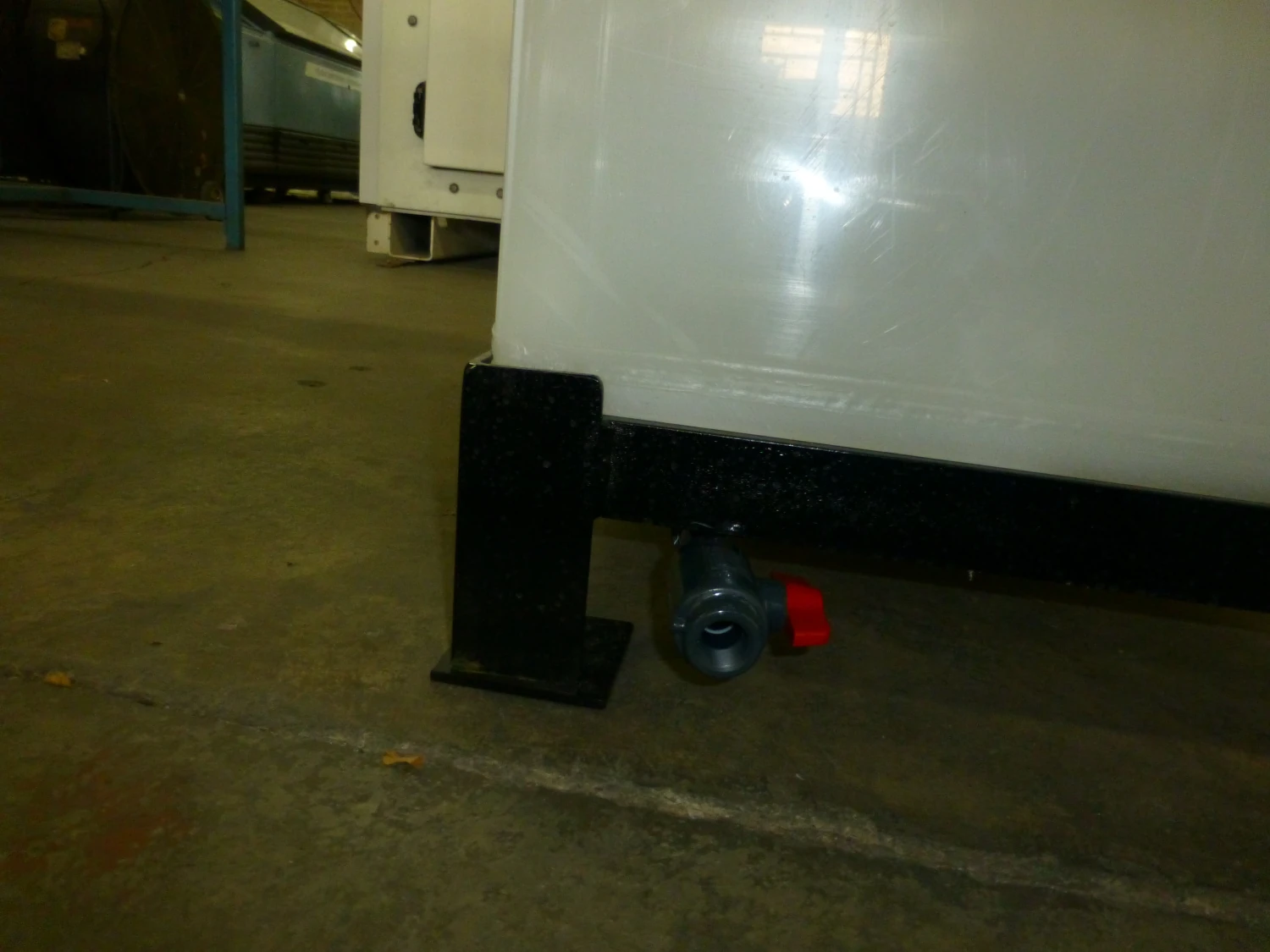
The 2 inch diameter gravity-feed drain connection used for removing solution after testing.
Full Key Features List
- Continuous immersion tank for uninterrupted liquid exposure
- Immersion heater to heat the tank solution from ambient to the quoted temperature
- RTD temperature probe to read current solution temperature and report it to the controller
- Digital temperature controller for tank temperature control
- Air agitation sparger located below the floor grate to agitate the solution
- Front-mounted air regulator and gauge for adjustment of the agitation air supply
- DI water solenoid to allow DI water to fill the immersion tank
- Full-level float switch to signal when the tank is full
- Low-level float switch to prevent heater operation without solution covering it
- Overflow drain to prevent solution from rising above the desired level
- Front-mounted electrical control panel with temperature controller, tank heat on-off, and start-stop switch
- Two exposure chamber covers with lift handles
Feature / Benefit Summary
| Feature | Benefit |
|---|---|
| Continuous Immersion Tank | Keeps specimens submerged for the duration of the test |
| Immersion Heater | Heats the tank solution from ambient to the quoted temperature |
| RTD Temperature Probe | Reports actual solution temperature to the controller |
| Digital Temperature Controller | Allows the operator to set and control tank temperature |
| Air Agitation Sparger | Provides agitation to the solution in the immersion tank |
| DI Water Solenoid | Allows the immersion tank to be filled with DI water |
| Full and Low Level Float Switches | Confirm fill status and protect the heater from low-solution operation |
| Overflow Drain | Prevents liquid from rising above the desired level |
| Electrical Control Panel | Provides control of tank heat, start-stop, and temperature settings |
Applicable Standards
This chamber is intended for continuous immersion testing and related immersion-based procedures. Applicable standards discussed for this chamber include:
- Ford BI 104-01
- GMW14704 (Procedure A)
- Chrysler LP-463PB-10-01 (Method C)
- ISO 2812-2
- ASTM D1308 — Total Immersion
- ASTM G31
- ASTM G48 — Method A
- ISO 1817
- ISO 175
- ASTM D471
- NACE TM0169
Important: final chamber suitability should be confirmed against the exact customer procedure, liquid, temperature, and loading requirements.
Solution Compatibility Notice: Use of solutions other than DI water or standard aqueous test solutions must be reviewed with Auto Technology prior to purchase. Chemical compatibility can affect tank materials, seals, plumbing components, and overall system performance. Failure to specify the correct solution may result in improper operation or equipment damage.
Sizing
Continuous Immersion Chambers are built to order. If a specific size is not defined in the quoted design, chamber sizing depends on the customer’s requirements.
Sizing depends on customer requirements. Final tank dimensions, immersion depth, and working layout are determined by the test program and the parts being tested.
Installation & Facility Requirements
What Is Required for Chamber Installation
- Qualified electrician for electrical connection
- Plumber for drain, air, and water connections
- Level floor
- Floor drain
- Pressurized 172–551 kPa (25–80 psi) ASTM D1193 reagent grade type IV water
- Clean dry compressed air regulated to 207–345 kPa (30–50 psi)
- Customer-specified electric power from a lockable disconnect with appropriate electric cord and conduit for the chamber location
- 2 in. plastic (PVC) plumbing fittings for chamber drain to connect the chamber to the floor drain
- 3/8 in. O.D. poly tubing from the compressed air line source to the air agitation regulator
- 3/8 in. O.D. poly tubing from the pressurized DI line to the DI water solenoid
Drain Connection
- The chamber uses a 2 in. diameter drain connection located at the front right bottom of the immersion tank
- The drain line must gravity feed to the floor drain
- Do not directly connect into the floor drain
- Allow the chamber drain line to lay over the floor drain
Compressed Air Connection
- One air line connection is provided for the immersion tank
- The tank requires dry, oil-free compressed air
- Incoming compressed air should be regulated to 207–345 kPa (30–50 psi) at the incoming airline to the cabinet
- The customer must run 3/8 in. O.D. poly tubing from the customer-supplied compressed air source to the push-to-fit fitting on the regulator/filter
- If compressed air is not clean, the customer must install an oil/water extractor in the air line prior to connection
Water Supply Requirements
- One water connection is provided for the immersion tank
- The DI water connection accepts 3/8 in. outside diameter poly tubing
- DI / distilled water is used in the immersion tank
- The type of water used is usually specified by the test
Electrical Connection
- The chamber is wired for use with the customer-specified electrical supply
- Only a qualified electrician should connect wire to the chamber
- Power is brought to the chamber from a customer-supplied lockable fused disconnect
- A separate fused safety switch in full view of the operator is strongly recommended
- Stable voltage is necessary
- Do not attempt to test electrical circuits until the immersion chamber is filled with water
Access and Room Conditions
- The instrument must be accurately leveled
- Maintain at least 3 feet of open area in front of the instrument for access and maintenance
- The chamber should be installed in a climate-controlled room
- Recommended ambient temperature range is 20 to 25 °C (68 to 77 °F)
- The room should be properly ventilated with minimal drafts, air pollution, or dust
- Do not install the instrument in a corrosive or toxic environment
Improper installation will affect operation and compromise test integrity. The manual strongly discourages installation in a warehouse, boiler room, garage, factory floor, paint room, powder mixing room, or other areas with frequent dust, outside-door exposure, or widely varying humidity, air pressure, or temperature.
Photo Gallery
Complete Auto Technology D.I. Water Immersion Chamber ready for installation and utility connection.
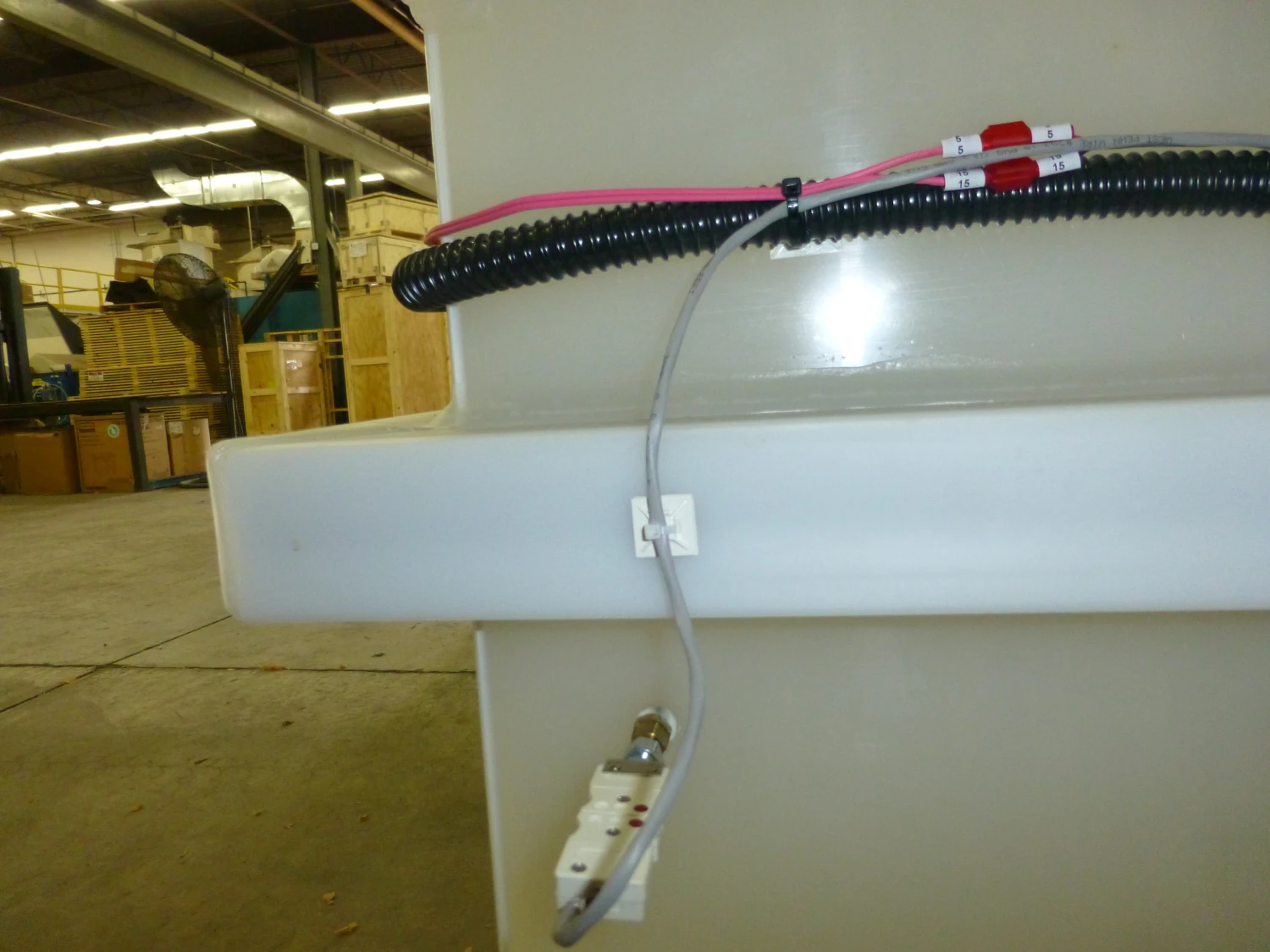
The RTD temperature probe mounted on the exterior side wall of the immersion tank.
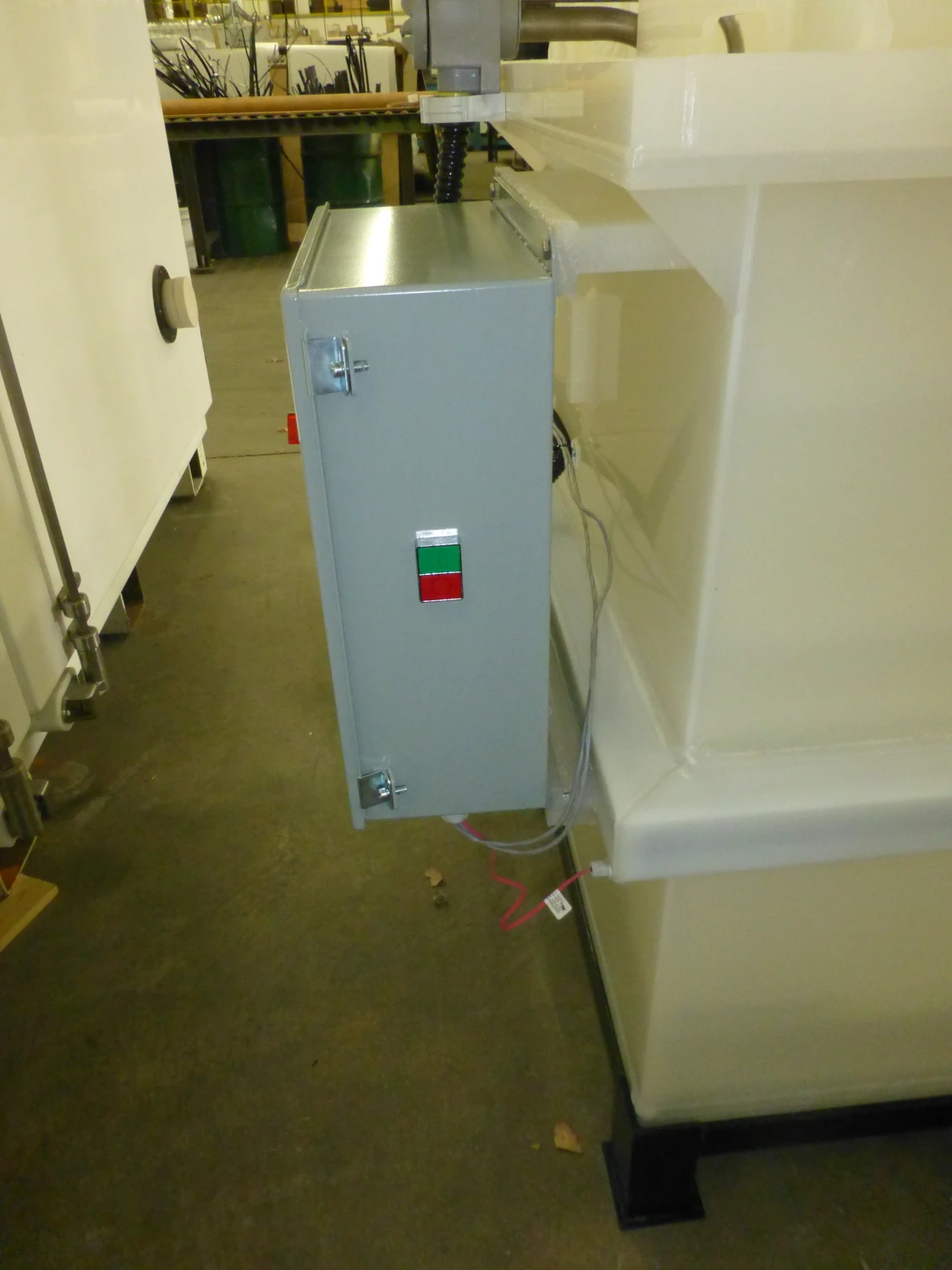
Side view of the electrical panel highlighting the primary Start/Stop interface.
FAQ
Is this a cyclic chamber?
No. This is a continuous immersion chamber intended for steady-state immersion rather than cyclic spray, fog, or wet/dry testing.
How is the solution mixed?
The chamber uses an air agitation sparger located below the floor grate to provide agitation to the solution in the immersion tank.
How is tank temperature controlled?
An RTD temperature probe reports tank temperature to the controller, which then activates the immersion heater as needed.
What happens if the liquid level gets too low?
The chamber includes a low-level float switch that prevents the heater from operating without solution covering it.
What water does the chamber use?
The manual specifies DI / distilled water for the immersion tank, and the type of water used is usually specified by the test.
Are standard chamber sizes available?
These chambers are built to order, so sizing depends on customer requirements unless a specific design has already been defined.
What standards can this chamber support?
Standards discussed for this chamber include Ford BI 104-01, GMW14704 Procedure A, Chrysler LP-463PB-10-01 Method C, ISO 2812-2, ASTM D1308 Total Immersion, ASTM G31, ASTM G48 Method A, ISO 1817, ISO 175, ASTM D471, and NACE TM0169.