
WALK-IN & DRIVE-IN CORROSION CHAMBERS

Custom Walk-In Corrosion Chambers Built Around Your Specification
Auto Technology designs and manufactures custom walk-in and drive-in corrosion chambers for salt fog and spray,
cyclic corrosion, humidity exposure, mixed flowing gas testing, sub-zero cycles, full vehicle testing,
military qualification, aerospace durability programs, battery validation, and large-scale environmental exposure applications.
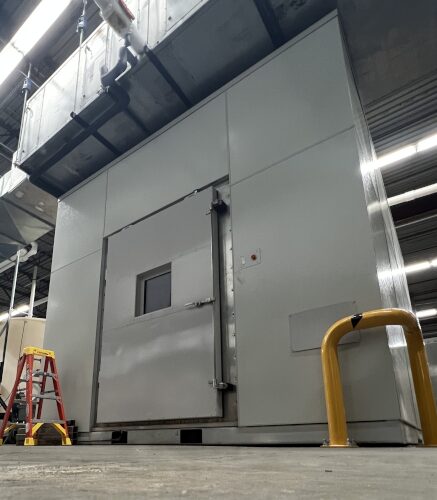
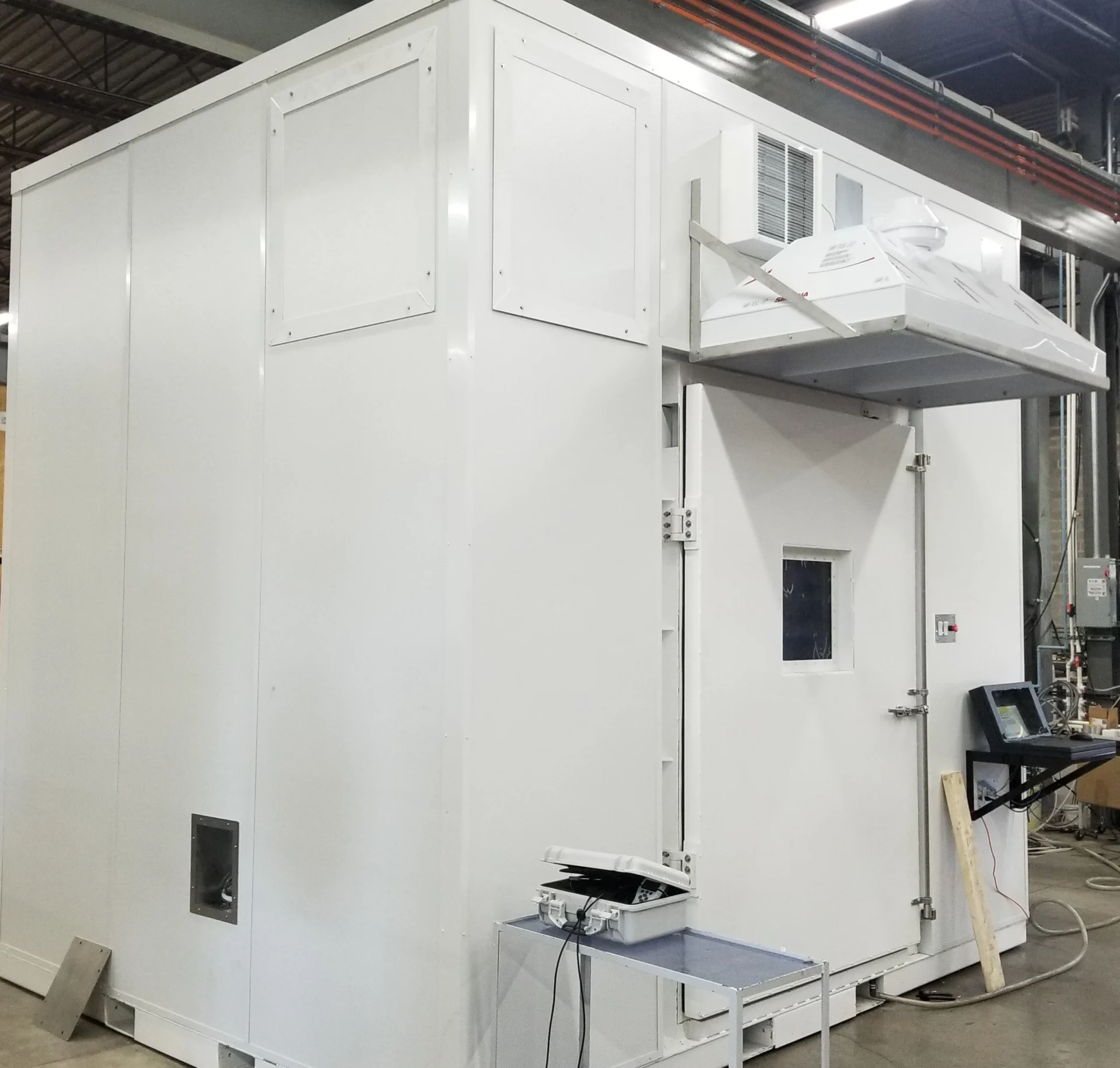
Built Around the Test Sample
Every chamber is engineered around the specimen, environmental conditions, loading requirements, and facility constraints.
Any Size. Any Specification.
From large assemblies and battery systems to full vehicles and complete electronic systems, the chamber is designed around the application.
Manufacturer & Testing Laboratory
Auto Technology designs chambers and operates environmental testing laboratories every day, providing real-world operational experience.
Tell us what you need to test, the applicable specification, specimen size, utilities, and facility limitations.
When Standard Chambers Are No Longer Large Enough
For decades, Auto Technology has designed and manufactured custom walk-in corrosion chambers for customers whose requirements extend beyond the limits of standard environmental equipment. From automotive OEM corrosion programs and military qualification testing to mixed flowing gas exposure, humidity cycling, sub-zero environments, and full-scale drive-in applications, our chambers are engineered around the test method, specimen size, facility constraints, and performance requirements of each project.
Built for Real-World Testing Challenges
Applications Include
- Automotive OEM corrosion testing
- SAE J2334 cyclic corrosion testing
- ASTM B117 salt fog testing
- ISO 9227
- ASTM G85 testing
- GMW14872 cyclic corrosion testing
- CETP L-467
- VCS 1027149
- JASO M609
- Military qualification testing
- Aerospace durability programs
- Battery and EV component validation
- Large structural assemblies
- Mixed flowing gas testing
- Humidity and condensation exposure
- CS.00056
- Thermal cycling
- Sub-zero environmental conditioning
- Functional testing during exposure
- Production validation testing
- Research and development programs
Why Walk-In Chambers Require Different Engineering
As chamber volume increases, maintaining temperature uniformity, humidity stability, fog distribution, condensation control, and serviceability becomes significantly more challenging.
Large chambers contain more thermal mass, greater air volume, larger wall surfaces, more potential for cold spots, more opportunities for condensation, greater temperature variation, and increased maintenance demands.
More Thermal Mass
Large specimens, chamber walls, floors, doors, and support structures affect recovery time and environmental stability.
Greater Air Volume
Fog, spray, humidity, and conditioned air must be delivered consistently throughout a much larger exposure area.
Larger Wall Surfaces
More surface area means more opportunity for temperature variation, condensation, and cold spots.
Condensation Control
Improperly managed condensation can create localized exposure conditions and reduce repeatability.
Environmental Variation
Temperature, humidity, fog distribution, and fallout rates must be evaluated across the usable exposure zone.
Maintenance Access
Large chambers require serviceable designs that account for long-term operation in corrosive environments.
The Auto Technology Double-Wall Air Jacket Design
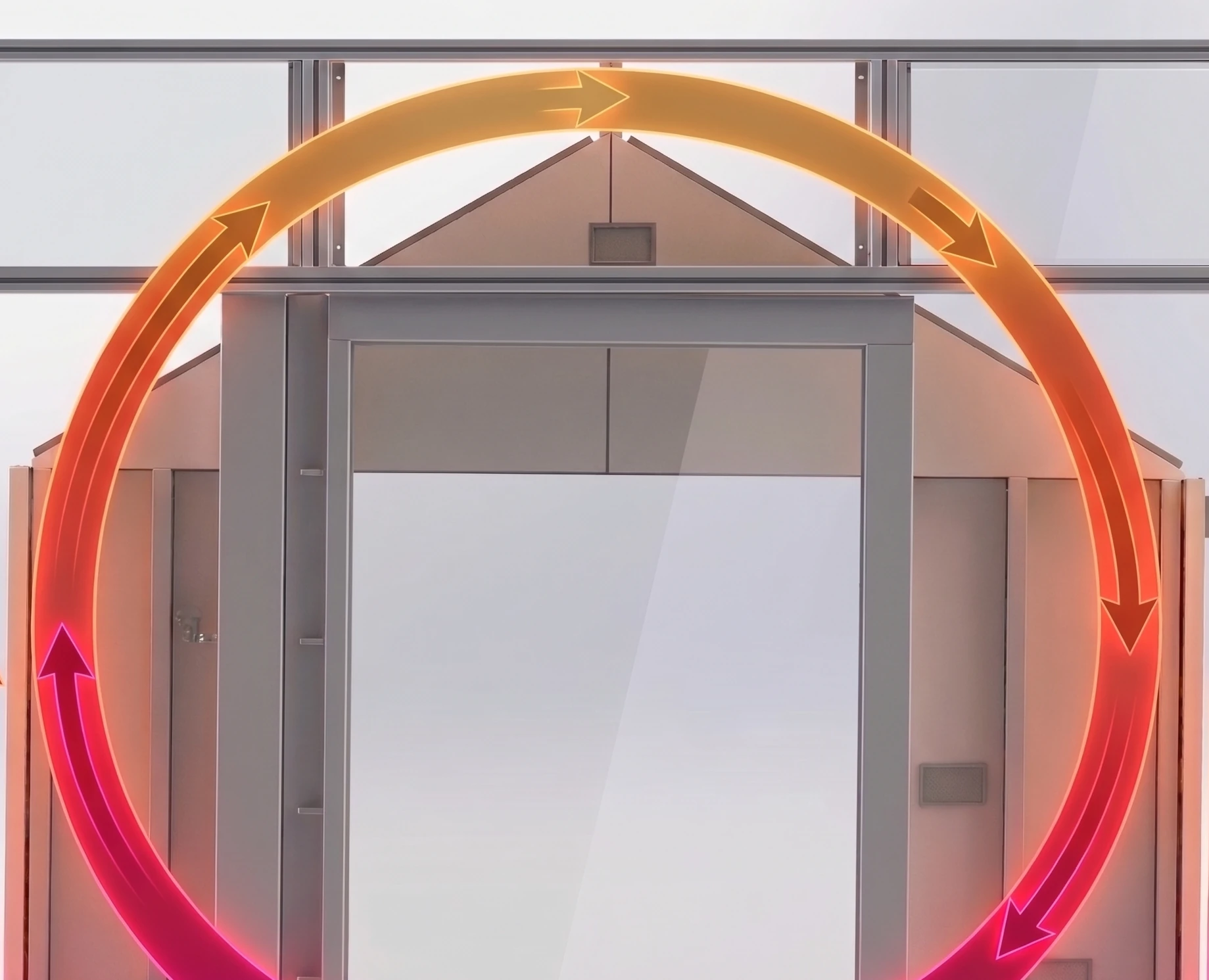
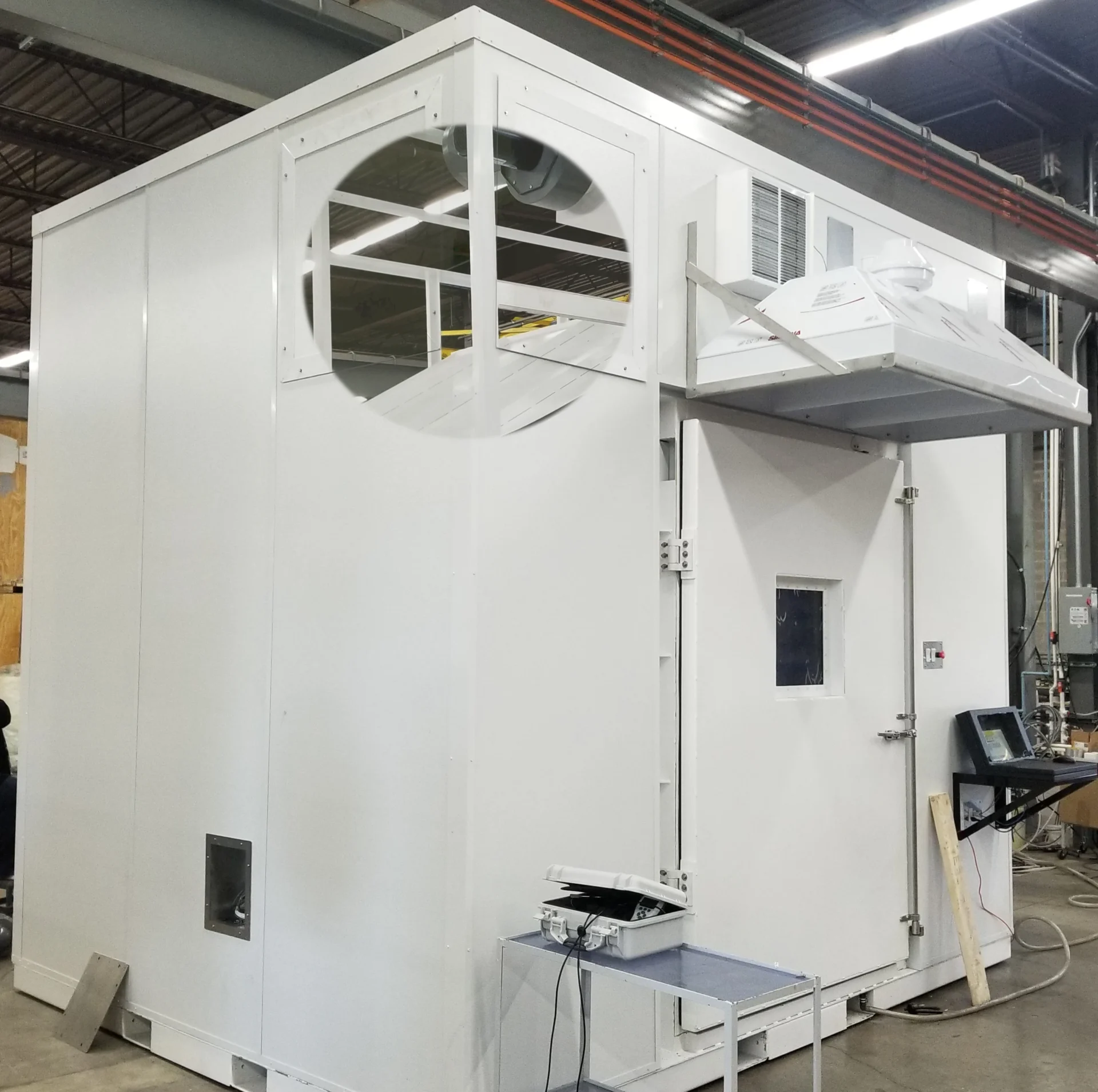
One of the most important design differences in an Auto Technology walk-in corrosion chamber is the use of a conditioned air jacket surrounding the primary exposure chamber. Rather than attaching localized electric heating mats directly to individual wall panels, conditioned air is circulated through a dedicated cavity located between the inner chamber and outer shell. This creates a true double-wall environmental enclosure.
The circulating air continuously conditions the chamber structure itself, allowing the walls, ceiling, and surrounding enclosure to participate in temperature control rather than relying on isolated heating locations. The result is a more stable, more uniform, and more serviceable chamber design that is particularly beneficial for large corrosion testing applications.
More Uniform Temperature Distribution
Localized heating mats introduce heat only where the heating element is installed. This creates areas of concentrated heating separated by cooler sections of wall structure. As chamber size increases, these temperature differences become increasingly difficult to control.
The conditioned air jacket distributes thermal energy around the entire chamber enclosure, helping maintain more uniform wall temperatures throughout the structure. This promotes improved environmental consistency across the exposure zone and reduces localized temperature gradients that can influence test results.
Reduced Condensation Problems
Corrosion chambers frequently operate at elevated humidity levels and often approach saturated conditions. Under these conditions, colder surfaces become condensation points. Localized heating systems can create uneven wall temperatures that encourage moisture accumulation in specific areas.
The air jacket design helps maintain more consistent wall temperatures, reducing cold spots and minimizing unintended condensation behavior that can interfere with repeatability.
Improved Recovery Performance
Large walk-in chambers contain substantial thermal mass and air volume. Following door openings, specimen loading, maintenance activities, or cyclic phase transitions, the chamber must recover quickly and consistently. The conditioned air jacket effectively turns the chamber enclosure into a thermal reservoir.
Rather than relying on isolated heating elements, the entire chamber structure contributes to maintaining environmental stability and improving recovery performance.
Superior Long-Term Serviceability
Corrosion chambers operate in some of the harshest laboratory environments imaginable. Salt, humidity, acidic environments, and thermal cycling place significant stress on mechanical and electrical components. Auto Technology's jacketed architecture allows heaters, circulation components, sensors, and serviceable systems to remain outside the direct exposure environment whenever possible.
This improves accessibility, simplifies maintenance, and reduces long-term ownership costs.
Designed for Decades of Operation
The objective is to build a chamber that remains maintainable, reliable, and repeatable for years of continuous operation. That philosophy influences every aspect of the design process, from material selection and environmental controls to airflow management and service access.
Materials
Salt, humidity, corrosive gases, elevated temperatures, and continuous cycling place significant demands on chamber materials and construction methods.
Auto Technology can utilize a variety of construction materials depending on the application, including:
- Stainless steel
- Coated carbon steel
- Fiberglass reinforced composites
- Polyurea-lined systems
- Corrosion-resistant piping materials
- Heavy-duty structural framing
- Industrial insulated wall systems
- Application-specific materials
Material selection is driven by the environmental conditions, chamber size, operating temperature range, expected service life, and customer requirements. Auto Technology engineers every walk-in chamber around the test requirement, allowing the chamber architecture, environmental systems, controls, and support equipment to be configured specifically for the application.
Direct Spray, Wetting, and Specialty Exposure Systems
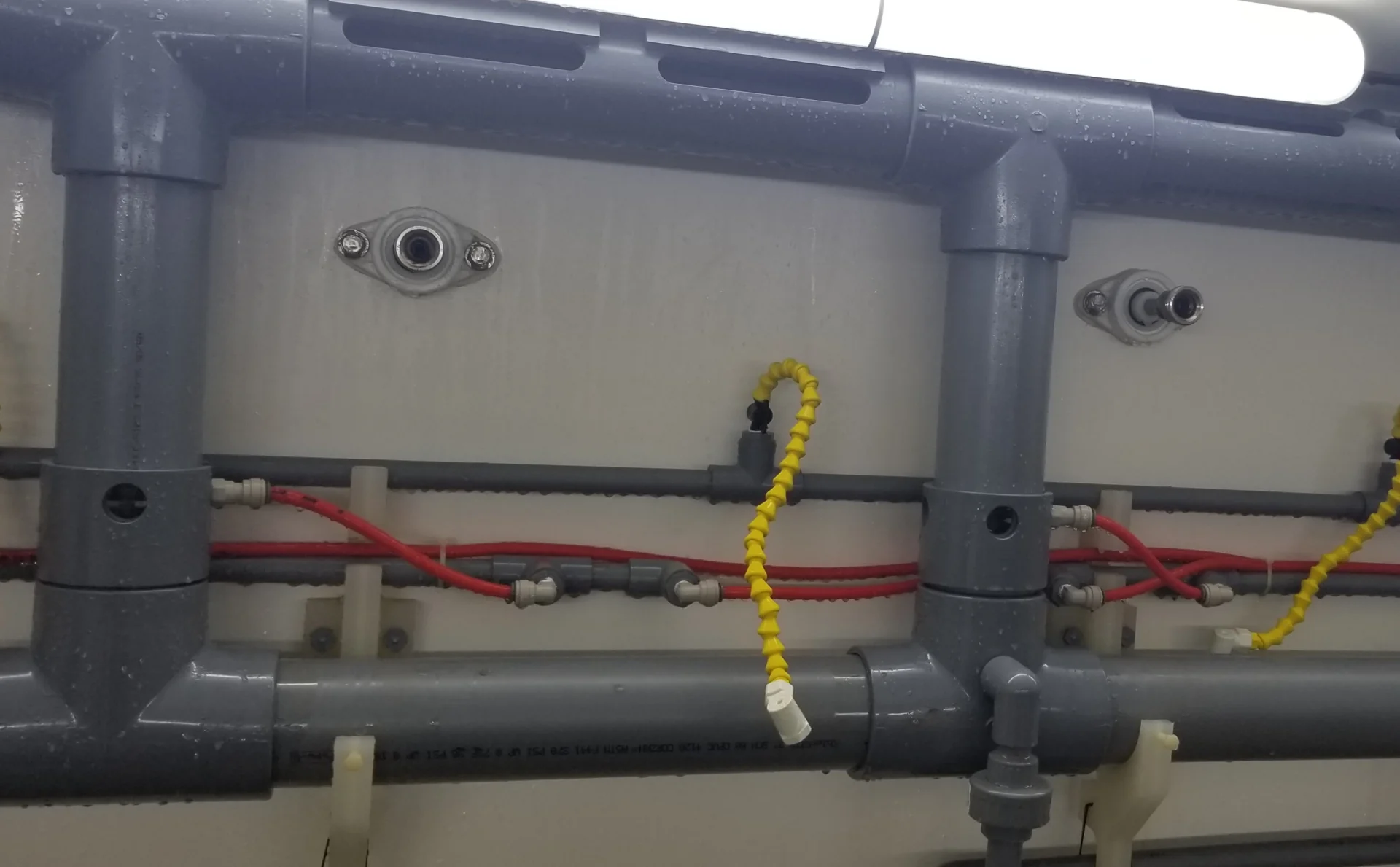
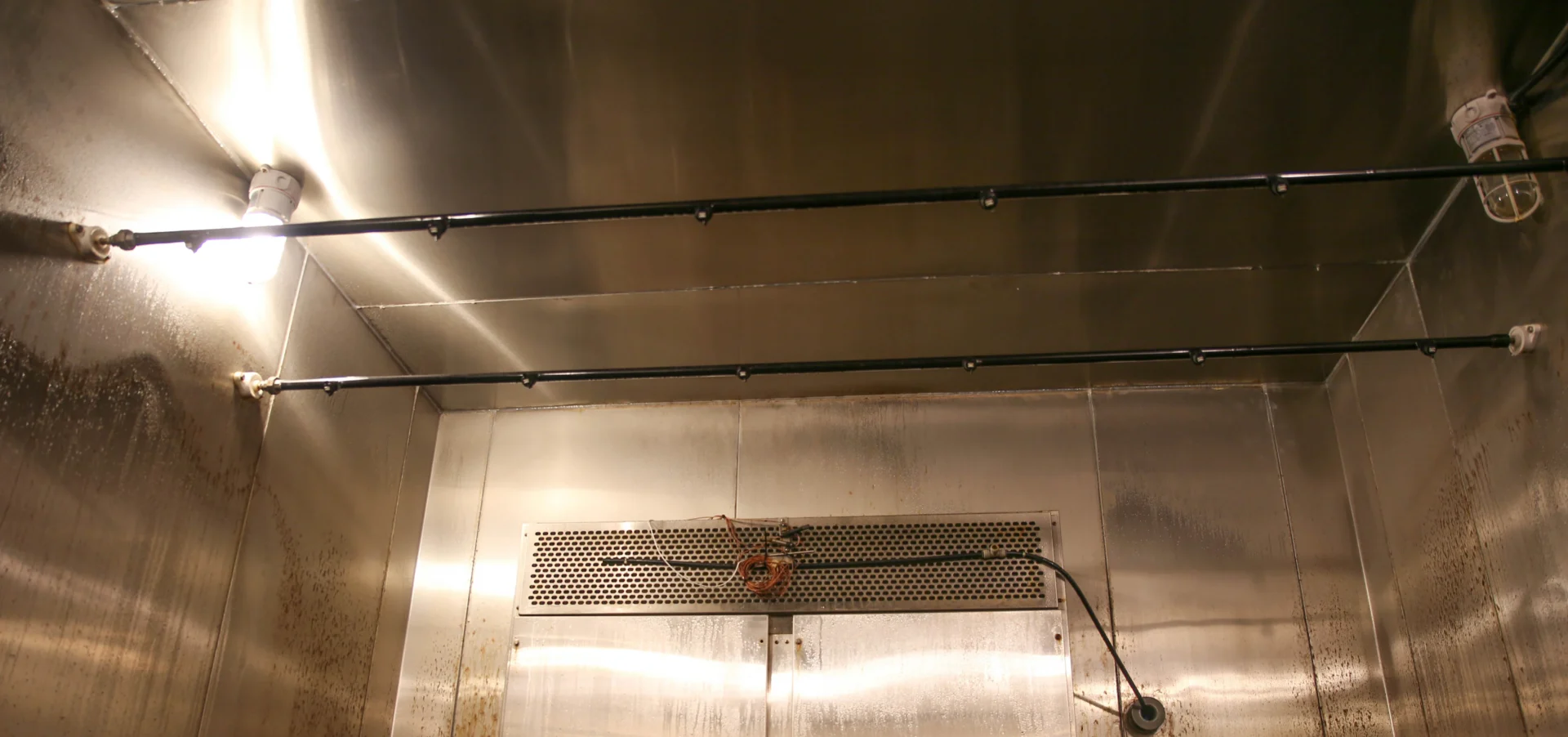
Many modern corrosion specifications require more than traditional salt fog exposure. Automotive, transportation, military, and industrial standards increasingly incorporate controlled wetting events, direct spray phases, saturation periods, drying cycles, and complex cyclic corrosion sequences.
While traditional salt fog testing relies on atomized fog suspended within the chamber environment, many cyclic corrosion specifications require direct application of solution to the specimens as part of the exposure sequence.
Supporting Modern Cyclic Corrosion Standards
Many modern specifications incorporate combinations of fog exposure, direct spray application, humidity control, drying cycles, and temperature transitions to better simulate real-world service environments.
Common exposure elements include:
- Direct spray events
- Intermittent wetting cycles
- Saturation phases
- Humidity-controlled dwell periods
- Custom customer-defined exposure profiles
Large-Scale Spray System Design
In large walk-in chambers, achieving uniform wetting across oversized specimens requires more than simply adding spray nozzles. Spray coverage, solution delivery rate, nozzle placement, specimen geometry, and chamber layout all influence exposure consistency.
Auto Technology can incorporate:
- Fixed spray systems
- Oscillating spray bars
- Swaying spray assemblies
- Custom spray manifolds
- Programmable spray sequences
- Multiple spray zones
- Hybrid fog and spray systems
These systems are designed around the chamber geometry, specimen configuration, and requirements of the applicable specification.
Fog Distribution and Condensation Management
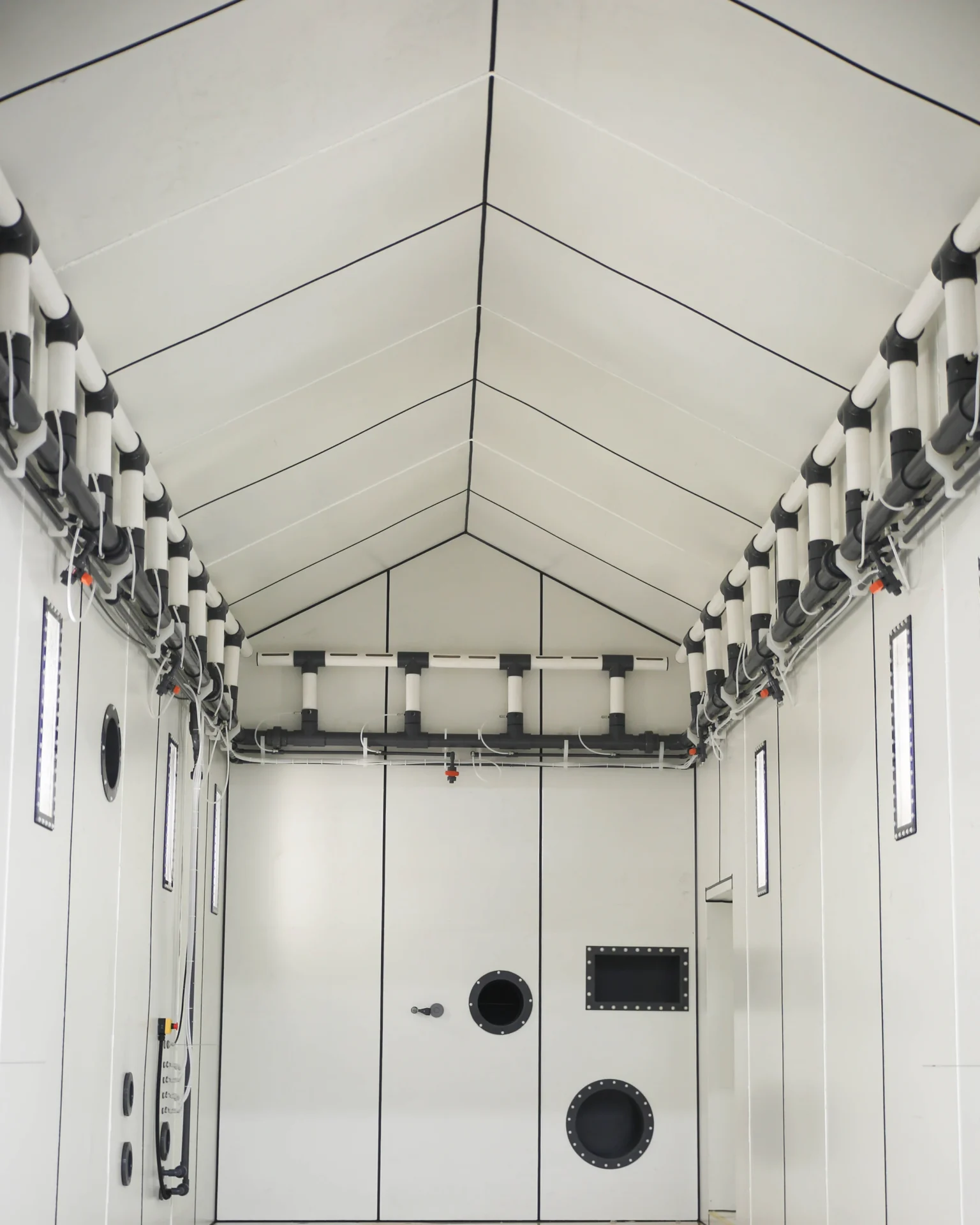
Auto Technology designs custom fog distribution systems using strategically positioned fog towers, manifolds, baffles, and distribution networks tailored to the chamber geometry and specimen loading arrangement.
These systems are designed to maintain a uniform fog environment throughout the exposure zone while minimizing localized differences in fallout and specimen exposure.
Uniform Fog Distribution
Large walk-in chambers contain significantly more volume than traditional cabinet-style corrosion chambers. As chamber size increases, maintaining consistent fog distribution becomes increasingly difficult.
Auto Technology engineers fog systems specifically around the chamber geometry, loading configuration, and performance requirements of the application.
- Promote uniform fog distribution throughout the exposure zone
- Keep the salt solution suspended as fog rather than liquid spray
- Minimize dead zones and localized exposure differences
- Reduce fallout variation throughout the chamber
- Improve collection rate consistency
- Support ASTM B117 and ISO 9227 collection requirements
- Accommodate unusually large specimens and loading configurations
Rather than relying on a single fog source, larger chambers may incorporate multiple fog towers, custom manifolds, baffle systems, and engineered distribution networks to maintain consistent exposure conditions throughout the usable chamber volume.
Keeping Condensed Fog Off the Samples
Maintaining a uniform fog environment requires more than proper fog generation. It also requires controlling what happens when that fog condenses on chamber surfaces.
Salt fog chambers operate near saturation. As fog contacts chamber surfaces, condensation naturally forms on the ceiling and walls. If that condensate drips directly onto specimens, the result is uncontrolled liquid exposure instead of the intended fog environment.
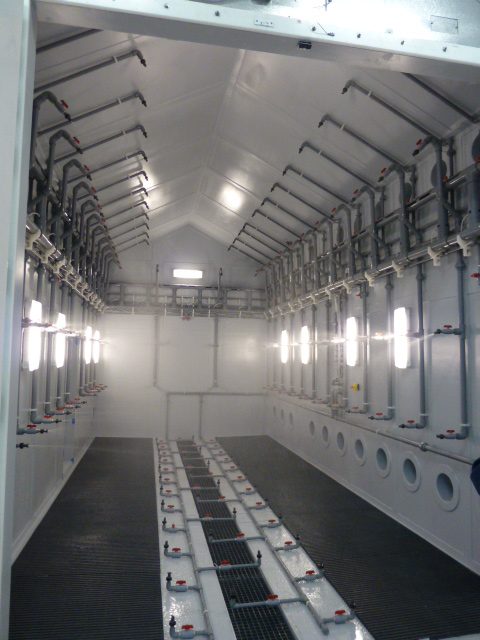
For this reason, Auto Technology walk-in corrosion chambers utilize sloped or peaked ceiling designs that direct condensed fog and droplets toward the chamber walls where they can safely drain away from the exposure zone.
This helps ensure specimens are exposed to the controlled fog environment rather than uncontrolled droplets falling from overhead surfaces.
More Uniform Fog Exposure
Reduced Droplet Impingement
Less Specimen Contamination
Improved Repeatability
Better Condensate Control
Cleaner Exposure Zone
Together, the fog distribution system, chamber geometry, baffle design, and sloped ceiling architecture work as a single integrated system designed to maintain a uniform fog environment while minimizing the impact of condensate on the test.
High-Capacity Bubble Towers and Humidity Systems
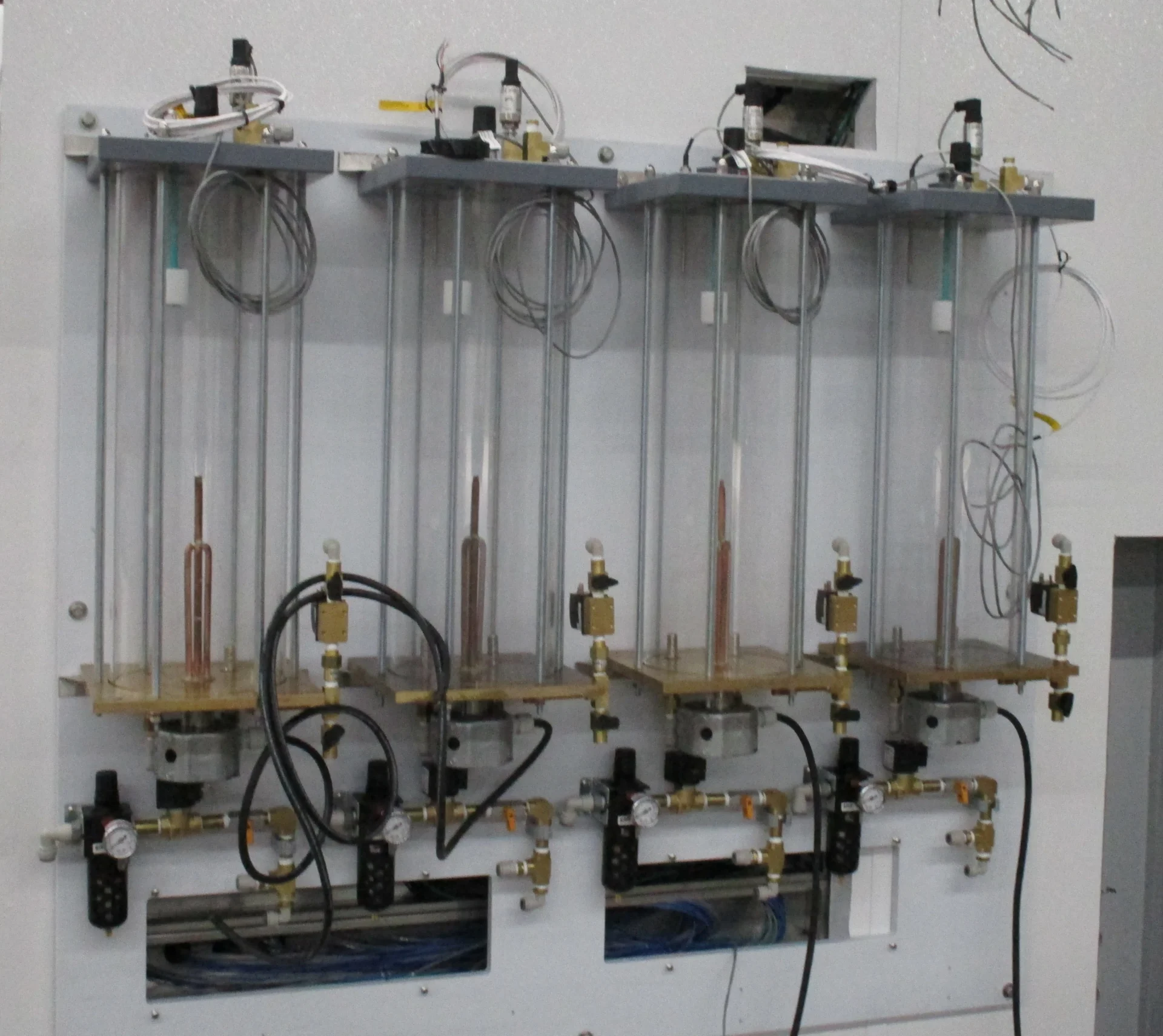
Proper conditioning of atomizing air is critical to maintaining stable fog generation.
As chamber volume increases, humidification demands increase dramatically.
Large walk-in chambers often require multiple bubble towers operating simultaneously to condition the volume of air required for continuous testing.
Auto Technology can provide:
- Single bubble tower systems
- Multi-tower assemblies
- High-capacity humidification systems
- Custom humidification assemblies
These systems are designed around the chamber volume and intended operating conditions to ensure stable long-duration performance.
Custom Solution Storage and Mixing Systems
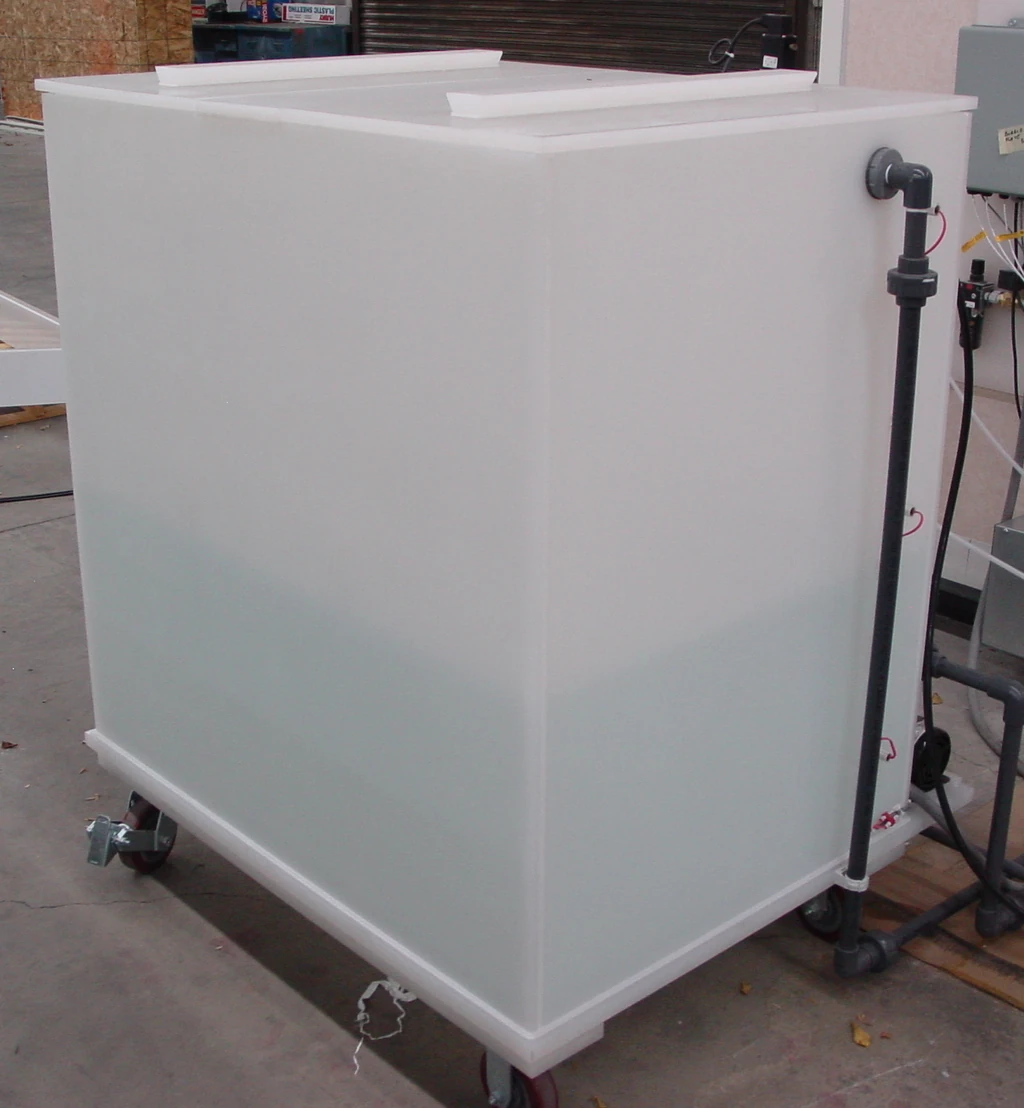
Large corrosion chambers consume significant quantities of test solution.
Rather than relying on small integrated reservoirs, Auto Technology can provide high-capacity solution storage and mixing systems designed around the expected operating schedule.
Available options include:
- Mobile solution tanks
- Large stationary reservoirs
- Automatic refill systems
- Solution recirculation
- Air sparging systems
- Multi-solution delivery systems
These systems simplify chamber operation while supporting extended test durations and high-volume exposure programs.
Custom Loading Systems
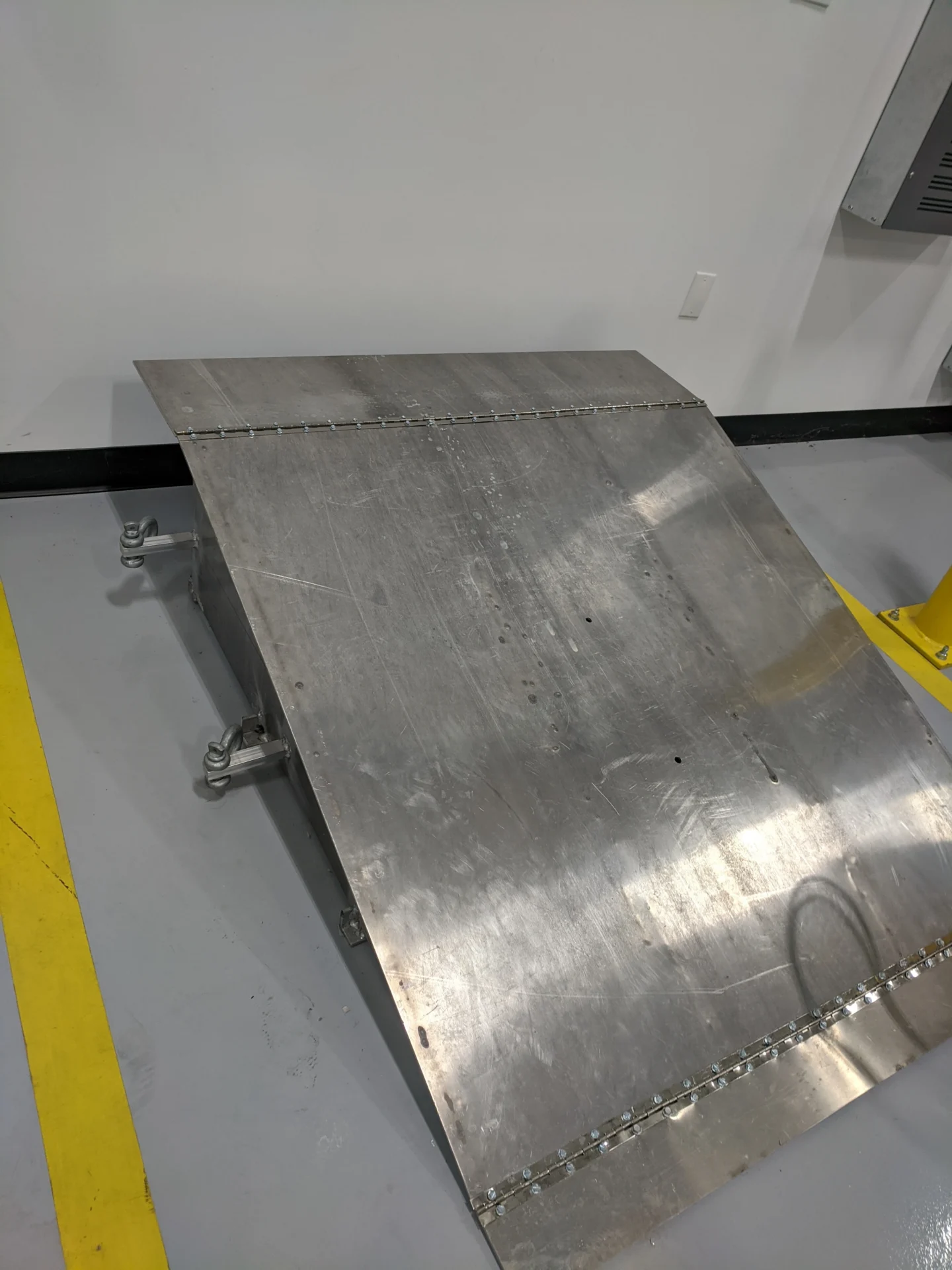
Testing large parts requires more than environmental control.
It requires a chamber that can be loaded safely and efficiently.
Auto Technology designs loading systems around the customer's workflow and facility constraints.
Available configurations include:
- Roll-in carts
- Forklift access
- Palletized loading
- Drive-in vehicle access
- Custom loading ramps
- Reinforced floors
- Rail-guided systems
- Oversized entry openings
Custom ramps can be fabricated to accommodate specific floor elevations, wheel loads, and specimen handling procedures.
Oversized Doors and Access Systems
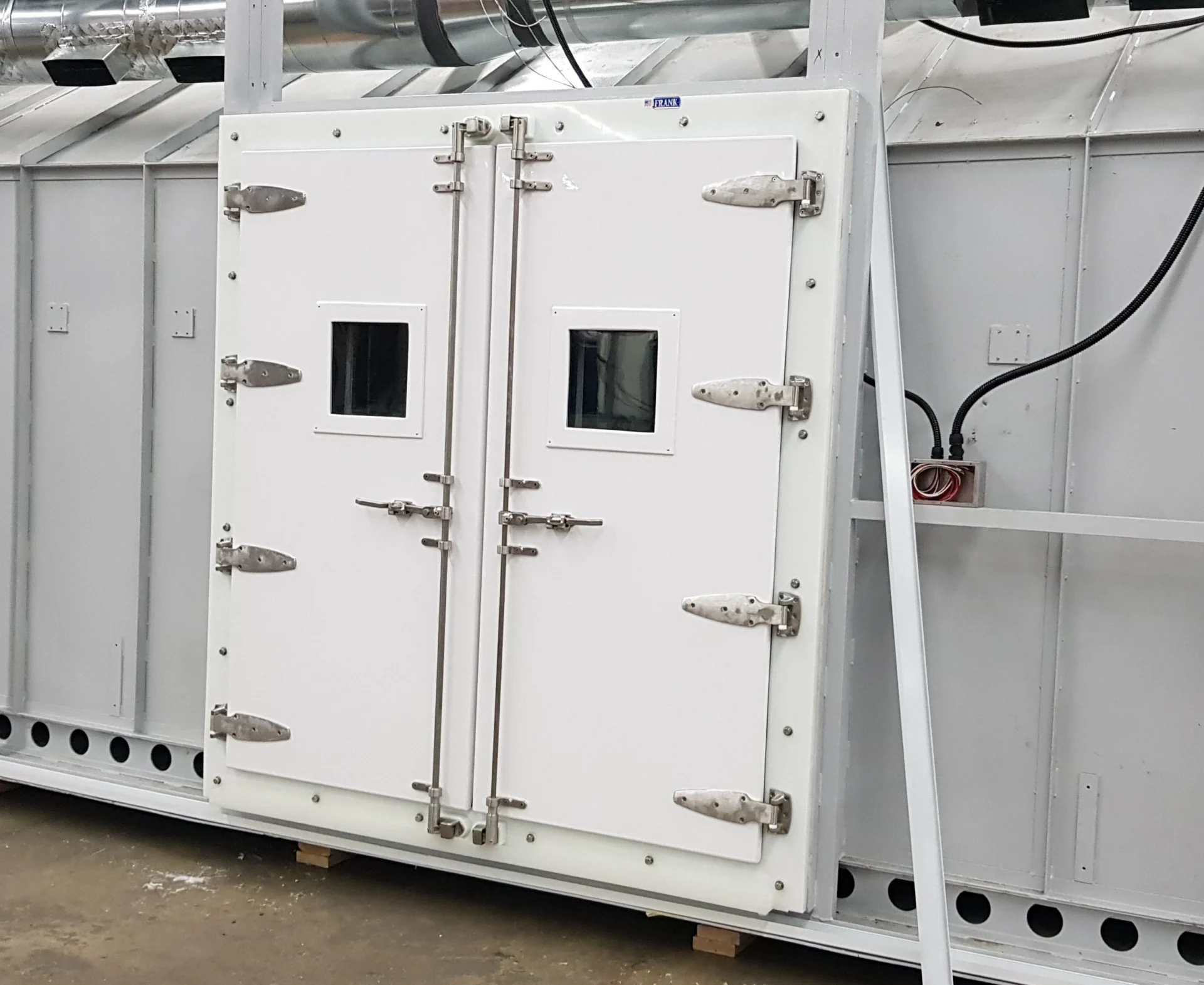
Large specimens require large access openings.
Auto Technology can provide:
- Single-door configurations
- Double-door systems
- High-clearance openings
- Forklift-access designs
- Vehicle-access doors
- Observation windows
- Insulated viewing panels
- Custom safety interlocks
Door systems are engineered to maintain environmental performance while providing practical access for personnel and equipment.
Whether the chamber must accommodate a vehicle, battery pack, industrial assembly, or military component, the access system can be designed accordingly.
Environmental Control and Exposure Zone Measurement
Creating a controlled environment requires more than heaters, refrigeration systems, and humidifiers. It also requires accurate measurement of the conditions experienced by the specimens. Auto Technology designs environmental systems and instrumentation together so chamber performance can be controlled, verified, and documented throughout the usable exposure zone.
Environmental Conditioning Systems
Many environmental specifications require thermal cycling, cold starts, sub-zero exposure, controlled humidity levels, or rapid transitions between environmental conditions.
Auto Technology can incorporate environmental conditioning systems designed to support:
- Sub-zero environmental conditioning
- Thermal cycling programs
- Cold-soak testing
- Battery validation programs
- Military qualification testing
- Automotive environmental testing
- Humidity-controlled exposure
- Custom environmental profiles
These systems can be integrated with corrosion exposure, humidity control, mixed flowing gas testing, direct spray systems, and customer-specific environmental profiles.
Whether the objective is maintaining a stable sub-zero environment, executing aggressive thermal cycling profiles, or rapidly transitioning between environmental conditions, the system can be engineered around the specification.
Measuring Conditions Where the Test Occurs
The most important measurements occur where the specimens are actually located.
Many environmental systems rely heavily on measurements taken outside the exposure zone. While useful for control purposes, those measurements do not always reflect the conditions experienced by the test article.
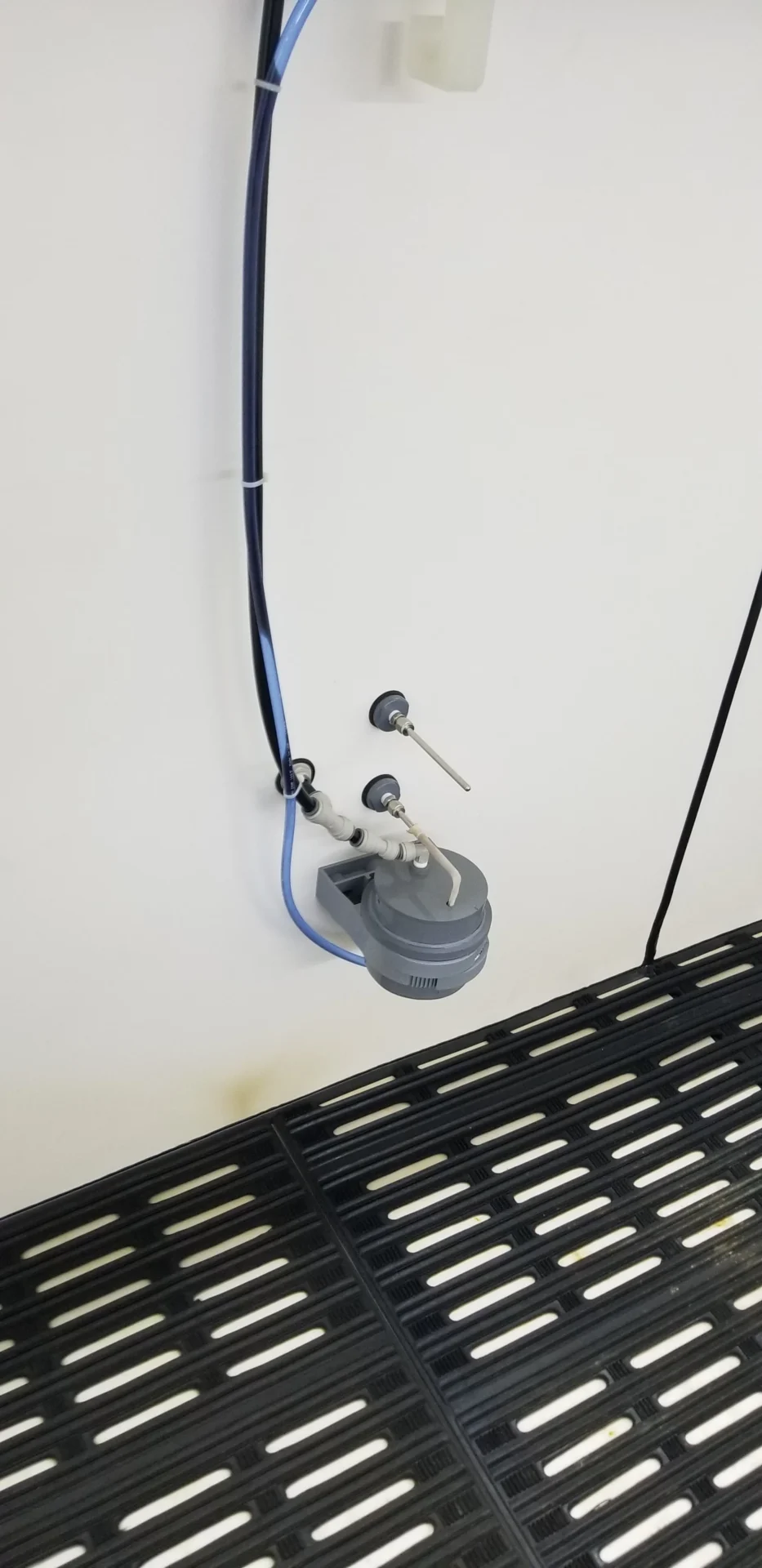
Auto Technology can incorporate instrumentation directly within the exposure zone, including:
- Wet bulb measurements
- Dry RTD measurements
- Humidity sensors
- Temperature sensors
- Airflow monitoring
- Fallout monitoring
- Solution monitoring
- Additional process instrumentation
By combining properly engineered environmental systems with exposure-zone instrumentation, chamber performance can be monitored and controlled based on the conditions experienced by the specimens rather than assumptions made elsewhere in the system.
Accurate environmental testing requires both environmental control and environmental verification.
Exhaust and Scrubber Systems
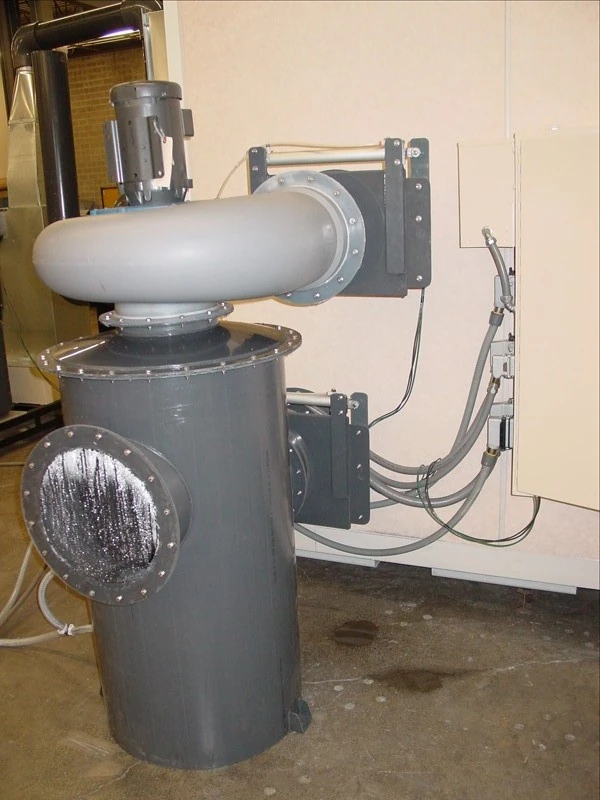
Large corrosion chambers require carefully engineered exhaust systems.
Improper ventilation can negatively impact chamber performance, create maintenance issues, and introduce safety concerns.
Auto Technology designs exhaust systems specifically for the application and facility.
Available solutions include:
- Powered exhaust systems
- Automated dampers
- Corrosion-resistant ductwork
- Exhaust scrubbers
- Neutralization systems
- Facility integration packages
- Environmental compliance solutions
Each system is designed to balance environmental performance, maintenance requirements, and facility constraints.
Collection Mapping and Chamber Validation
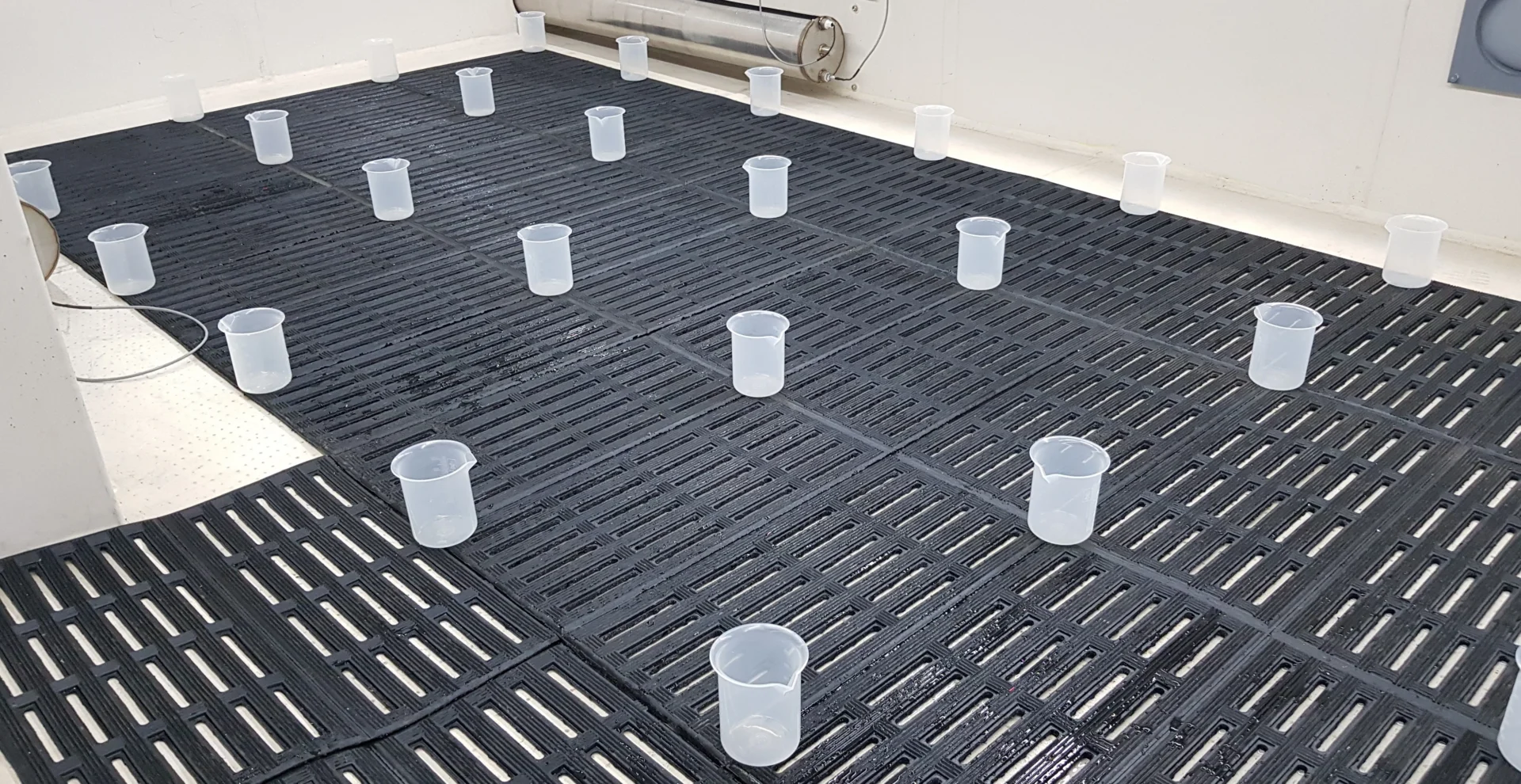
A chamber is only as good as its ability to produce repeatable conditions.
Large walk-in chambers present unique challenges because environmental conditions can vary significantly across large floor areas if not properly engineered.
Auto Technology performs chamber validation and fallout mapping to evaluate environmental consistency throughout the usable exposure zone.
This process helps verify:
- Collection rate uniformity
- Fog distribution
- Environmental consistency
- Chamber performance
- Exposure repeatability
The result is greater confidence that specimens receive consistent exposure regardless of their position within the chamber.
Controls, Automation, and Data Logging
Available Control Capabilities
- Environmental Control
- Temperature control
- Humidity control
- Salt fog control
- Direct spray control
- Drying cycle control
- Exhaust control
- Refrigeration control
- Mixed flowing gas control
- Test Programming
- Customer-specific test profiles
- OEM test procedures
- Multi-step cyclic programs
- Temperature ramps
- Humidity ramps
- Timed exposure events
- User-defined recipes
- Programmable loops
- Data Logging
- Time and date recording
- Chamber temperature
- Relative humidity
- Wet bulb temperature
- Dry bulb temperature
- Bubble tower temperature
- Spray events
- Alarm conditions
- Operator actions
- Profile execution history
User Interface
- Industrial touchscreen controls
- PC-based systems
- Graphical trend displays
- Historical data review
- User access levels
- Recipe management
- Network connectivity
- Remote monitoring options
- Centralized control interfaces
Walk-In Mixed Flowing Gas Chambers

Large electronic systems often require environmental testing that extends beyond temperature, humidity, and salt fog exposure.
Auto Technology designs custom walk-in mixed flowing gas chambers capable of exposing complete electronic assemblies, telecommunications equipment, battery systems, control cabinets, industrial power systems, and other large products to precisely controlled corrosive gas environments.
Auto Technology also operates a walk-in mixed flowing gas chamber within its own environmental testing laboratory, providing firsthand experience with chamber operation, gas control, calibration, maintenance, and long-duration exposure programs.
Learn more about our Mixed Flowing Gas Chamber systems.
These chambers may be configured for:
Hydrogen Sulfide
H2S
Sulfur Dioxide
SO2
Nitrogen Dioxide
NO2
Chlorine
Cl2
These systems maintain controlled temperature and humidity conditions throughout the exposure period while accurately delivering and monitoring corrosive gas concentrations.
Unlike traditional cabinet-scale mixed flowing gas chambers, walk-in systems allow customers to evaluate complete assemblies, production equipment, telecommunications systems, battery installations, and large integrated electronic systems under realistic environmental conditions.
For customers requiring large-scale electronics corrosion testing, walk-in mixed flowing gas chambers provide capabilities that are often unavailable through conventional environmental equipment.
How a Custom Walk-In Chamber Project Works
Every walk-in chamber begins with understanding the test requirement.
| Step | Project Phase | What Happens |
|---|---|---|
| Step 1 | Define the Test | We review specifications, environmental conditions, specimen dimensions, exposure requirements, utility availability, and facility constraints. |
| Step 2 | Develop the Chamber Concept | Our engineering team develops a chamber architecture capable of producing the required environmental conditions while accommodating the specimen and facility requirements. |
| Step 3 | Detailed Engineering | Environmental systems, controls, utilities, instrumentation, safety systems, and chamber construction details are finalized. |
| Step 4 | Manufacturing | The chamber is fabricated, assembled, and tested prior to shipment. |
| Step 5 | Installation and Commissioning | Our team assists with installation, startup, and verification of chamber operation. |
| Step 6 | Training and Support | Operators receive training on operation, maintenance, programming, and routine system care. |
The result: a complete environmental testing system designed specifically for the application.
Examples of Custom Walk-In Chamber Projects
No two walk-in chambers are exactly alike.
Auto Technology designs each system around the customer's specification, environmental requirements, specimen size, facility constraints, and testing objectives. The projects below illustrate the wide range of custom walk-in chambers developed for customers across multiple industries.
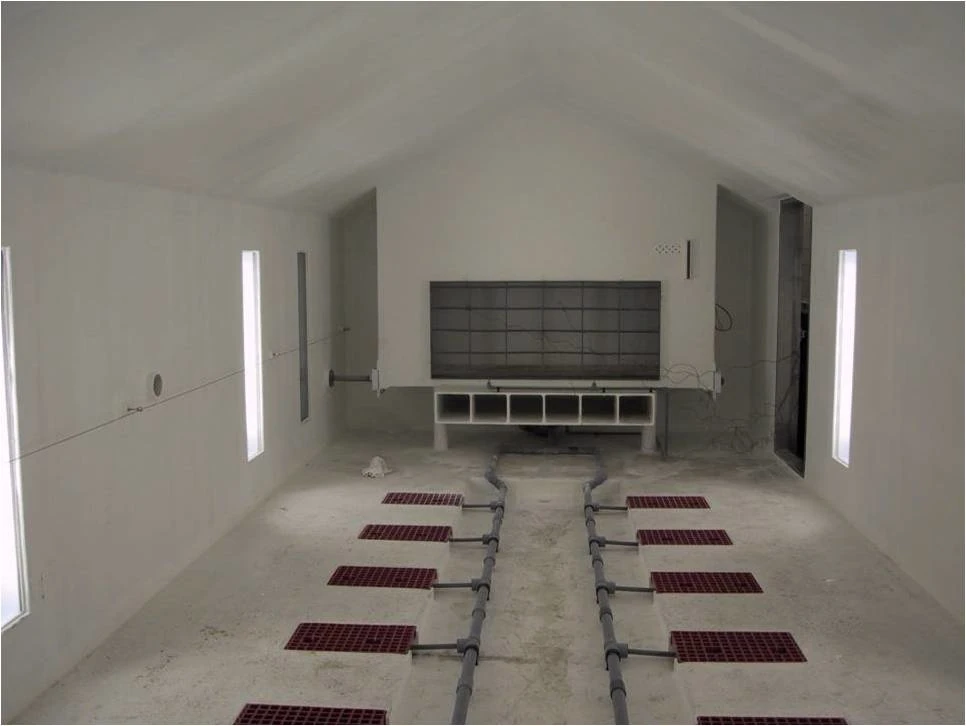
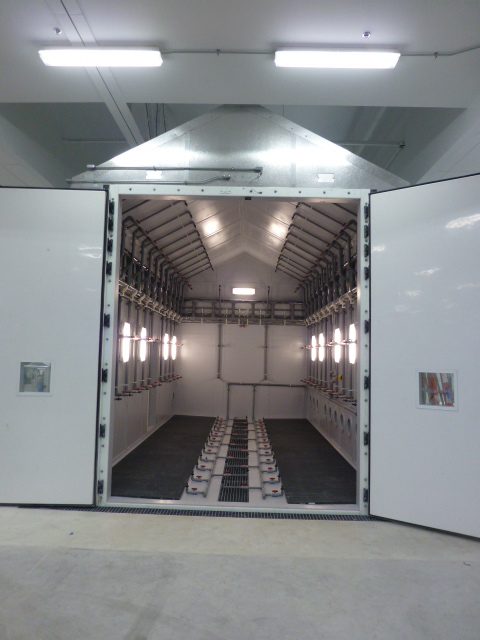
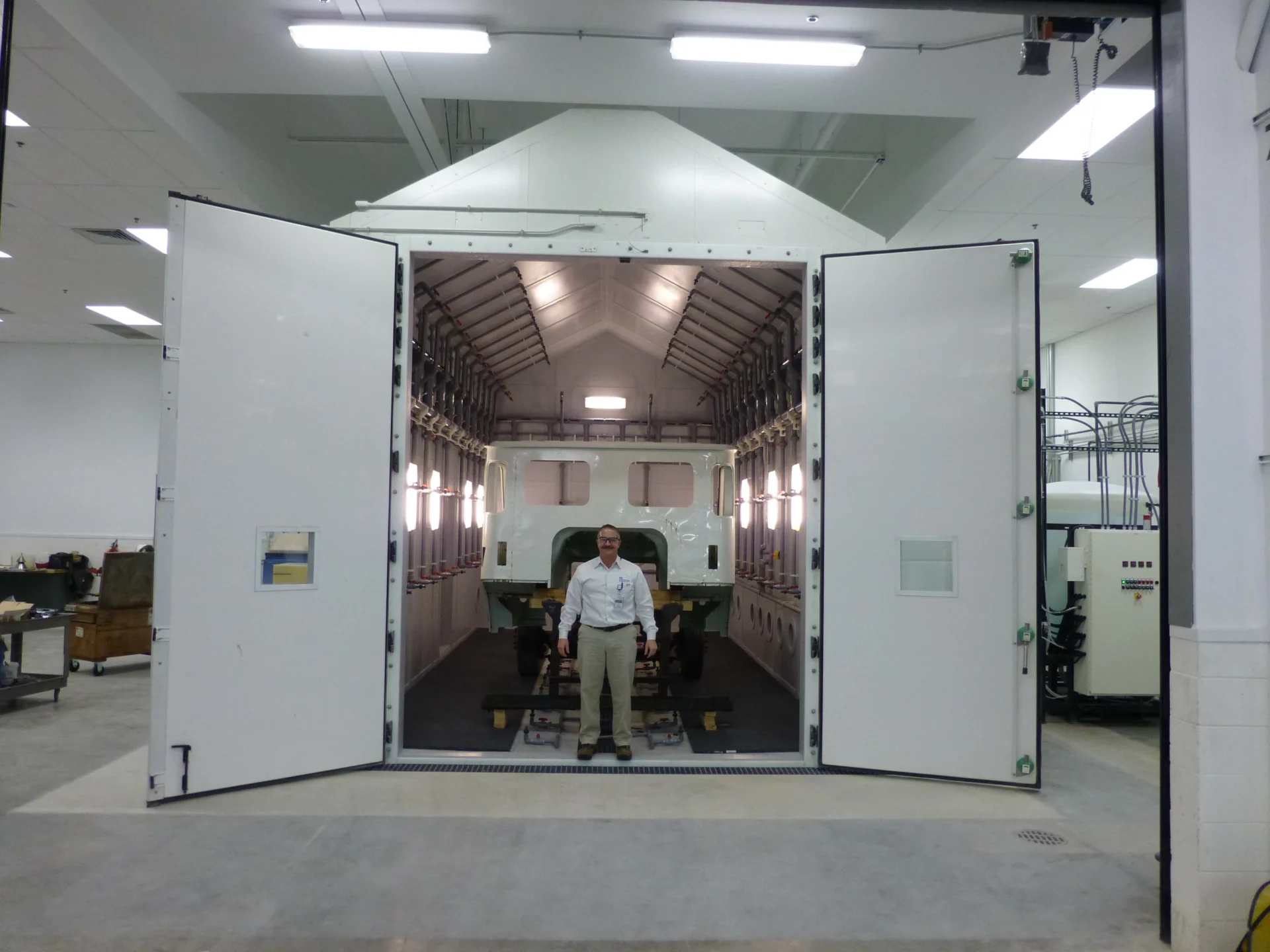
Drive-In Chamber for Automotive Durability Testing
Custom drive-in corrosion chamber engineered to accommodate complete vehicle testing programs. Designed to support large automotive assemblies and full-vehicle durability validation under controlled environmental conditions.
Features included corrosion-resistant construction, large access doors, integrated environmental controls, and environmental conditioning systems tailored to automotive qualification requirements.
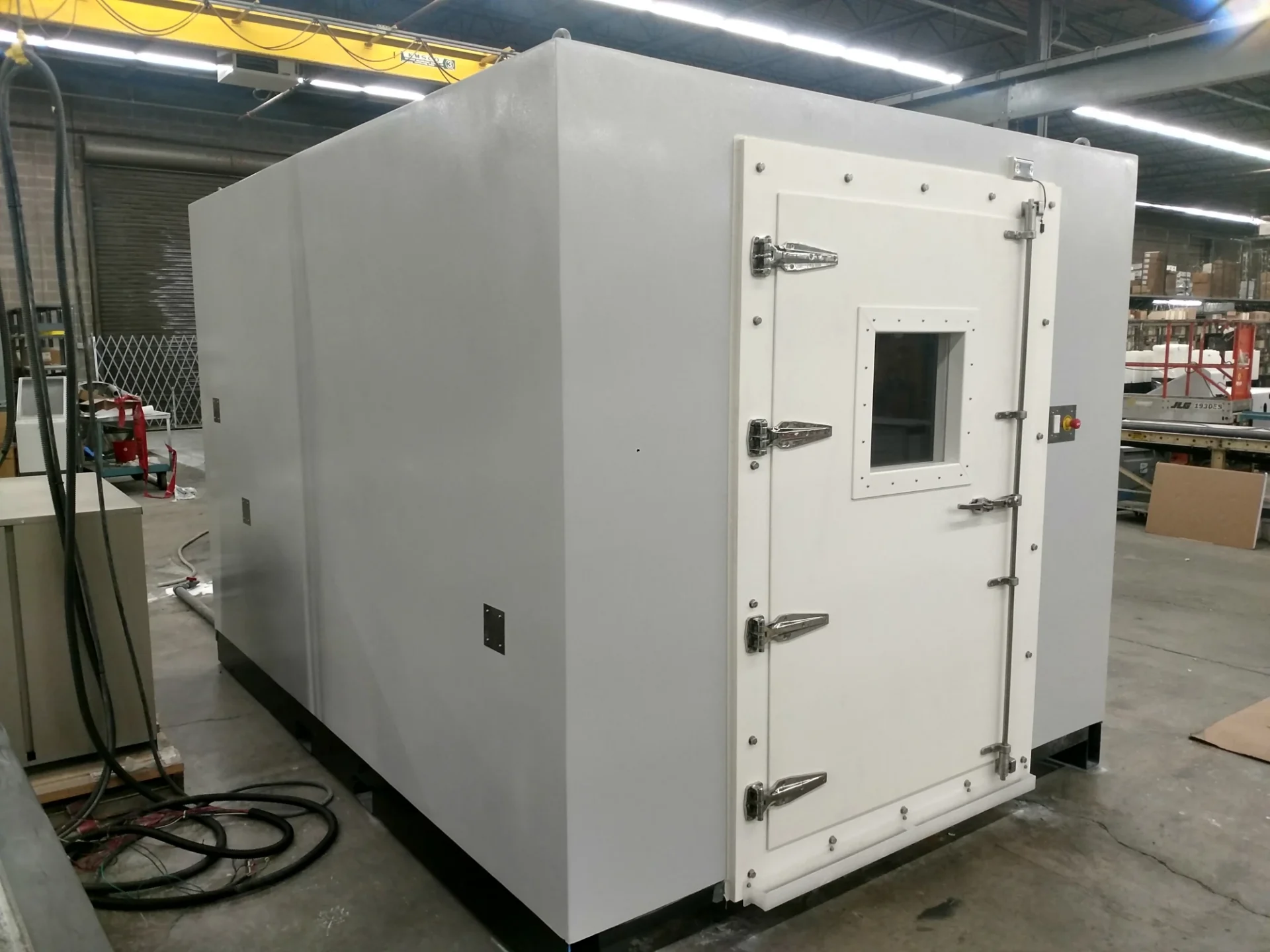
Custom Drive-In Chamber for Automotive OEM Testing
Large-scale environmental chamber designed to support automotive corrosion and durability testing programs.
The chamber was engineered around customer-specific requirements including specimen size, environmental control performance, access requirements, and long-term operational reliability.
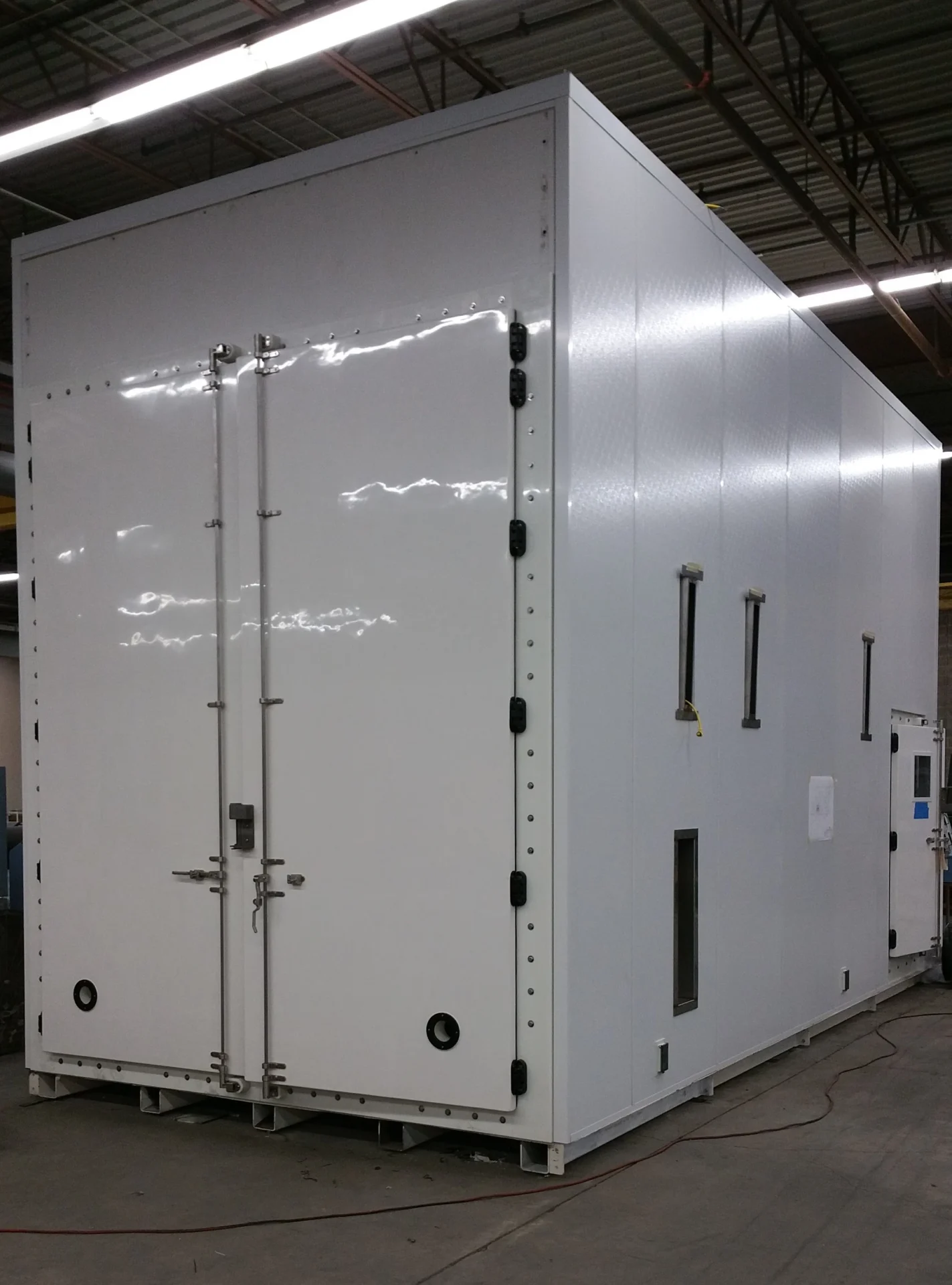
Custom Drive-In Chamber for Military Applications
Drive-In chamber developed to support demanding military qualification and environmental exposure programs.
The system was engineered around customer requirements for environmental performance, durability, serviceability, and long-term operation.
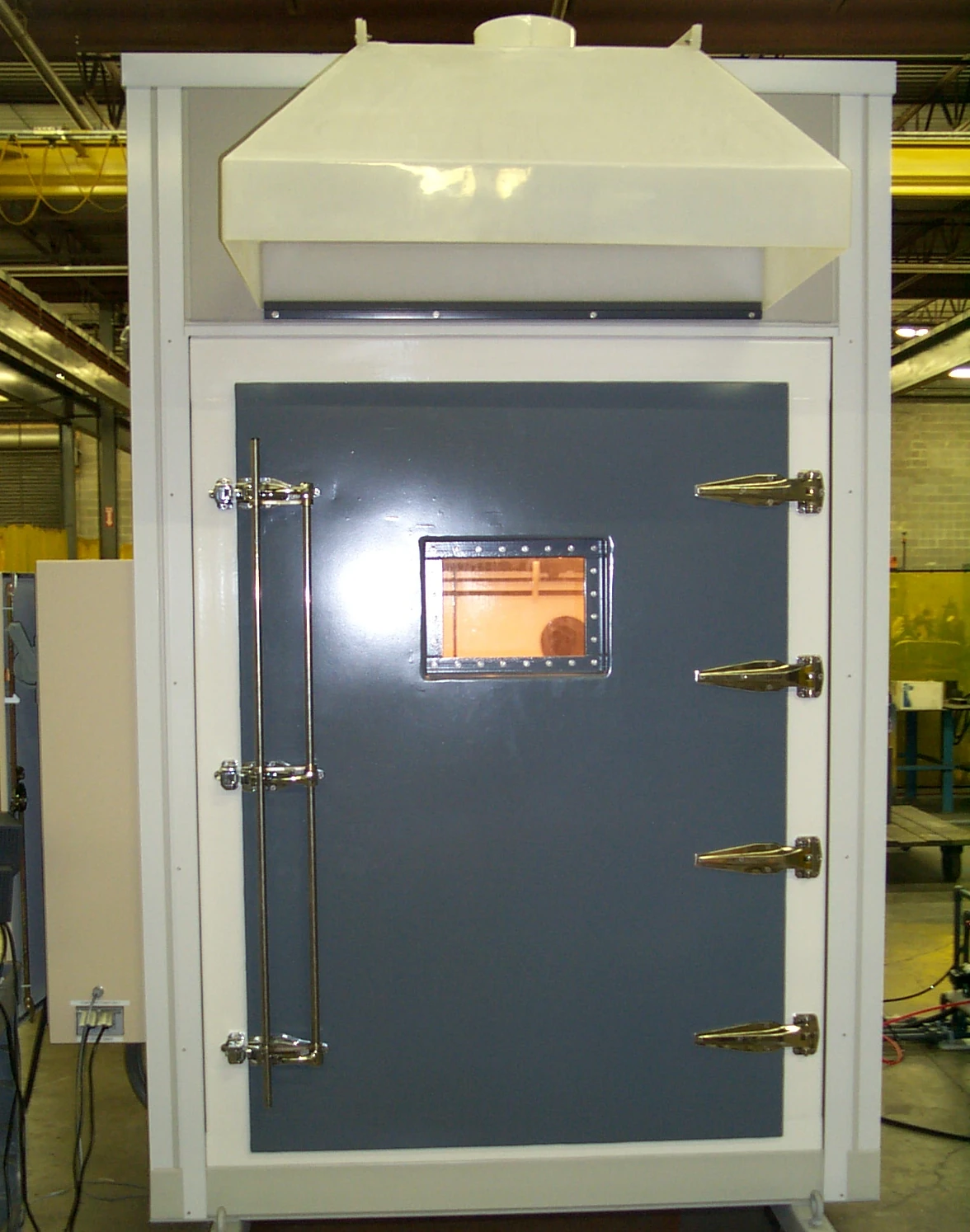
Walk-In Chamber for HVAC Equipment Testing
Custom chamber developed for testing large HVAC assemblies under controlled environmental conditions.
The chamber was designed around the physical dimensions of the equipment, environmental performance requirements, and customer testing procedures.
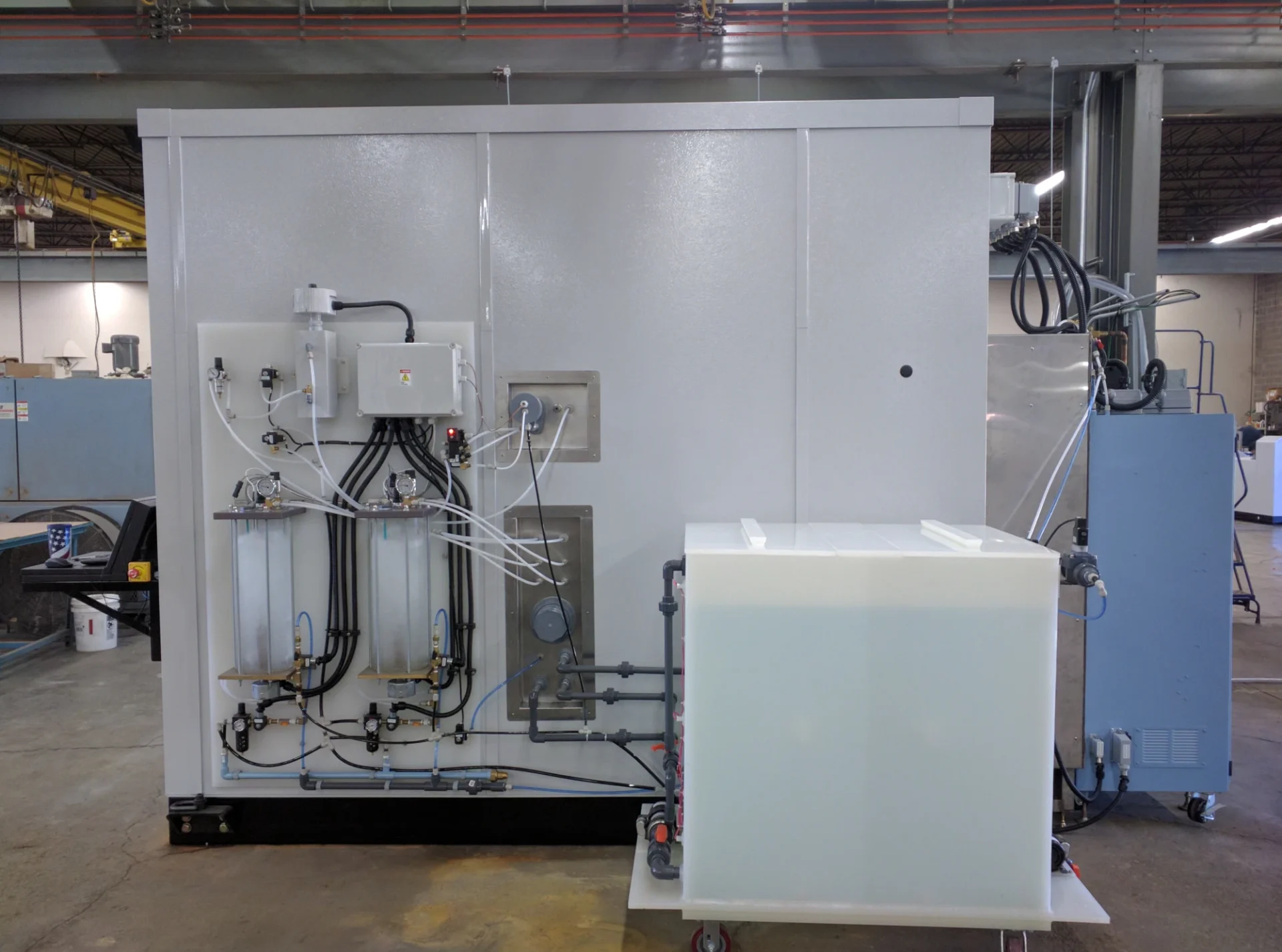
Custom Walk-In Chamber for Consumer Product Testing
The system was engineered to provide repeatable environmental exposure conditions while accommodating oversized product assemblies.
Your project will not look exactly like these examples.
Every Auto Technology walk-in chamber is engineered around the customer's specification, environmental requirements, specimen size, facility constraints, and testing objectives.
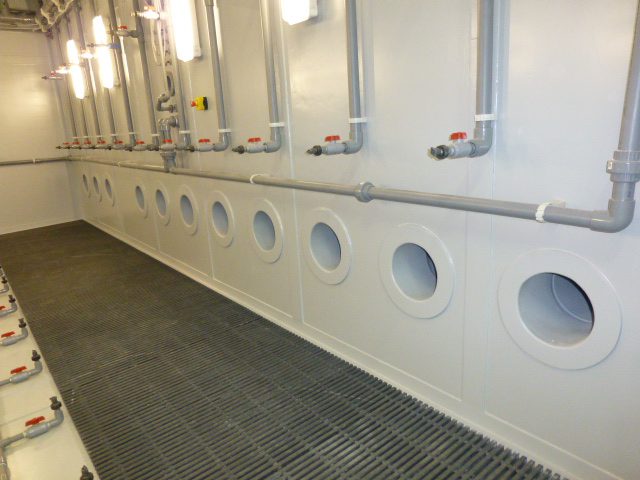
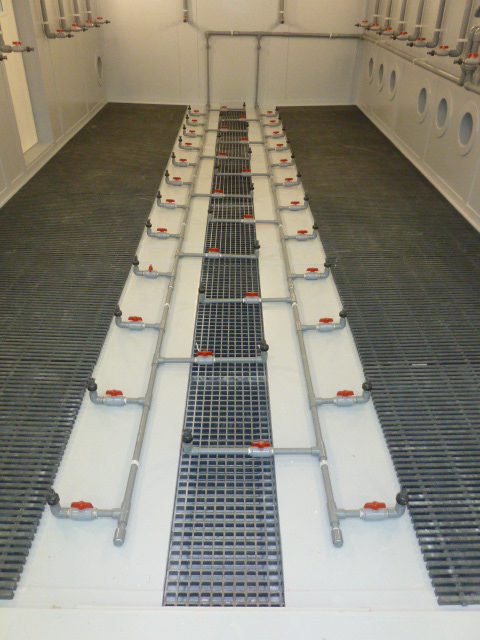
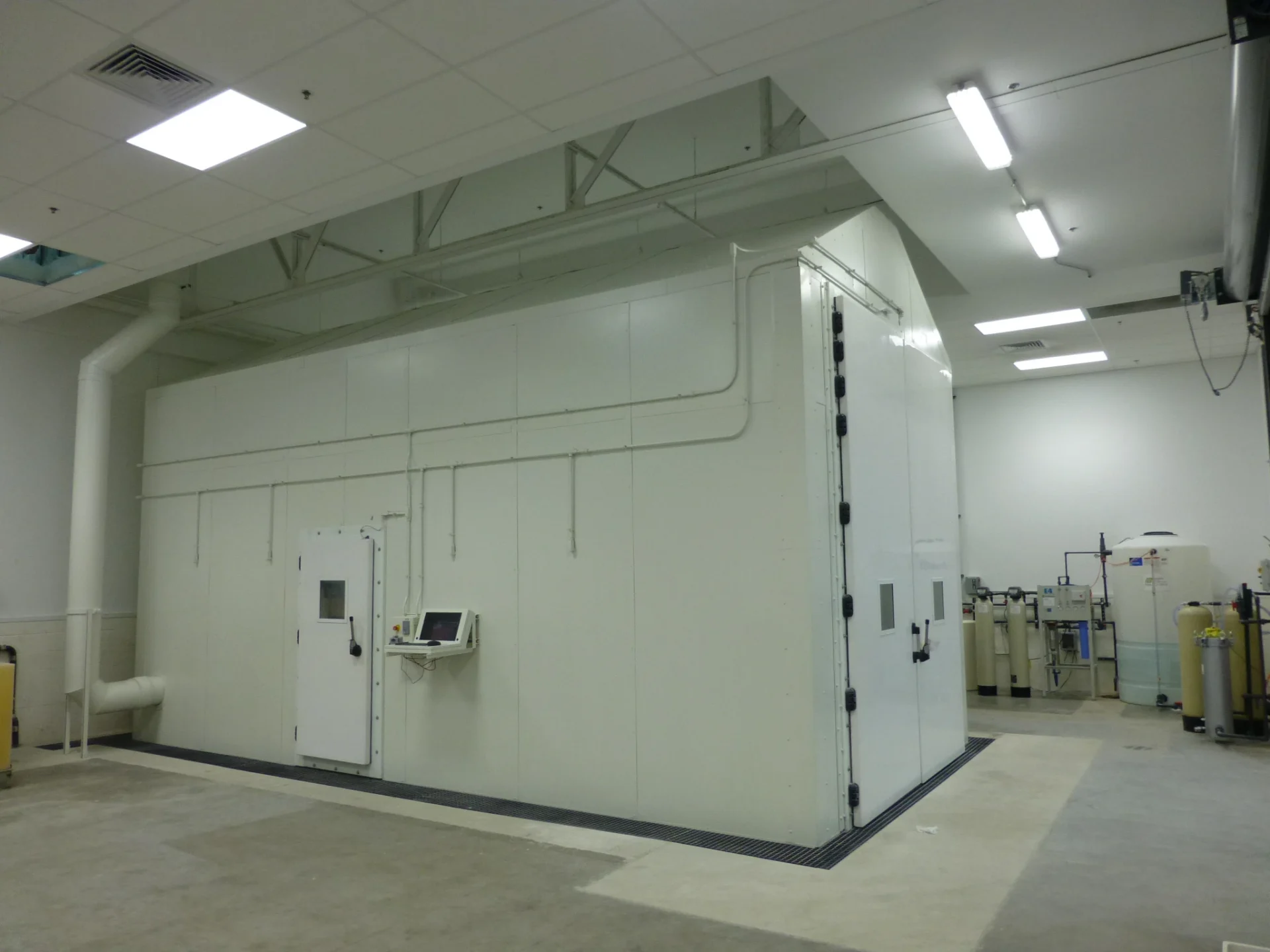
Drive-In Salt Fog Corrosion Chamber
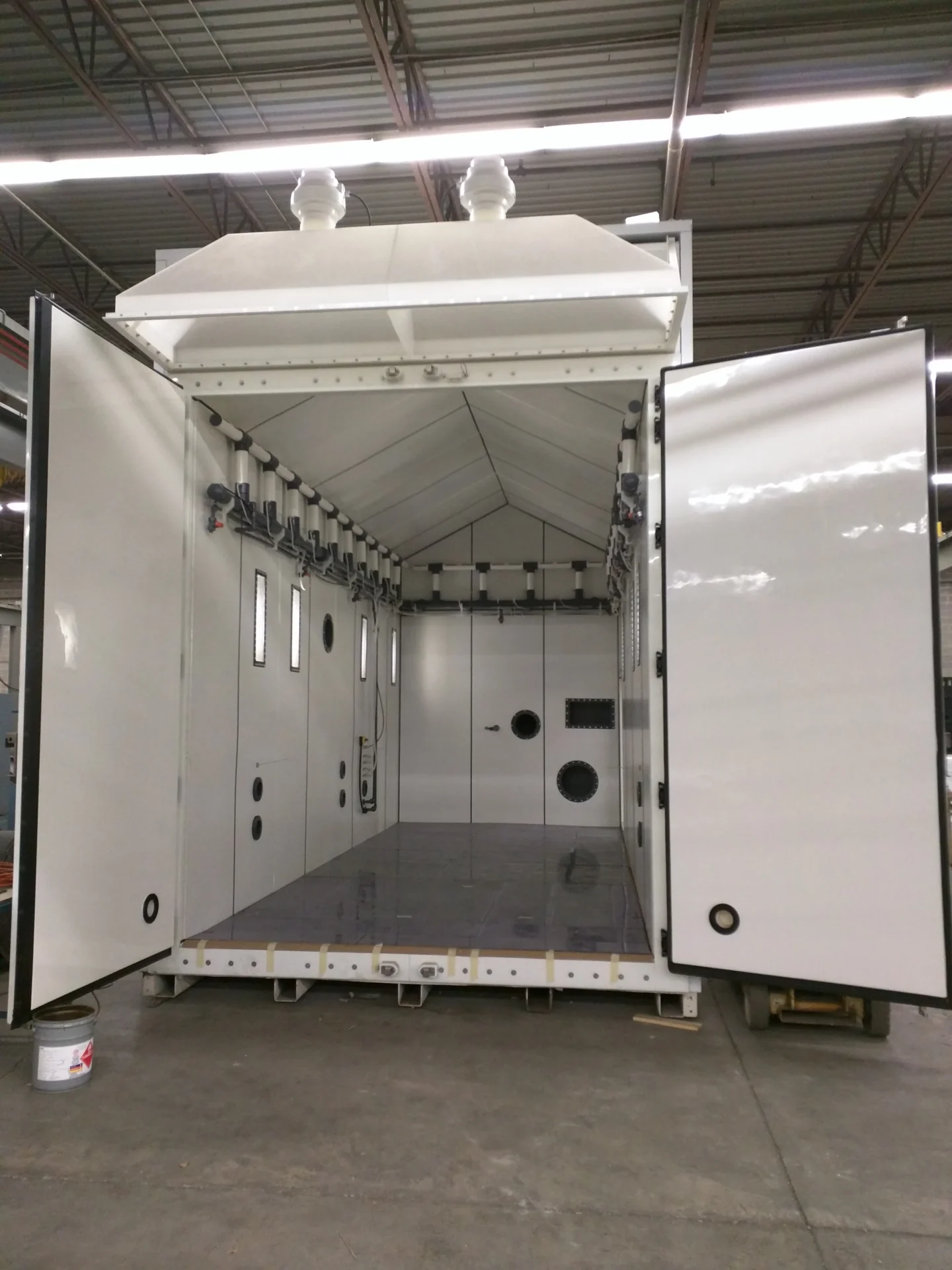
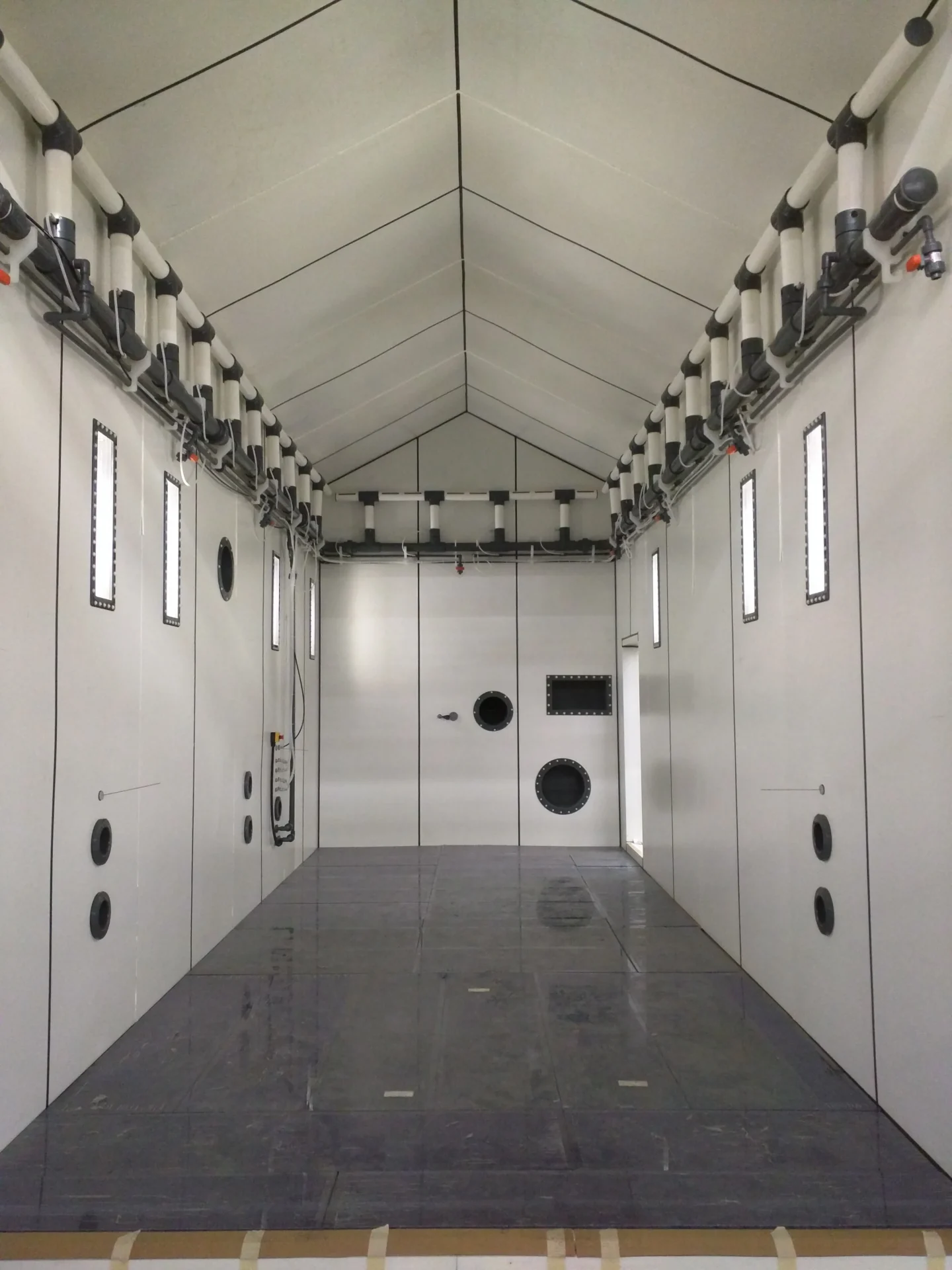
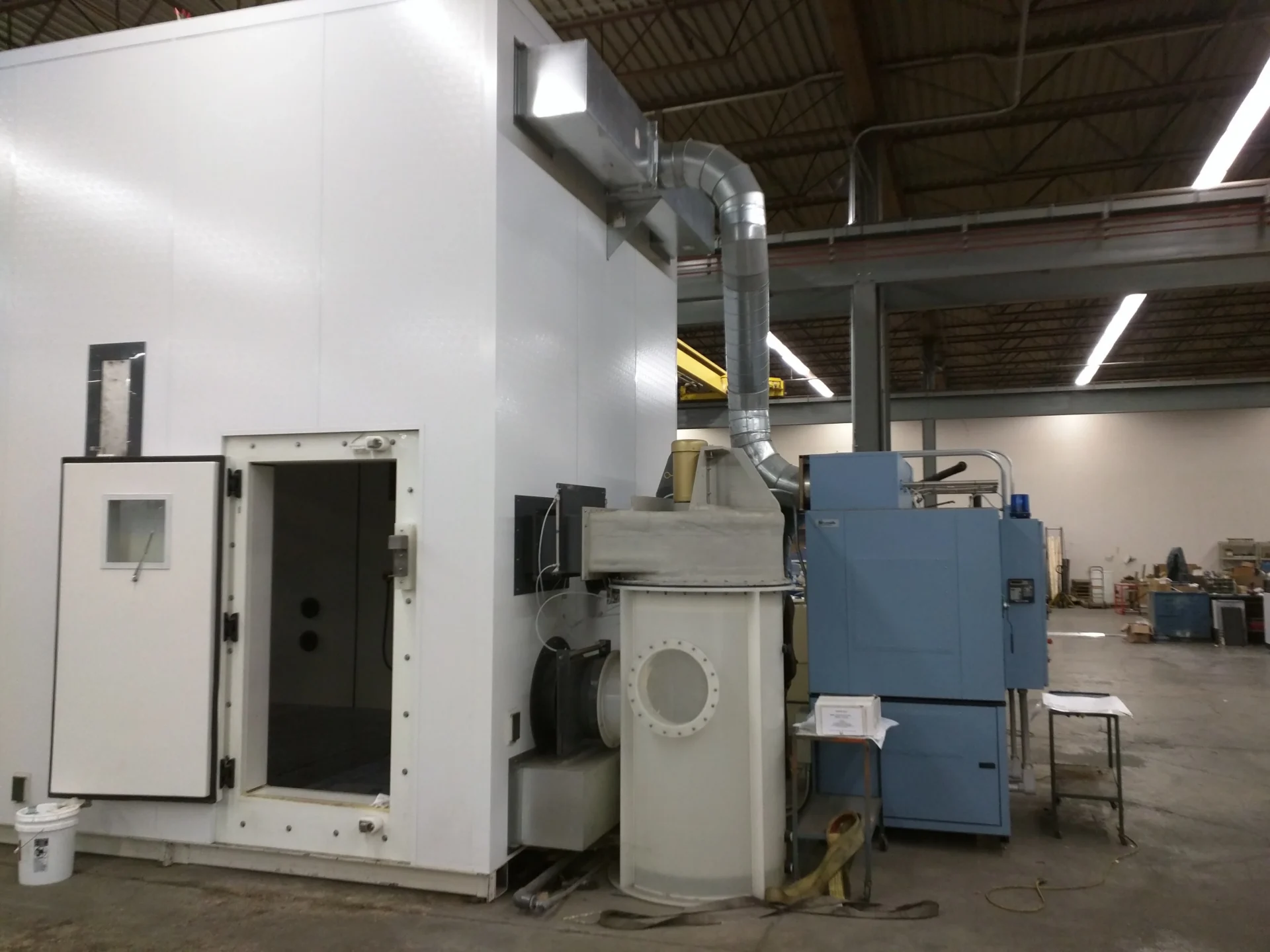
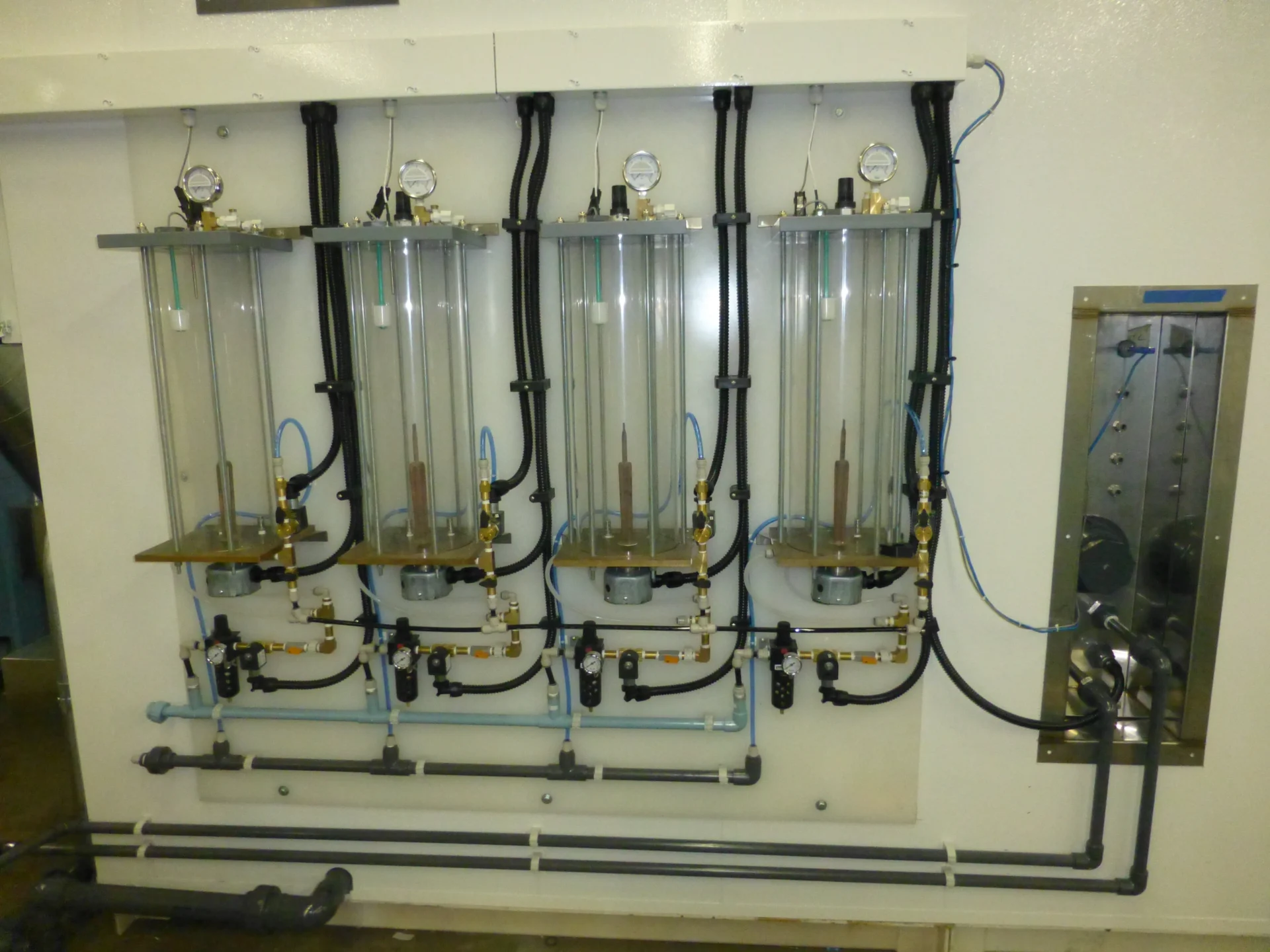
13' x 25' x 14' Drive-In Corrosion Chamber
Why Companies Choose Auto Technology
A custom walk-in chamber is a long-term capital investment. Customers choose Auto Technology because our chambers are built in America, serviced in America, supported by decades of manufacturing experience, trusted by leading organizations across multiple industries, and informed by the practical knowledge that comes from operating environmental chambers ourselves.
Made in America
Auto Technology chambers are designed and manufactured in the United States by a team experienced in corrosion, cyclic corrosion, humidity, mixed flowing gas, and custom environmental testing systems.
Serviced in America
Installation, training, parts support, service, troubleshooting, and long-term technical support are available from the same organization that designed and built the chamber.
Trusted Across Industries
Auto Technology chambers support testing programs at automotive OEMs, military organizations, aerospace companies, coating manufacturers, electronics companies, research institutions, and independent testing laboratories throughout North America.
We Operate Chambers Ourselves
Auto Technology also operates environmental testing laboratories, providing firsthand experience with chamber operation, maintenance, calibration, test execution, and long-term reliability.
Chamber manufacturing experience with real-world testing experience to deliver environmental systems designed for long-term performance and support.
Need Walk-In Testing Without Purchasing Equipment?
Not ready to purchase a walk-in chamber? Auto Technology’s Strongsville laboratory provides access to large-scale corrosion, humidity, cyclic corrosion, and mixed flowing gas testing services.
Validate your test program, generate exposure data, or evaluate chamber requirements before committing to a capital equipment purchase.
FAQ
How large can a walk-in chamber be?
Walk-in chambers can be engineered in a wide range of sizes depending on the specimen, facility, and environmental requirements. Systems may range from compact room-sized chambers to vehicle-scale environmental rooms.
Can a walk-in chamber perform cyclic corrosion testing?
Yes. Walk-in chambers can be designed to perform cyclic corrosion testing including temperature transitions, humidity control, drying phases, fog exposure, direct spray events, and customer-specific profiles.
Can a walk-in chamber be designed for vehicle testing?
Yes. Walk-in chambers can be configured with oversized access doors, reinforced floors, drive-in access, and environmental systems sized appropriately for vehicle-scale testing.
Can you build a walk-in mixed flowing gas chamber?
Yes. Auto Technology can design walk-in mixed flowing gas chambers for large electronic systems and assemblies requiring controlled exposure to corrosive gas environments.
Do walk-in chambers require refrigeration?
Not always. The requirement depends on the specification. Some chambers operate entirely above ambient temperatures, while others require mechanical refrigeration for thermal cycling or sub-zero operation.
Can Auto Technology provide installation and startup support?
Yes. Installation assistance, commissioning, training, and support services can be provided as part of the project.
What if I need testing but do not need my own chamber?
Auto Technology operates a full-service environmental testing laboratory in Strongsville, Ohio and can perform testing on behalf of customers who do not require ownership of a chamber.