
VDA 233-102 & ISO 11997-3 CYCLIC CORROSION TESTING SERVICES

Auto Technology Company performs automotive cyclic corrosion testing to VDA 233-102, ISO 11997-3, and DIN EN ISO 11997-3. Each method uses a seven-day sequence of salt fog, temperature and relative-humidity changes, an inspection period, and a -15°C low-temperature phase. The methods are closely related, but differences in scope, tolerances, chamber verification, and reporting mean they should not be treated as interchangeable without reviewing the governing requirement.
ATC can expose coated panels, automotive materials, joined assemblies, bodywork, mounted parts, and vehicle components. The laboratory prepares and verifies the salt solution, records chamber conditions, completes the permitted Cycle B inspections, runs the Cycle C low-temperature phase, checks chamber corrosivity, and performs the evaluations defined for the project.
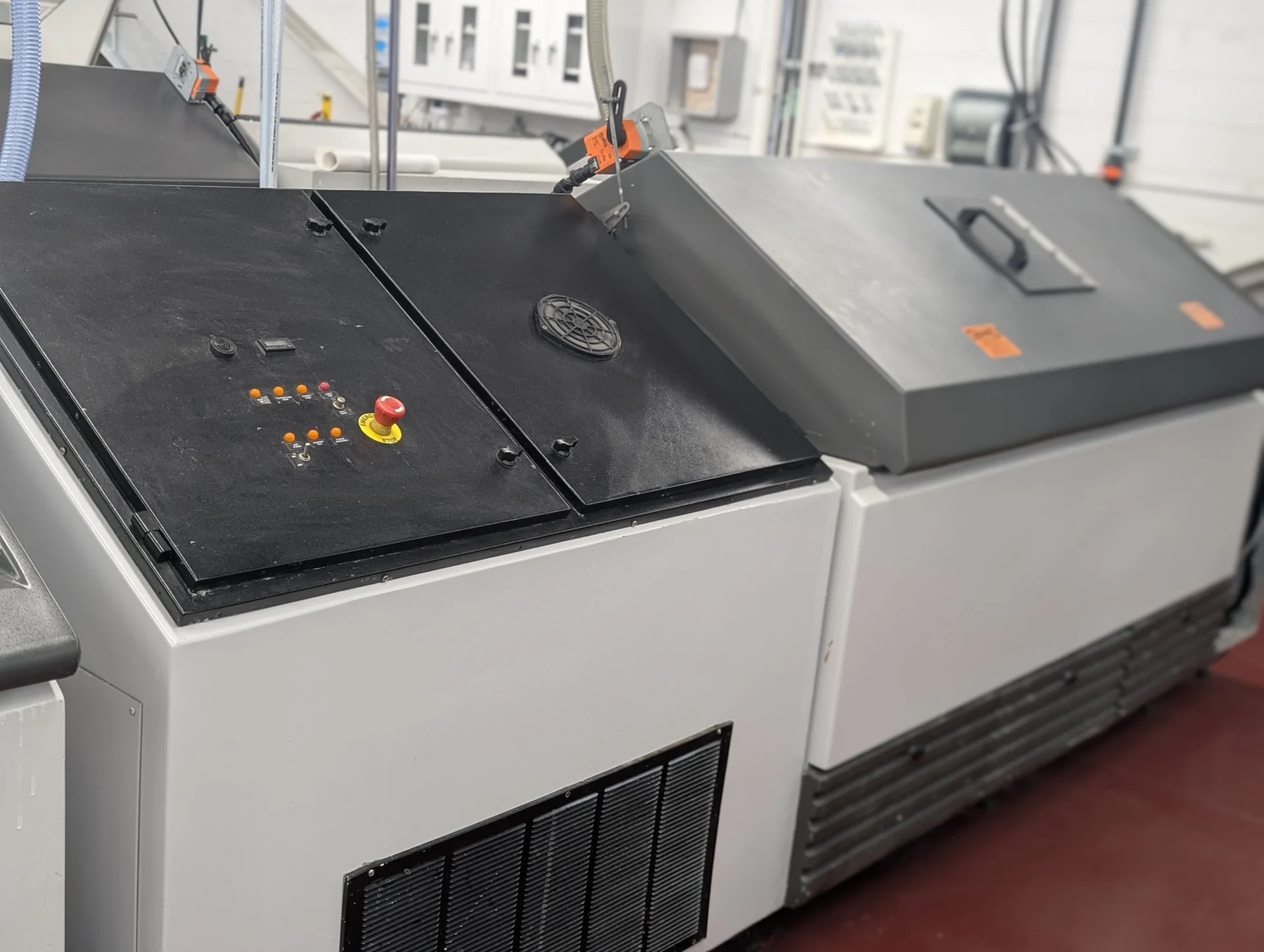
Seven-Day Sequence
B-A-C-A-B-B-A: three salt-fog days, three salt-free climate and inspection days, and one low-temperature day.
-15°C Mechanical Cooling
Cycle C cooling, five-hour low-temperature exposure, controlled warm-up, and edition-specific RH handling during the sub-zero phase.
Documented Test Conditions
Solution and fog checks, temperature and RH records, scheduled inspections, mass-loss controls, evaluation, and reporting.
Send the exact standard and edition.
ISO 11997-3 was developed from VDA 233-102 and SEP 1850, but it did not formally replace VDA 233-102. ATC runs the specification named in the test plan.
Automotive Cyclic Corrosion Testing for Coatings, Materials and Components
VDA 233-102 and ISO 11997-3 were developed for modern automotive substrates and coating systems. Unlike continuous neutral salt fog, the methods combine a controlled 1% sodium-chloride fog exposure with temperature and humidity ramps, intermediate-RH conditions, an inspection period, and a weekly low-temperature excursion. The objective is to create reproducible corrosion patterns that are more representative of automotive field and outdoor exposure than a continuously wet, high-salt environment.
The methods are particularly relevant to painted steel, galvanized steel and aluminum. Depending on the test requirement, the program can evaluate corrosion creep from an intentional coating defect, surface and edge corrosion, blistering, filiform corrosion, adhesive specimens, flange and gap corrosion, bodywork, mounted parts, and complete vehicle components.
What the Exposure Can Evaluate
Coating delamination and corrosion creep from scribes or prior damage.
Surface, edge, flange, gap, hem, joint, and component corrosion.
Comparative behavior of steel, galvanized steel, aluminum, pretreatments, paints, adhesives, and coating systems.
Product development, supplier comparison, qualification, process change, and specification-controlled testing.
What the Exposure Does Not Decide
The methods do not establish one universal passing result for every automotive product.
They do not automatically convert six laboratory weeks into a fixed number of service years.
They do not make VDA 233-102 and ISO 11997-3 contractually interchangeable.
The governing specification or approved test plan must define the samples, duration, evaluation, acceptance criteria, and permitted deviations.
VDA 233-102 History
The older VDA 621-415 alternating-climate test had been used for decades, but the automotive industry was moving toward increasingly complex multi-metal construction. A test that applied a comparatively heavy 5% salt exposure did not always rank bare steel, galvanized steel, newer zinc-alloy coatings, and aluminum in the same way those materials behaved on vehicles or in outdoor exposure.
In 2006, a working group representing the VDA automotive industry, VDEh steel industry, and aluminum industry began a four-year development program for a more reliable, field-relevant and multi-material laboratory corrosion test. The program examined robustness, field comparability, cosmetic corrosion, perforation corrosion, and reproducibility through round-robin testing. The resulting method was published in 2013 with identical content as VDA 233-102 and Stahl-Eisen-Prüfblatt SEP 1850.
Zinc performance was a central design issue.
Fraunhofer IPA reports that excessive salt loading can exaggerate zinc corrosion. Road snowmelt measurements supported reducing the conventional 5% salt concentration
to 1%, while controlled intermediate RH was included to represent zinc passivation behavior more realistically. The low-temperature phase following high humidity added
another field condition missing from the older test.
From an industry method to an international standard
| Date | Publication or Development | Relationship |
|---|---|---|
| 2006-2010 | Joint automotive, steel and aluminum development program | Four-year working-group and round-robin program aimed at field correlation, robustness and multi-material use. |
| 2013 | VDA 233-102 and SEP 1850 | The agreed laboratory method was published through the automotive and steel-industry channels with identical technical content. |
| 2019 | DIN 55635 | DIN's coatings committee developed the German national standard on the basis of VDA 233-102 and SEP 1850. |
| 2022 | ISO 11997-3:2022 | ISO/TC 35/SC 9 published the first international edition, explicitly prepared on the basis of SEP 1850 and VDA 233-102. |
| 2024 | DIN EN ISO 11997-3:2024-01 | Germany adopted the ISO method. This publication formally replaced DIN 55635, not VDA 233-102. |
Development sources: Galvatech 2011 development summary; Fraunhofer IPA technical summary; DIN 55635 history and replacement record.
VDA 233-102 vs. ISO 11997-3: Same Test Family, Different Publications
The publications share the seven-day A/B/C sequence, but they are not identical. ISO 11997-3 reorganized and expanded several execution details, narrowed part of the stated scope, and changed some numerical requirements. A request that simply says "VDA or equivalent ISO" leaves those differences unresolved.
| Issue | VDA 233-102:2013 | ISO 11997-3:2022 |
|---|---|---|
| Primary scope | Materials, components and coating systems; expressly includes flange/gap corrosion and unpainted surfaces. | Automotive coating systems on aluminum, steel and galvanized steel; unpainted metallic coatings were outside the standardization scope. |
| Weekly sequence | B-A-C-A-B-B-A | B-A-C-A-B-B-A |
| Typical/default duration | Duration agreed case by case; six complete cycles identified as typical. | Six complete cycles unless otherwise agreed. |
| Temperature tolerance | ±2°C at defined values | ±2°C at defined values |
| RH tolerance | ±3% RH at defined values | ±5% RH at defined values |
| Test-solution pH | The June 2013 cycle schedule identifies pH 6.5-7.1 and references the applicable ISO 9227 NSS provisions. | pH 6.5-7.2 |
| Fog-distribution check | 3.0 ± 1.0 mL/h per approximately 80 cm² collector, checked in an empty chamber for at least three hours. | Same target collection rate, controlled with representative specimen loading; at least 16 hours of constant salt spray is recommended for qualification and regular checks. |
| Chamber corrosivity | Average mass loss of at least three coupons after three cycles: 900 ± 220 g/m². | Defines ranges after one, two and three cycles: 240 ± 75, 570 ± 160 and 900 ± 220 g/m². |
| Artificial coating damage | Established through the agreed specimen and evaluation program. | If not otherwise specified, identifies scribing, stone impact or cross-cut preparation using referenced ISO methods. |
The shared sequence does not eliminate edition differences.
RH tolerance, solution limits, fog qualification, specimen preparation, corrosivity checks, and reporting rules can differ even when the weekly chamber program looks the same.
VDA 233-102 and ISO 11997-3 Cycle A, B and C Steps
One complete test cycle lasts 168 hours. The specified order is B-A-C-A-B-B-A: three Cycle A days, three Cycle B days, and one Cycle C day. Each daily cycle lasts 24 hours and returns the chamber to a defined condition for the next day. The full temperature and RH ramps in the controlling publication govern the program.
| Daily Cycle | Defined Exposure | What the Step Contributes | Critical Operating Rule |
|---|---|---|---|
| Cycle A 3 days/week |
Three hours of 10 g/L NaCl salt fog at 35°C, followed by programmed heating, drying, rehumidification, and cooling between 35-50°C and approximately 50-100% RH. | Applies the controlled chloride load and then exposes the deposited electrolyte to the principal temperature/RH transitions. | The salt-fog phase cannot be interrupted. Fog collection, distribution, solution concentration, and pH must remain within the applicable limits. |
| Cycle B 3 days/week |
Salt-free 24-hour climate cycle that moves from 35°C/95% RH to approximately 25°C/70% RH for the assessment period, then returns through 50°C and high RH. | Provides the salt-free climate portion of the method and the only defined opportunity to place, remove, or inspect specimens without interrupting Cycle A or C. | Chamber opening is permitted only during the fourth, fifth and sixth hours of the Cycle B assessment phase. The chamber remains operating. |
| Cycle C 1 day/week |
Salt-free low-temperature cycle that cools from 35°C/95% RH to -15°C, holds the low-temperature condition for five hours, then warms to 50°C and returns to high RH. | Adds the low-temperature exposure following a high-humidity condition and then returns the specimens to the warm/humid climate sequence. | RH is undefined and not controlled while chamber temperature is below 5°C. The cooling and warm-up ramps must follow the applicable program. |
The Changing Climates
Salt application is only one part of the test. As the chamber moves through wet, humid, and drying conditions, the electrolyte layer becomes thinner or thicker, chloride concentration changes, and oxygen reaches the metal differently. Salts and corrosion products can also retain enough moisture for corrosion to continue during a nominally dry phase. Those changes are why a cyclic test can rank automotive materials differently than continuous salt spray.
Real-time measurements during VDA 233-102 have recorded continued carbon-steel corrosion during the drying portions of Cycle A at 50°C/50% RH and Cycle B at 25-50°C/70% RH. Zinc and Zn-Al-Mg coatings respond differently as chloride load, time of wetness, specimen geometry, and corrosion products change.
Why Cycle C includes freezing
Cycle C begins at 35°C and high humidity, cools to -15°C, holds that temperature for five hours, then warms to 50°C and returns to high humidity. The transition carries the specimens from a warm, humid condition through freezing and back into a warm/humid environment. Coatings, seams, crevices, adhesive joints, corrosion products, and retained electrolyte all remain in place throughout the sequence. Fraunhofer IPA identifies a low-temperature phase following high RH as an important part of producing a realistic accelerated automotive exposure.
Material and joint design still determine how much the low-temperature phase affects the result. LeBozec and Thierry compared +20, -15, and -25°C versions of the VDA cycle using 20 welded, clinched, and adhesively bonded lap-shear assemblies. They found no significant difference in corrosion behavior or mechanical properties after 25 weeks for those combinations. Cycle C remains important because it keeps winter low-temperature exposure in the standardized weekly sequence instead of evaluating the specimens only under warm, wet, and drying conditions.
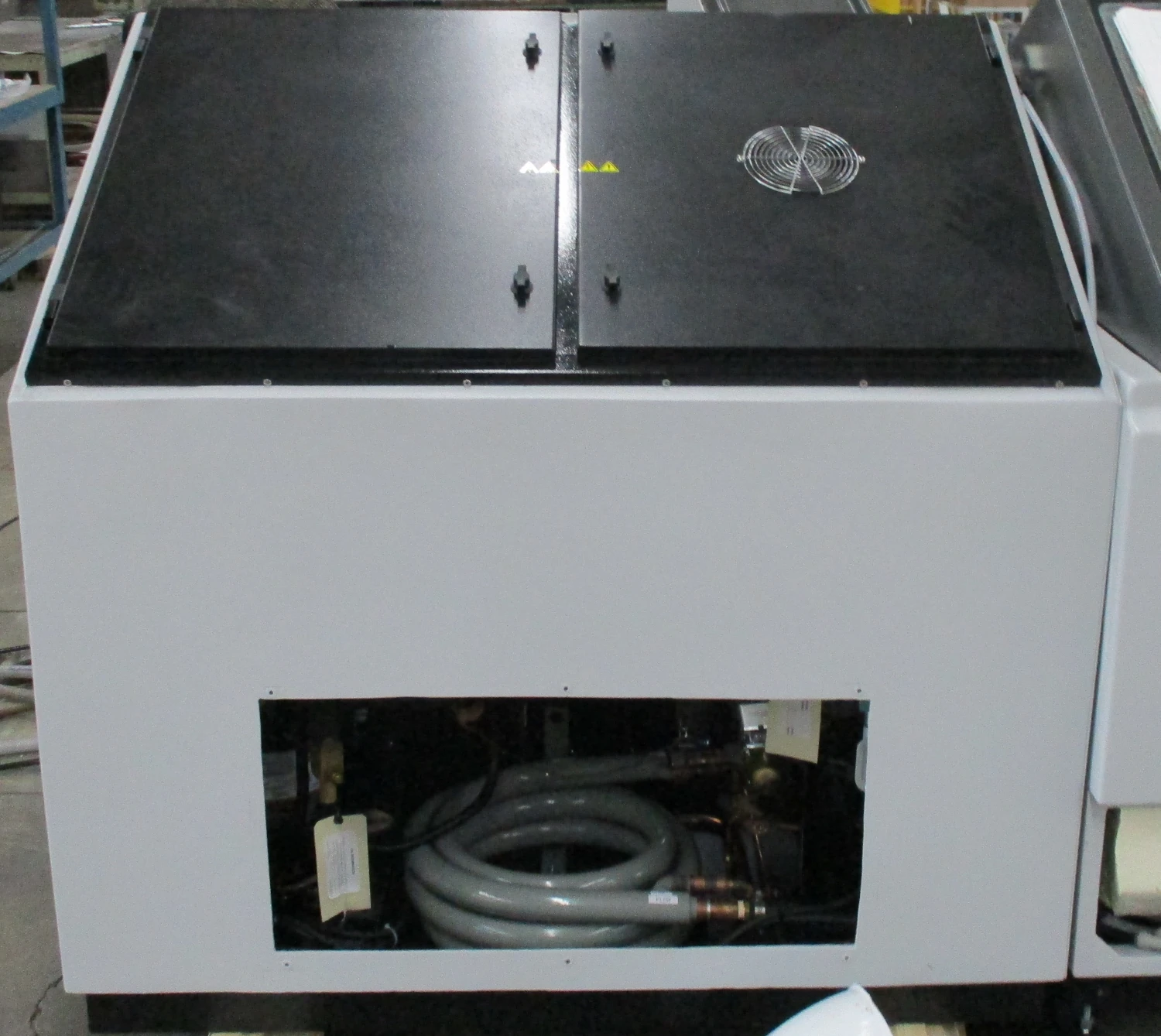
What the chamber must accomplish
Cool the loaded exposure zone from 35°C to -15°C at the specified rate, hold the low temperature for five hours, warm to 50°C, and resume the humidity program without moving the specimens.
Mechanism reading: Popova and Prošek, Effect of Drying in Cyclic Accelerated Corrosion Tests; LeBozec and Thierry, Influence of VDA test parameters on joined materials; Fraunhofer IPA, development and field-correlation summary; Keppert et al., Zn-Al-Mg behavior in alternating climate tests.
How Auto Technology Runs VDA 233-102 and ISO 11997-3 Tests
ATC uses a programmable combination chamber so specimens can remain in one exposure volume through salt fog, temperature/RH transitions, inspection periods, and the -15°C phase whenever their size and the test program allow.
1. We identify the controlling publication and test scope
ATC confirms whether the project calls for VDA 233-102, SEP 1850, ISO 11997-3, DIN EN ISO 11997-3, or an OEM procedure based on one of them. The scope records the edition, duration, specimens, artificial damage, orientation, inspections, evaluations, acceptance criteria, and reporting requirements.
2. We review and prepare the specimens
The laboratory verifies identification, substrate, coating system, cure and conditioning, dimensions, loading quantity, and areas to be evaluated. Programs can use customer-supplied test-ready panels or components, or ATC can perform agreed preparation such as cleaning, masking, edge protection, controlled scribing, cross cutting, stone-impact damage, coating application, or fabrication of representative panels.
3. We prepare the solution and qualify the exposure zone
ATC prepares the 10 ± 1 g/L sodium-chloride solution with qualifying water, verifies concentration or density and pH, and confirms that sprayed solution is not returned to the reservoir. The nozzle is adjusted so the direct spray jet does not strike the specimens. Collection devices are positioned in the usable exposure zone to verify the required average collection rate and distribution under the procedure required by the named publication.
That last point is edition-sensitive: VDA 233-102 describes an empty-chamber check of at least three hours, while ISO 11997-3 controls collection with representative specimen loading and recommends at least 16 hours of constant salt-spray operation for qualification and regular checks. ATC documents the approach used for the project rather than blending the two requirements.
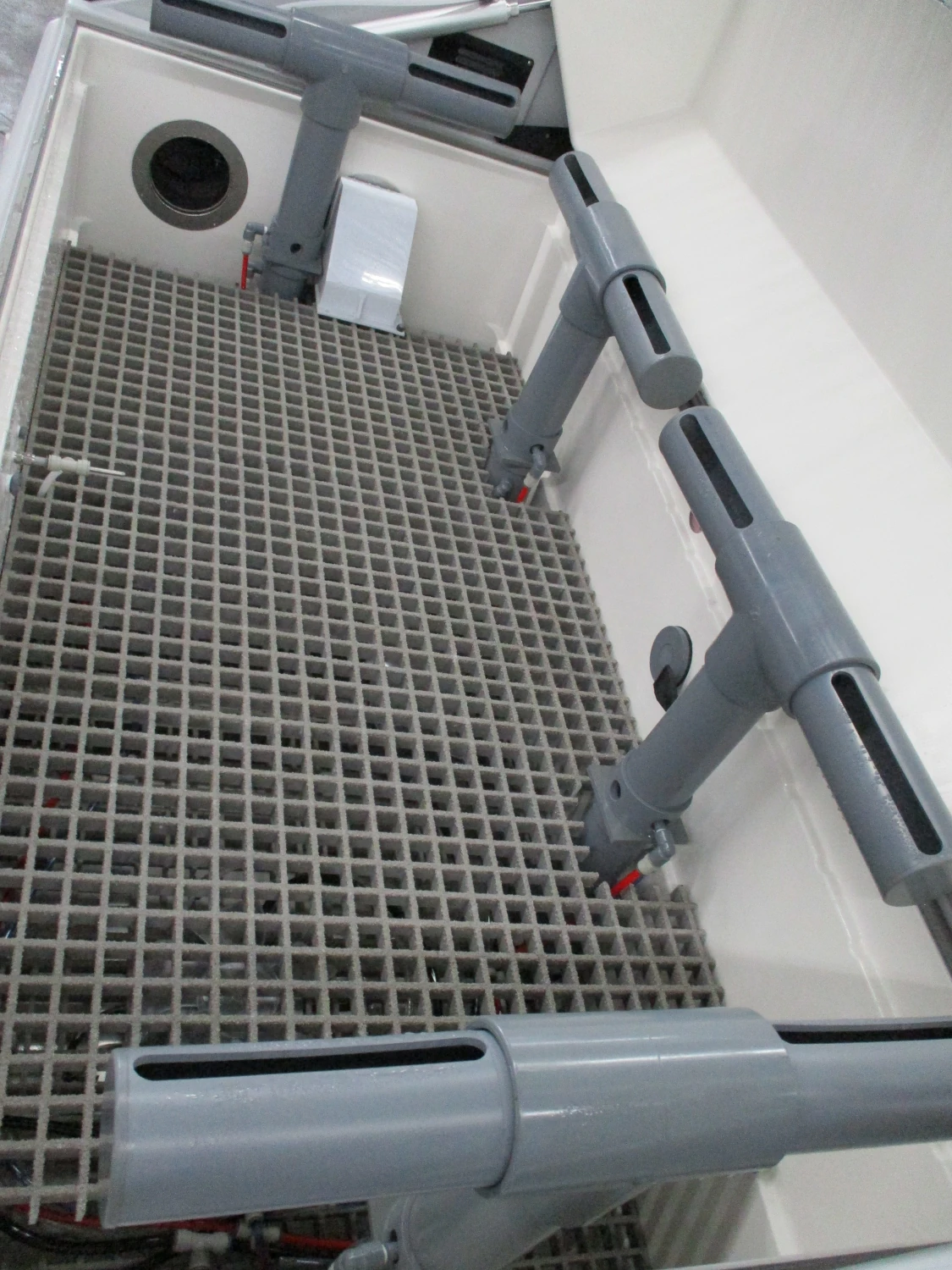
Fog delivery and collection across the chamber
The specified collection rate is 3.0 ± 1.0 mL/h for approximately 80 cm² of collection area throughout the usable exposure zone. A larger exposure area therefore requires greater total fog
output and enough distribution points to maintain that rate across the cabinet. This chamber uses additional fog towers to deliver and distribute the required fog volume while avoiding direct jet
impingement on the specimens. Collection measurements confirm the final tower arrangement. See the official VDA 233-102 and
ISO 11997-3 listings.
4. We load the chamber correctly
Panels are positioned at the prescribed angle with the evaluated surface facing upward. They cannot contact or shield one another, create conductive bridges, receive direct spray impingement, or drip onto specimens below. Components are installed in the required orientation with drainage paths open and without pockets that unintentionally retain solution. ATC records specimen position, orientation, supports, and the surfaces being evaluated before the chamber program starts.
5. We start and record the B-A-C-A-B-B-A chamber program
Once loading is confirmed, ATC starts the seven-day sequence with Cycle B. PC-based controls sequence and record the daily temperature and relative-humidity programs. ATC monitors the Cycle A salt-fog phase, opens the chamber only during the permitted Cycle B period, and runs Cycle C with mechanical cooling to -15°C and the specified warm-up. Any interruption, deviation, or transfer between chambers is recorded in the report.
6. We monitor chamber corrosivity
Mass-loss coupons check whether the chamber is producing the expected corrosive severity. Coupon material, preparation, placement, exposure, cleaning, weighing, and acceptance limits follow the specified method.
The shared three-cycle reference is an average mass loss of 900 ± 220 g/m². ISO 11997-3 also defines one- and two-cycle ranges and provides additional coupon-preparation and interlaboratory information.
7. We complete the agreed evaluation and report
At the end of exposure, specimens are rinsed, conditioned, cleaned, scraped, or taped as required by the evaluation procedure. Depending on the program, ATC can measure corrosion creep and assess blistering, rusting, flaking, cracking, filiform corrosion, adhesion, mass loss, cross-cut damage, stone-impact damage, or other specified changes.
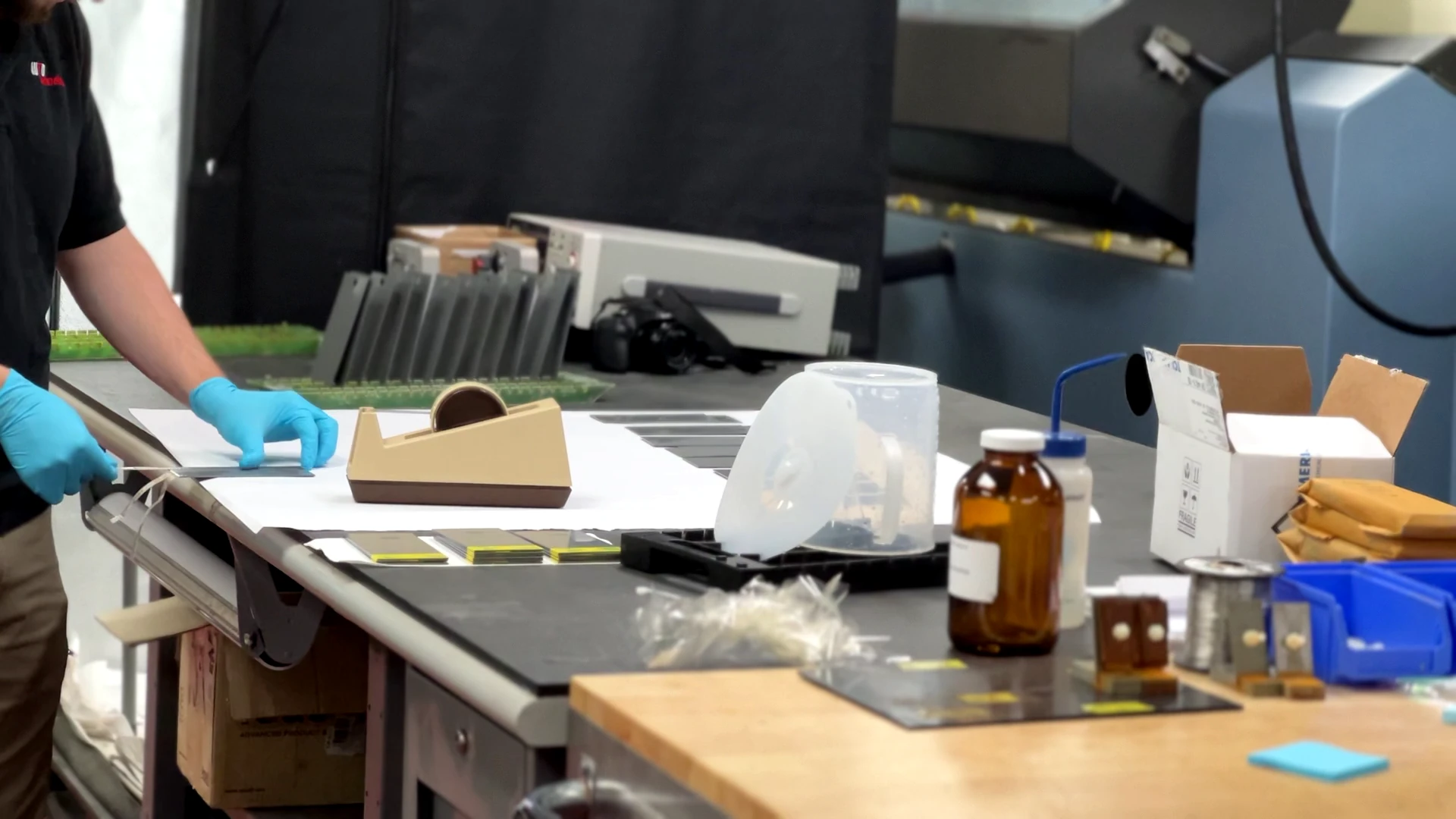
Specimen Planning, Evaluation and Test Reporting
Send Test-Ready Specimens
Send panels, coupons, body components, mounted parts, joined assemblies, adhesive specimens, flanged samples, or other approved test pieces with complete identification and the governing requirement. Include substrate, alloy, metallic coating, pretreatment, paint system, coating thickness, cure, damage method, production lot, and installation orientation when relevant.
Ask ATC to Prepare the Program
Auto Technology can help define representative specimen geometry, prepare substrates, apply or coordinate coatings, mask and protect areas, create controlled damage, fabricate special panels, design noncorrosive supports, and document the condition of each specimen before testing.
Typical report content
- Customer, project, laboratory, sample, material, coating, and lot identification.
- VDA, SEP, ISO, DIN EN ISO, OEM, or customer procedure and exact edition used.
- Specimen dimensions, quantity, preparation, prior damage, orientation, support, and loading.
- Test duration, cycle count, start and completion dates, chamber identification, and program used.
- Solution preparation, water quality, NaCl concentration or density, pH, and applicable collected-solution results.
- Fog collection rate, collector positions, qualification approach, and usable exposure-zone information.
- Temperature and RH records, Cycle B inspections, Cycle C execution, and specified chamber-corrosivity results.
- Requested setup, progress, inspection, and final photographs.
- Evaluation standards, observations, measurements, ratings, comparisons, and acceptance results requested in the approved scope.
- Interruptions, specimen pooling, transfers, limitations, deviations, or other conditions affecting interpretation.
Primary Standards and Technical Reading
Engineers planning or interpreting a VDA 233-102 or ISO 11997-3 program should work from the complete purchased standard and the governing product requirement. The sources below document the formal scope, development history, national and international standardization, field-correlation objective, and research into material behavior under cyclic exposure.
Official and Development Sources
VDA 233-102 (06/2013)
Official VDA description and current publication listing.
ISO 11997-3:2022
Official ISO scope, committee, edition, status, and publication history.
DIN 55635 record
Documents development from VDA 233-102/SEP 1850 and replacement by DIN EN ISO 11997-3.
Fraunhofer IPA climate-cycle summary
Development purpose, zinc behavior, salt concentration, cycle details, field correlation, and test characteristics.
Mechanism and Performance Studies
Effect of Drying in Cyclic Accelerated Corrosion Tests
Open-access 2025 study of RH, electrolyte films, real-time corrosion, corrosion products, and material-specific behavior.
Influence of VDA test parameters on joined materials
Study varying freezing temperature and salt composition across welded, clinched, and adhesively bonded multi-material assemblies.
Zn-Mg-Al coatings in automotive tests and field exposure
Comparison of VDA 233-102, VDA 621-415, Volvo testing, sample configurations, and stationary field exposure.
Zn-Al-Mg behavior in alternating climate tests
Corrosion-product and cross-section study comparing VDA methods, condensation climates, and salt spray.
Anticorrosion mechanisms of aluminized hot-stamped steel
Mechanistic comparison of VDA 233-102 cyclic exposure and continuous salt spray.
Why Use Auto Technology for Automotive Cyclic Corrosion Testing?
Auto Technology operates the corrosion laboratory and manufactures the chambers used to reproduce these exposures. That combination is useful when a project raises questions about chamber programming, salt-fog delivery, humidity control, mechanical cooling, specimen loading, or whether a customer can reproduce the same test in-house.
Laboratory Execution
One programmable combination chamber: minimizes specimen transfers and disturbance between fog, climate and low-temperature phases.
Mechanical cooling and PC control: supports the -15°C Cycle C phase, programmed ramps, live monitoring, graphing and data recording.
Test support: specimen planning and preparation, exposure, mass-loss controls, inspections, evaluation, photography, and reporting.
Corrosion and Equipment Experience
Standards-focused review: the laboratory distinguishes the VDA, SEP, ISO and DIN EN ISO requirements instead of treating them as one generic program.
Direct equipment knowledge: laboratory staff can work with the engineers who build, program, and service the corrosion chambers.
Related testing: salt spray, cyclic corrosion, humidity, condensation, immersion, coating evaluation, analytical work, and failure investigation can be added when the project requires them.
Explore Auto Technology's broader materials and corrosion testing laboratory or submit your requirement through the testing contact form.
VDA 233-102 and ISO 11997-3 Testing FAQ
Are VDA 233-102 and ISO 11997-3 the same test?
They belong to the same technical family and use the same basic B-A-C-A-B-B-A weekly climate sequence. ISO 11997-3 was prepared on the basis of VDA 233-102 and SEP 1850, but the publications differ in scope and several execution details. The exact publication and edition named by the customer must control the test.
Did ISO 11997-3 replace VDA 233-102?
Not formally. DIN EN ISO 11997-3 replaced the German national standard DIN 55635. VDA continues to list VDA 233-102 without identifying it as withdrawn. ISO 11997-3 is best described as the international standard derived from the VDA/SEP method, not an automatic contractual replacement for VDA 233-102.
What is the VDA 233-102 and ISO 11997-3 test duration?
One complete test cycle lasts seven days. VDA 233-102 identifies six complete cycles, or six weeks, as typical while allowing duration to be agreed case by case. ISO 11997-3 specifies six cycles unless otherwise agreed. A governing OEM or product requirement may establish a different duration.
What happens during Cycle C?
Cycle C is a salt-free 24-hour low-temperature cycle. The chamber cools from 35°C and high RH to -15°C, holds the low-temperature phase for five hours, warms to 50°C, returns to high RH, and cools to the next starting condition. RH is undefined and not controlled below 5°C. This keeps winter low-temperature exposure and the following warm/humid recovery in the same weekly sequence as the salt, wet, and drying phases.
Why does the method use only 1% sodium chloride?
The lower salt loading was a deliberate part of the method's development. Fraunhofer IPA reports that high salt loading can exaggerate zinc corrosion. Road snowmelt measurements supported the 1% concentration as a more practical chloride load for the intended automotive multi-metal comparison.
Can Auto Technology test complete automotive components?
Yes, subject to chamber capacity, loading, orientation, solution pooling, access and the governing requirement. Send drawings, dimensions, weight, installation orientation, evaluated surfaces, drain or pooling concerns, support needs, and required inspections so ATC can confirm the setup before quoting.
Does the standard provide a universal passing result?
No. The methods establish the exposure and evaluation framework, but the governing product, OEM, coating, material, procurement or customer requirement must define the applicable acceptance criteria. Auto Technology documents those criteria in the approved scope before testing.
What should I send for a testing quote?
Send the exact standard and edition, governing specification, exposure duration, specimen quantity and dimensions, substrate and coating system, preparation and artificial-damage requirements, orientation, inspections, evaluation methods, acceptance limits, photographs, reporting requirements, and requested schedule.
Request a VDA 233-102 or ISO 11997-3 Testing Quote
Send Auto Technology the controlling publication, governing product requirement, specimen information, exposure duration, preparation, evaluation, acceptance criteria, and schedule. Include drawings for large components or unusual fixtures. ATC can quote test-ready specimens or include preparation, controlled damage, inspections, evaluation, and reporting in the scope.
Need to Bring VDA 233-102 or ISO 11997-3 Testing In-House?
Auto Technology designs and manufactures X Series combination corrosion chambers configured for the seven-day A/B/C sequence, including salt fog, full temperature and RH programming, chamber pressure equalization, PC-based monitoring and data logging, and mechanical cooling for the -15°C Cycle C phase. Final configuration is established around the named standard and edition, chamber size, specimen load, transition requirements, utilities, ventilation, and related cyclic corrosion programs.
Or browse Auto Technology's full range of X Series cyclic corrosion chambers and industrial corrosion test chambers.