
CORROSION TEST CHAMBER SELECTION GUIDE

Selecting the right salt spray chamber or cyclic corrosion test system starts with understanding the environmental stresses required by your test standard: continuous salt fog, humidity cycling, temperature ramps, SO₂ exposure, mixed flowing gas, or long-term immersion. Compare the chamber types below for ASTM B117, ISO 9227, SAE J2334, GMW 14872, and specialized gas or immersion exposures. Select the chamber configuration from the standard, edition, cycle, specimen load, and required transition times.
C, M, A & X Series Chamber Capabilities
Compare the controls, environmental capabilities, chamber design, and heating methods available across Auto Technology C, M, A, and X Series corrosion test chambers.
Show C, M, A & X Series ComparisonHide C, M, A & X Series Comparison
| Feature / Capability | C Series | M Series | A Series | X Series |
|---|---|---|---|---|
| Controls | ||||
| Basic Controls | ● | |||
| Touchscreen Controls | ● | ◐ | ● | |
| Advanced Computer Controls | ● | |||
| Environmental Capabilities | ||||
| Fog | ● | ● | ● | ● |
| Spray | ◐ | ◐ | ||
| Basic Humidity Control | ◐ | |||
| Advanced Humidity Control | ◐ | |||
| Freezing | ◐ | |||
| Immersion | ◐ | |||
| Chamber Design | ||||
| Fiberglass Construction with Immersion Heating | ● | ● | ● | |
| Steel Construction with Water-Jacket Chamber Heating | ● | |||
Salt Fog & Modified Salt Fog Chambers
ASTM B117, ASTM G85, ISO 9227, and JIS Z 2371.

Complete IEC 60068-2-52 cycles also require the humidity, ambient, and/or dry conditions specified by the selected method; use separate controlled environments or a suitably equipped cyclic chamber.
Focused B117 / G85 salt-fog and cyclic capability
Touchscreen controls for salt fog and supported fog/dry cycles

Optional equipment supports additional humidity, cyclic fog, and SO₂ exposures.
*Requires the applicable factory-installed test package.
Ideal for long-term data consistency
Precision water-jacket heating
Cyclic Corrosion Test Chambers
SAE J2334, GMW 14872, ASTM G85, ISO 11997, Ford CETP 00.00-L-467, Volvo VCS 1027, and other OEM cyclic corrosion standards.
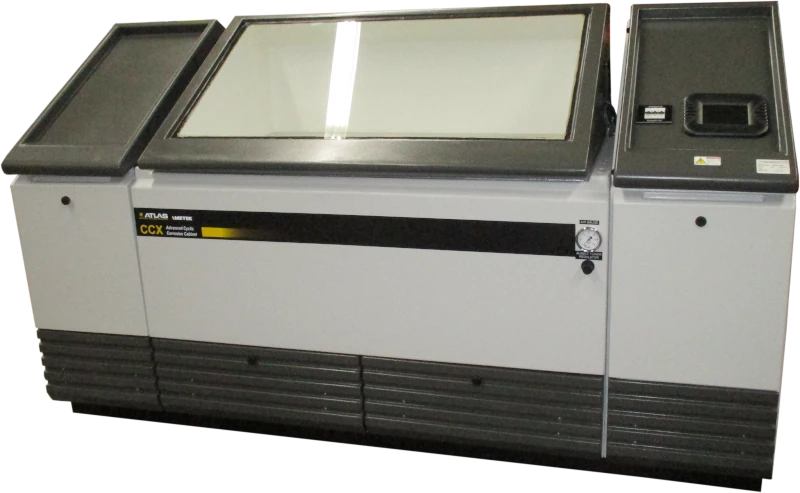
For ISO 11997-1, review the selected cycle and its temperature, humidity, and transition requirements before choosing A or X Series.
Basic humidity control when equipped
Dry-off using blower and compressed-air systems

Configured around the required test cycle and specimen load.
Optional mechanical cooling for low-temperature and freezing stages
Full PC control with advanced climate management
Auto Technology & Competitor Chamber Comparison
Compare the SSP, CCT, and CRH models listed below with Auto Technology C, M, A, and X Series chambers. The table identifies included features and options for those models.
Show Competitor ComparisonHide Competitor Comparison
| Feature / Capability | Competitor Chambers | Auto Technology Chambers | |||||
|---|---|---|---|---|---|---|---|
| SSP | CCT | CRH | C Series | M Series | A Series | X Series | |
| Two or more chamber sizes available | ● | ● | ● | ● | ● | ● | ● |
| Four or more chamber sizes available | — | — | — | — | ● | ● | ● |
| Performs Prohesion and other Fog/Dry-Off cycles | ● | ● | ● | ● | — | ● | ● |
| Performs conventional continuous salt fog | ● | ● | ● | ● | ● | ● | ● |
| Produces 95–100% humidity for high-humidity exposure stages | — | ● | ● | ● | ● | ● | ● |
| Performs cyclic automotive tests requiring variable humidity control | — | — | ● | — | — | ● | ● |
| Internal salt solution reservoir | ● | ● | ● | ● | — | ● | ● |
| Internal chamber heating | ● | ● | ● | ● | — | ● | ● |
| Reinforced fiberglass construction | ● | ● | ● | ● | — | ● | ● |
| Simple user interface for easy programming | ● | ● | ● | ● | ◐ | ● | ● |
| Controller with self-diagnostics, error messages, and safety shutdown | ● | ● | ● | ● | — | ● | ● |
| Automatic data logging (interface depends on controller) | ● | ● | ● | ◐ | ◐ | ◐ | ● |
| Salt fog via variable-speed peristaltic pump | ● | ● | ● | — | — | — | — |
| Salt fog via Venturi atomizer | — | — | — | ● | ● | ● | ● |
| Dry-Off: controlled temperature with forced air | ● | ● | ● | ● | — | ● | ● |
| Dwell: controlled temperature without forced air | ● | ● | — | ● | ● | ● | ● |
| Viewing window and interior chamber light | ● | ● | ● | ● | ● | ● | ● |
| Programmable ramp times | — | — | ● | — | — | — | ● |
| Shower module with self-cleaning spray nozzles | — | — | ● | — | — | — | — |
| Adjustable multipoint spray system | — | — | — | — | — | ◐ | ◐ |
| Top-mounted swaying shower bar | — | — | ◐ | — | — | — | ◐ |
| Performs automotive tests with fast temperature ramp specifications | — | — | ◐ | — | — | — | ◐ |
| Wall wash system (Renault ECC1 configuration requires cycle review) | — | — | ◐ | — | — | ◐ | ◐ |
| Specimen panel racks, hanging rods, and mounting grates | ◐ | ◐ | ◐ | ◐ | ◐ | ◐ | ◐ |
| Corrosion test coupons for GMW 14872, ASTM B117, ISO 9227, etc. | ◐ | ◐ | ◐ | ◐ | ◐ | ◐ | ◐ |
| External fog collection cylinders | ◐ | ◐ | ◐ | — | ◐ | ◐ | ◐ |
| Access port | ◐ | ◐ | ◐ | — | ◐ | ◐ | ◐ |
| Wet-bottom operation for ASTM G85 Annex A2 and A3 | ◐ | ◐ | ◐ | ● | ◐ | ● | ● |
Humidity capability describes an exposure stage; running a complete test also requires its specified wetting, dry-off, ambient conditions, and transitions. Controller diagnostics, Ethernet communication, and USB export depend on the installed controller and logging package.
G4 & MFG Gas Corrosion Chambers
Choose the chamber from the required gas exposure, humidity conditions, and sample load. The G4 adds a measured gas dose for each cycle and provides condensing humidity for moist SO₂ methods. MFG systems continuously supply a controlled gas atmosphere; methods such as ISO 10062 and IEC 60068-2-60 require condensation to be avoided.

IEC 60068-2-60
ASTM B845 and ASTM B827
IEC 60512-11-7
EIA-364-65
Continuous gas delivery with concentration measurement
Controlled temperature, relative humidity, and chamber air exchange
Custom chamber sizes, including walk-in systems
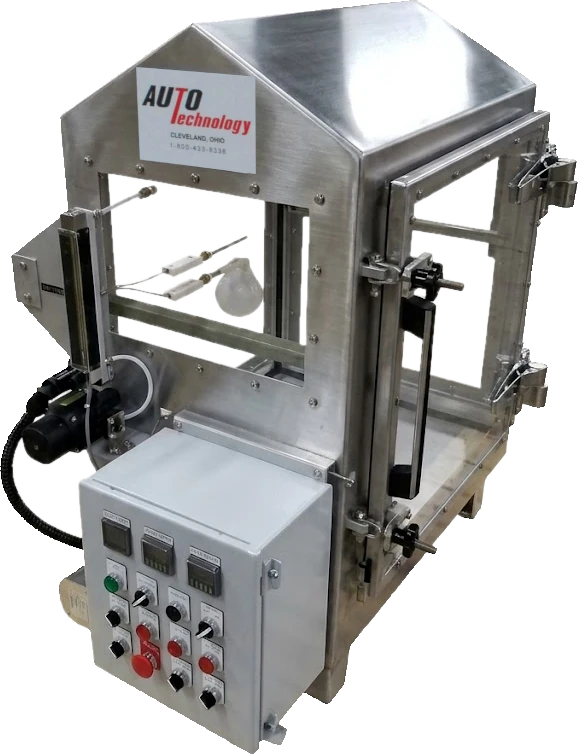
ISO 22479
DIN 50018
ISO 3231 and ISO 6988: legacy SO₂ methods replaced by ISO 22479
Measured gas dosing, temperature control, and timed exposure
Condensing humidity for moist SO₂ methods
Optional accessories for additional gas-exposure programs
Choosing Between G4 and MFG
A gas quantity specified in liters per cycle points to measured-dose testing. A concentration specified in ppm or ppb that must be maintained, together with continuous airflow, points to flowing-gas testing. Confirm the standard, edition, and selected method.
Show G4 & MFG ComparisonHide G4 & MFG Comparison
| What to Check | G4: Measured-Dose Exposure | MFG: Flowing-Gas Exposure |
|---|---|---|
| Gas Requirement | A specified gas quantity is added for each cycle, such as 1 liter of SO₂ in a 300-liter chamber. | A specified gas concentration is maintained during exposure, such as 200 ppb of SO₂, using continuously supplied gas and conditioned air. |
| Humidity & Condensation | Principal moist SO₂ methods use a heated, very humid atmosphere that produces condensation on the specimens. | Methods such as ISO 10062 and IEC 60068-2-60 require controlled temperature and relative humidity, with condensation avoided. |
| Airflow | The prescribed gas dose, chamber volume, water charge, and specimen load establish the exposure. Ventilation follows the selected cycle. | The test atmosphere continuously enters and leaves the chamber at the exchange rate required by the method. |
| Gas Measurement | Measure the gas quantity introduced. Its concentration changes as the gas dissolves in water and reacts with specimens. | Measure the exposure concentrations and maintain them within the method's limits. |
| Chamber Size & Loading | One size: 300 liters. Check sample dimensions, total exposed surface area, spacing, and clearance above the chamber water. | Custom sizes, including walk-in systems. Size the working volume and gas delivery around specimen loading, airflow, and the applicable method. |
The number of gases does not decide the chamber type. MFG systems can run single-gas tests. The G4 can support additional gases with optional equipment. Select by the required exposure conditions, including gas delivery, humidity, and airflow.
Check usable sample capacity, not just chamber volume. For example, ISO 22479 specifies 0.5 ±0.1 m² of total exposed specimen area for a 300 ±10-liter cabinet, together with specimen clearances. If the samples exceed the G4's capacity, review a larger system for the prescribed test. Changing chamber size does not change the required exposure method.
For example, ISO 10062 Annex A requires at least three chamber air exchanges per hour and measurement of gas concentrations. A gas flowmeter alone does not verify the exposure concentration.
Immersion, Walk-In & Spray Chambers
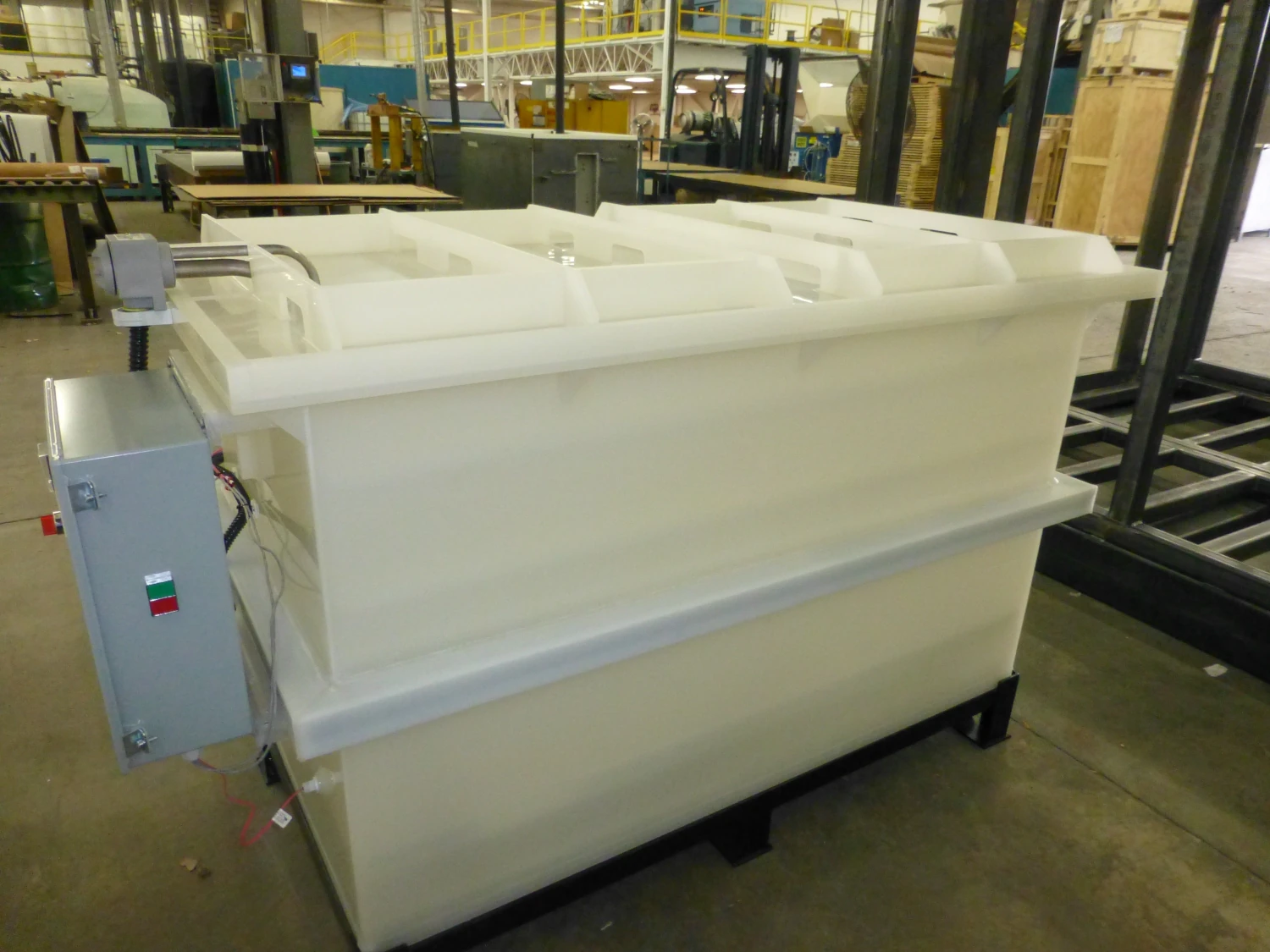
ISO 2812-2 (water immersion)
ISO 175 (plastics immersion, using liquids compatible with the tank and equipment)
Stable liquid exposure conditions
Built-to-order tank configurations
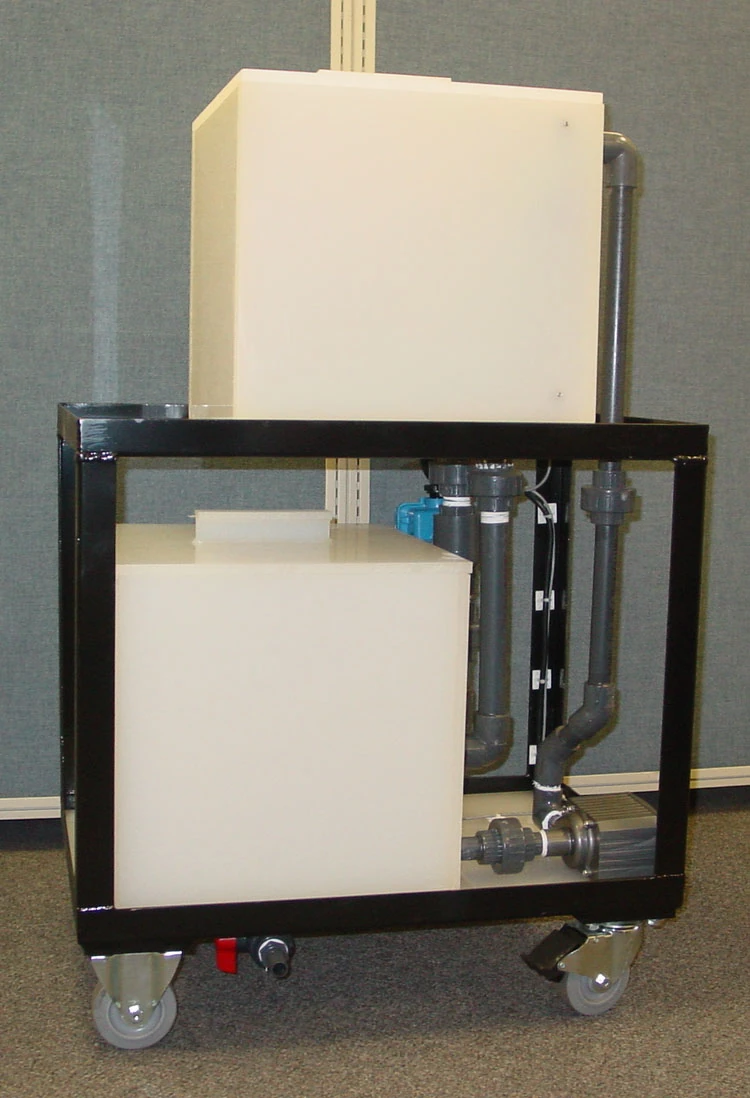
Internal durability procedures
Repeated immersion / drain exposure methods
Programmable fill and drain cycling
Electronic counter control

GMW14872
Ford CETP 00.00-L-467
ASTM B117
ISO 9227
Customer-specific corrosion programs
Salt fog, cyclic corrosion, humidity, and thermal cycling
Custom engineered around the application
Built in America and supported in America
