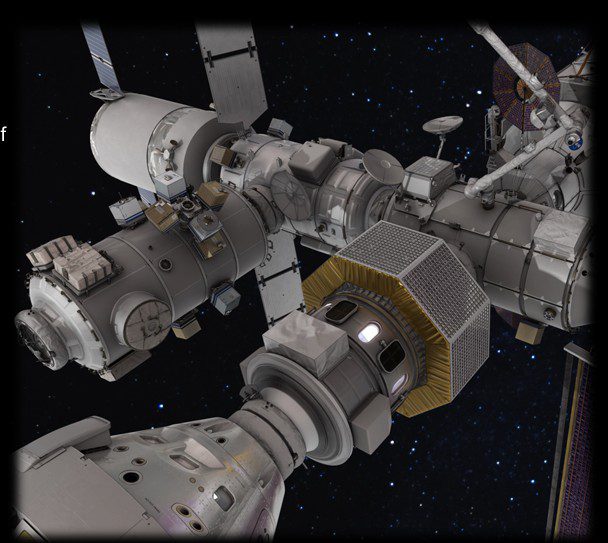
Corrosion Testing and Spacecraft
“That crap’s gonna eat through the hull!” — Alien (1979)
In science fiction, acid blood eating through a spacecraft hull is a nightmare. In the real world, corrosion is slower, less cinematic, and still serious enough that NASA identified it as a challenge for human spaceflight hardware.
What NASA Said About Gateway Corrosion
During NASA’s March 2026 Building the Moon Base presentation , the agency stated that the PPE+HALO launch would likely be further delayed due to ongoing HALO corrosion mitigation. The same presentation also identified corrosion mitigation as one of the significant technical challenges facing additional Gateway modules.
NASA did not describe corrosion as a minor cosmetic problem. It was listed as a technical issue affecting major Gateway hardware, including HALO, the Habitation and Logistics Outpost originally intended to support astronauts in lunar orbit.
The cited NASA presentation does not provide a detailed metallurgical failure analysis. It does not identify the affected alloy, establish the corrosion mechanism, or confirm the environmental conditions that caused the damage.
What Is Publicly Known
The GAO’s July 2026 assessment of NASA’s major projects reports microscopic corrosion on HALO’s primary structure. One affected location was observed before shipping, and additional affected areas were found after delivery. As of January 2026, the project had not established the root cause. These findings concern hardware still on Earth, rather than corrosion caused by the lunar environment.
In statements published by European Spaceflight in April 2026, ESA identified forging, surface treatment, and material properties as possible contributing factors based on preliminary findings. Thales Alenia Space separately described a known metallurgical behavior at the module surface. These statements do not establish a final root cause or a confirmed corrosion mechanism.
Program context: GAO also reports NASA’s March 2026 decision to pause Gateway Initial Capability and its April direction to stop most HALO work while considering other uses for Gateway equipment. The corrosion statements above describe technical problems identified during development; they should not be read as a current launch forecast.
Corrosion Testing and Corrosion Chambers
Corrosion is easier to find in a controlled test program than after hardware is already built, shipped, integrated, or placed into service.
Auto Technology supports corrosion validation through both corrosion testing laboratory services and corrosion test chambers for manufacturers, suppliers, labs, and engineering teams that need to qualify materials, coatings, parts, and assemblies.
Whether the concern is aerospace hardware, electronics, vehicles, infrastructure, industrial equipment, or defense systems, corrosion testing helps identify material and process weaknesses before they become field failures, warranty problems, or program delays.
For aerospace-specific requirements, NASA-STD-6012A, Corrosion Protection for Space Flight Hardware, addresses qualification of materials, surface treatments, and finishing processes for corrosion control. The applicable hardware requirements and service environment determine the validation program.
Sources
-
NASA – Building the Moon Base
Building the Moon Base — March 2026 presentation -
NASA – Gateway Space Station
Gateway mission background -
European Spaceflight – ESA Sheds Light on NASA Administrator’s Claims on Gateway Modules
ESA and Thales Alenia Space statements — April 24, 2026 - U.S. Government Accountability Office — NASA: Assessments of Major Projects
GAO-26-108556 — Gateway Initial Capability assessment, July 23, 2026 - NASA Technical Standards System
NASA-STD-6012A — Corrosion Protection for Space Flight Hardware