SAE J2334 Immersion Cyclic Corrosion Test Chamber – X Series Size 40
The Auto Technology X Series Size 40 is a configurable SAE J2334 immersion cyclic corrosion test chamber providing approximately 39 ft³ (1106 L) of usable internal test volume. The automated immersion configuration performs the method’s 15-minute salt-application stage without depending on spray distribution or fog collection rates.
- Primary Configuration: Automated immersion using the SAE J2334 mixed-electrolyte solution
- Test Cycle: 6-hour humid stage, 15-minute salt application, and 17-hour 45-minute dry stage
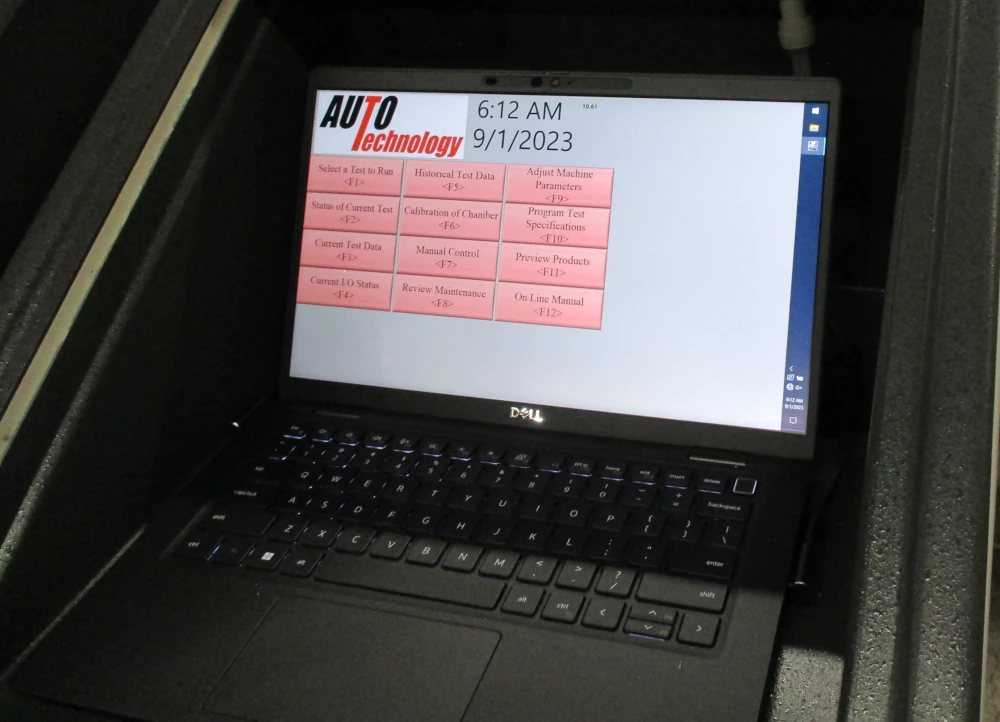
- Control System: PC-based control of immersion, temperature, humidity, air circulation, and cycle timing
- Additional Sizes: X Series Sizes 20 and 110 are also available
- Spray Alternative: The A Series can be configured for SAE J2334 direct-spray application
SAE J2334 also permits air-atomized fog, but the method was primarily developed using immersion, and comparative testing has produced less desirable results with fog application.
Description
The X Series Size 40 SAE J2334 Immersion Cyclic Corrosion Test Chamber is configured for laboratories evaluating automotive components, assemblies, coated specimens, and corrosion-control coupons to
SAE J2334, Laboratory Cyclic Corrosion Test.
It provides approximately 39 ft³ (1106 L) of usable internal test volume and combines automated immersion, controlled humidity, dry-off, air circulation, and PC-based test sequencing.
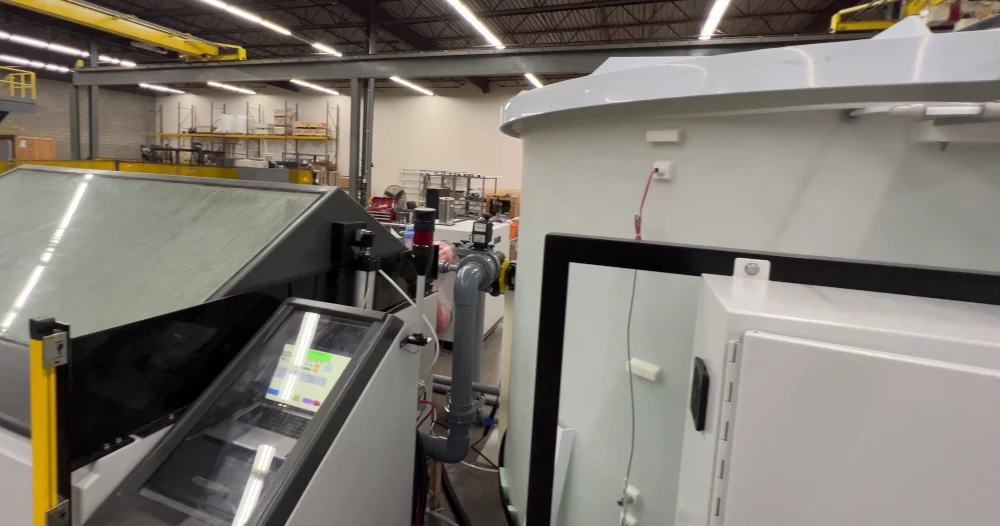
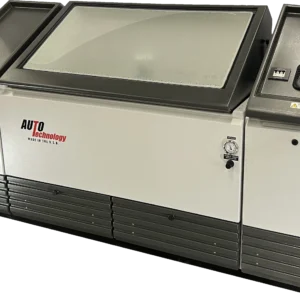
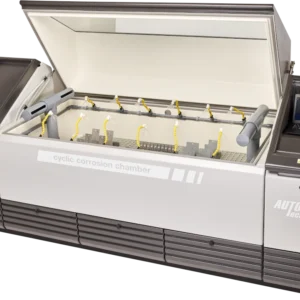
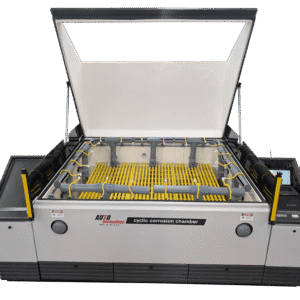
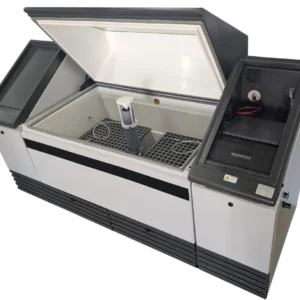
Example X Series chamber configured with automated immersion equipment and PC-based controls. Final equipment arrangement varies with chamber size and installation requirements.
Immersion Salt Application
Test specimens are immersed in the SAE J2334 solution for the complete 15-minute salt-application stage.
Size 40 Test Capacity
Approximately 39 ft³ of usable volume for automotive components, assemblies, and laboratory specimens.
Controlled Humid and Dry Stages
The chamber controls the 50°C humid stage and the 60°C/50% RH dry stage required by SAE J2334.
Request a Size 40 SAE J2334 Quote
Provide the applicable SAE J2334 revision, specimen dimensions, loading quantity, total test mass, and any additional corrosion methods the chamber must perform.
SAE J2334 Cyclic Corrosion Test Conditions
SAE J2334 uses a repeating 24-hour corrosion cycle consisting of a humid stage, a mixed-electrolyte salt-application stage, and a controlled dry stage.
| Stage | Duration | Required conditions |
|---|---|---|
| Humid stage | 6 hours | 50°C ±2°C and 100% relative humidity, with specimens visibly moist or wet |
| Salt-application stage | 15 minutes | Immersion, direct spray, or air-atomized fog at ambient conditions |
| Dry stage | 17 hours 45 minutes | 60°C ±2°C and 50% RH ±5% |
Test duration: SAE J2334 states that coated products are typically tested for a minimum of 60 cycles. The required duration may change based on the material, corrosion mechanism, product requirement, or previous test history.
Ramp time from salt application to the dry stage is included in the dry-stage duration. Ramp time from the dry stage to the humid stage is included in the humid-stage duration. These transitions should be documented for each test setup.
Automated Immersion for SAE J2334
In the immersion version of SAE J2334, test specimens are immersed in the specified salt solution for the complete 15-minute salt-application stage. This establishes solution contact across the exposed specimen surfaces without depending on spray distribution or fog collection rates.
Why immersion is emphasized: SAE J2334 states that most development of the method was performed using immersion and that immersion was used as the basis for comparing other salt-application methods and variables.
X Series automated fill and drain cycle demonstrating the operation of an immersion-equipped chamber.
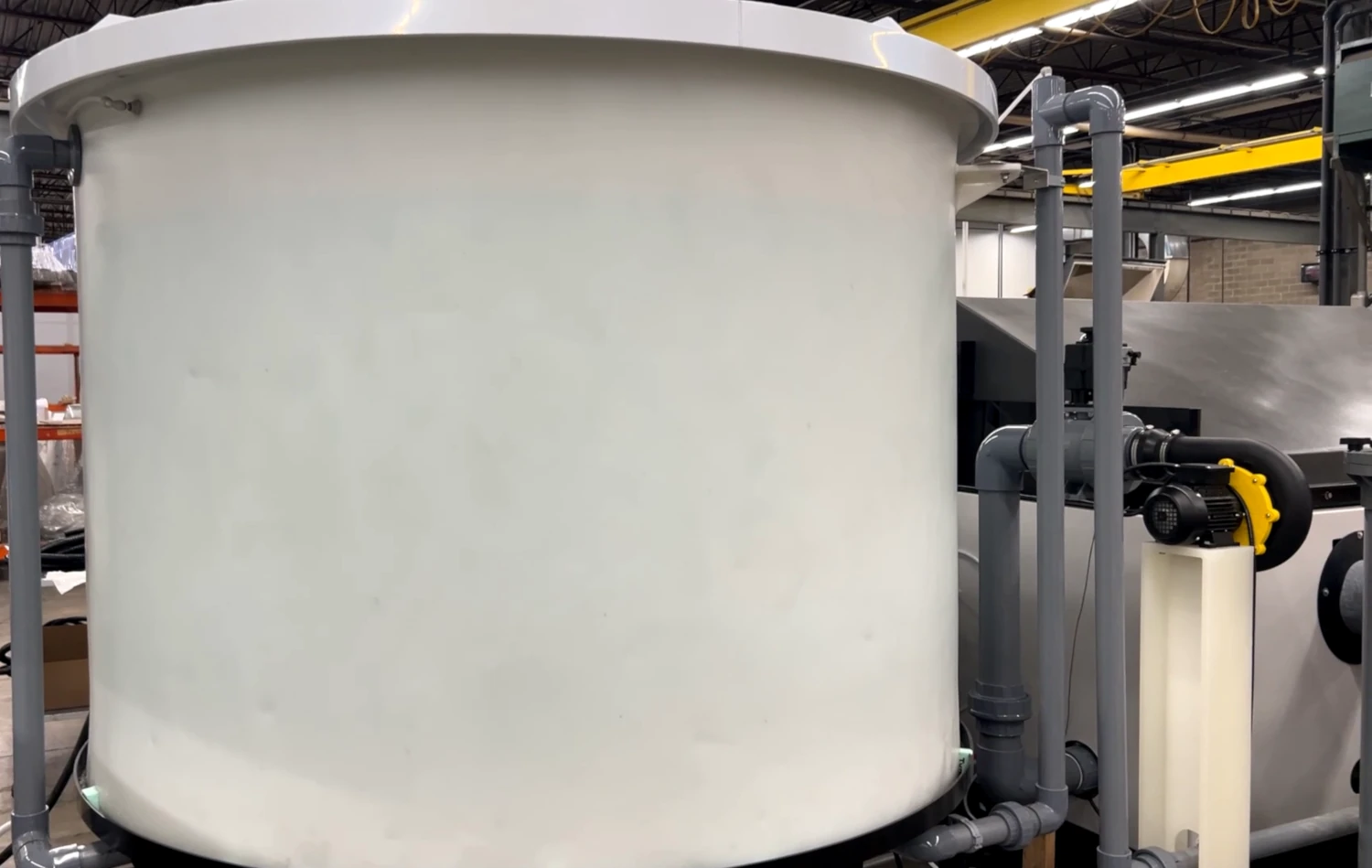
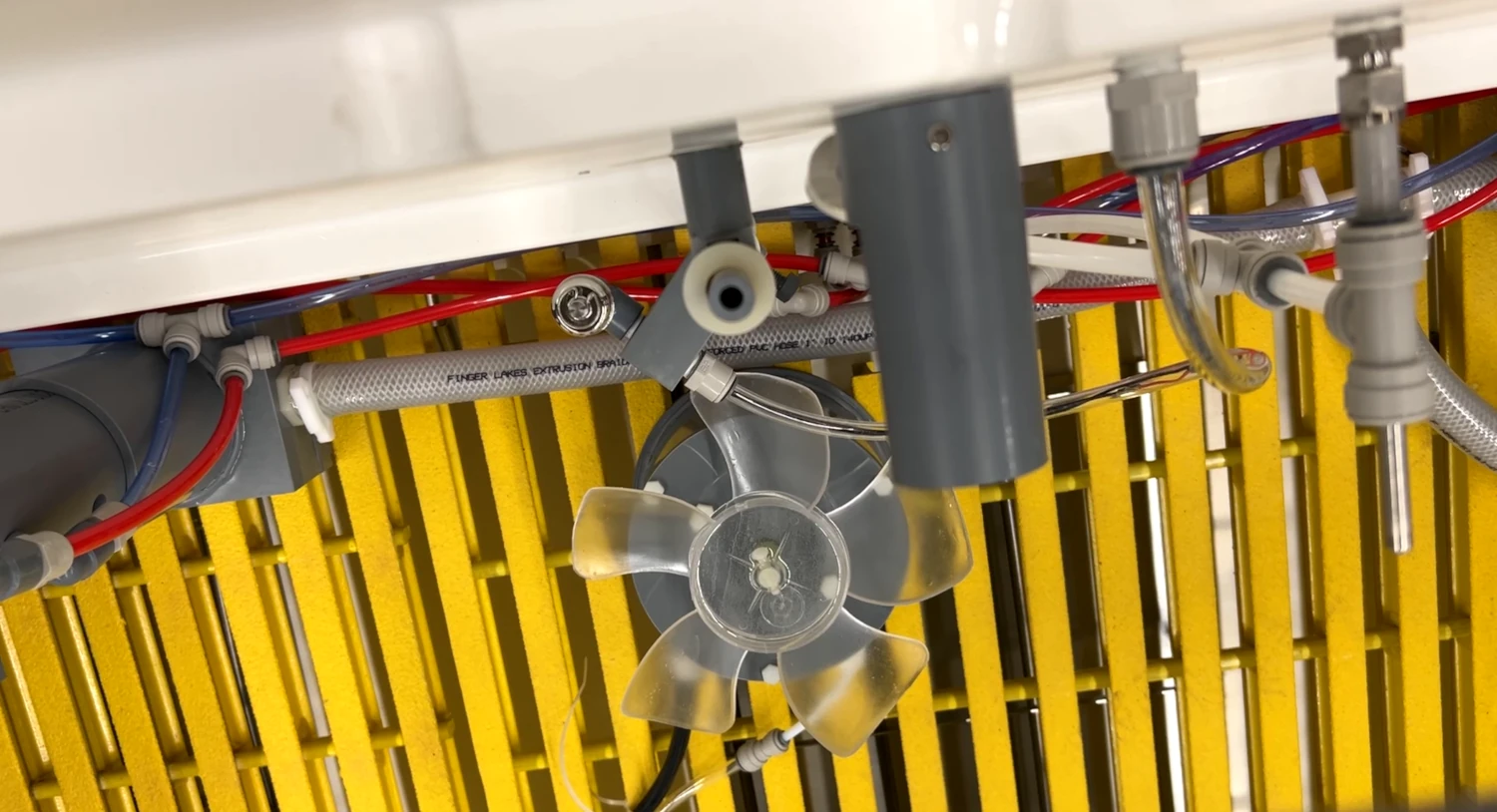
Automated immersion functions
- Programmed transfer of solution into the exposure zone
- Complete 15-minute specimen immersion interval
- Solution return to the external tank after immersion
- Full-level and overflow protection
- Coordination with the humid and dry stages
- PC-based test timing and recorded operating data
SAE J2334 Salt-Application Methods
SAE J2334 permits three salt-application methods. Regardless of the method selected, specimens and control coupons must remain visibly moist or wet throughout the complete 15-minute interval.
| Application method | SAE J2334 requirement | ATC configuration |
|---|---|---|
| Immersion | Immerse specimens for the complete 15-minute interval | Preferred X Series Size 40 configuration. Immersion was the basis of most J2334 development work. |
| Direct spray | Periodic or continuous spray that keeps specimens wet for the entire interval | A Series alternative. The A Series can be configured for SAE J2334 spray application when immersion is not required. |
| Air-atomized fog | 15-minute exposure at a documented collection rate of 2–4 mL/h | Permitted by the method, but not the preferred configuration because comparative testing has produced less desirable results than immersion. |
Spray control: SAE J2334 cautions against high-intensity spray that could remove corrosion products, remove coating, or drive solution into accumulated corrosion products.
Application method affects the exposure: Immersion, spray, and fog should not be treated as automatically equivalent simply because all three are permitted. The selected method must be documented and held consistent when comparing results.
SAE J2334 Mixed-Electrolyte Solution
SAE J2334 uses a mixed-electrolyte solution rather than the sodium-chloride-only solution associated with conventional salt spray testing.
| Solution component | Concentration |
|---|---|
| Sodium chloride, NaCl | 0.5% |
| Calcium chloride, CaCl2 | 0.1% |
| Sodium bicarbonate, NaHCO3 | 0.075% |
Water
SAE J2334 references ASTM D1193 Type IV reagent water for solution preparation.
Conductivity
A freshly prepared solution should have a conductivity of 10–12 mS at 25°C ±2°C.
Monitoring
Solution pH is measured before testing and weekly thereafter. The method states not to adjust pH using buffers.
Maintenance
SAE recommends changing the solution weekly and agitating or stirring it before salt application.
Mixing sequence: The calcium chloride or sodium bicarbonate must be dissolved separately in deionized water before being added to the other solution components. Adding all dry materials together can form an insoluble precipitate.
Humidity, Dry-Off, and Air Circulation
SAE J2334 requires the chamber to maintain two different controlled environments. Specimens must remain visibly wet during the 50°C humid stage and must dry during the 60°C/50% RH stage.
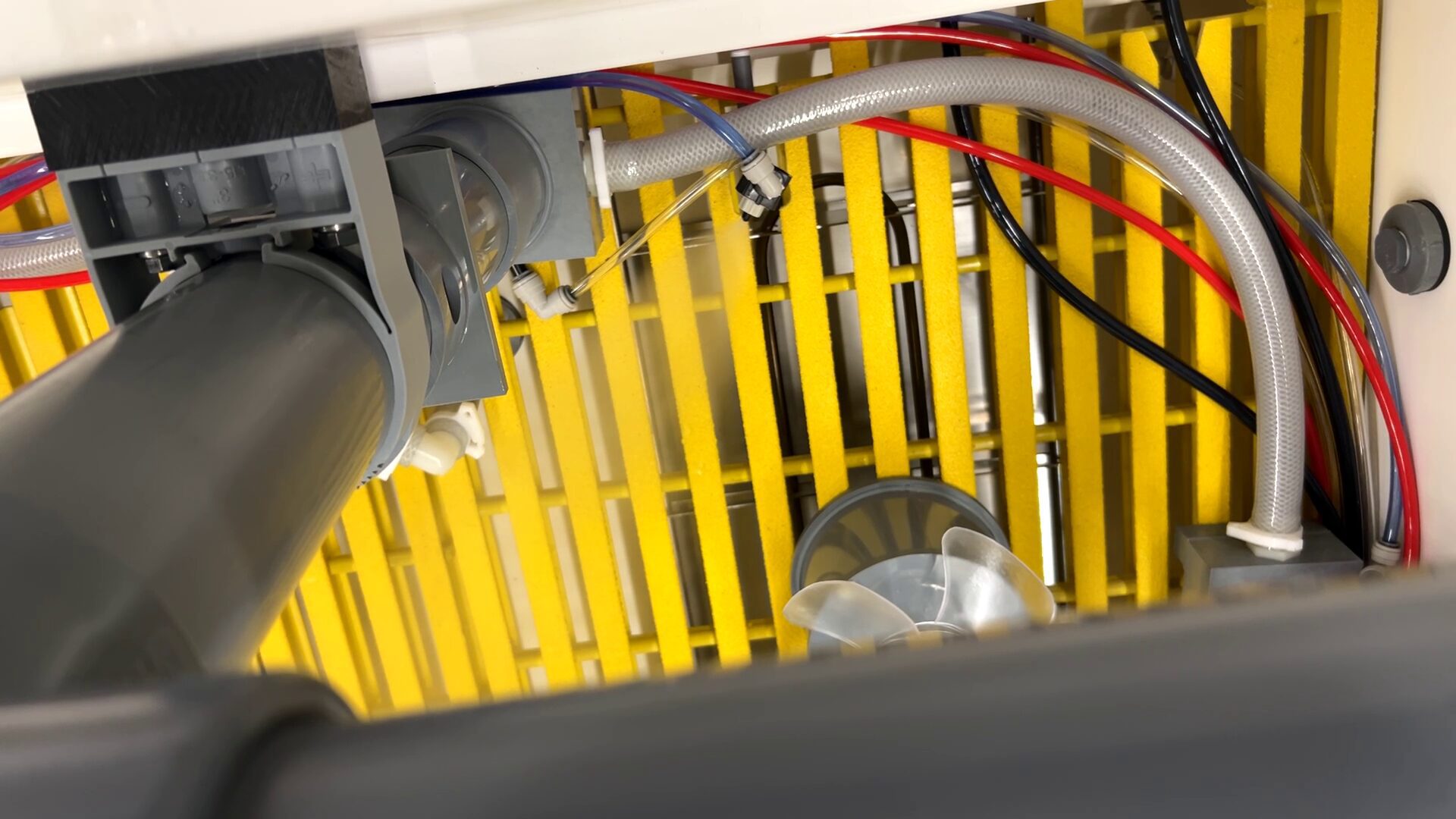
Air circulation must prevent temperature stratification and allow the test parts to dry during the dry-off portion of the cycle.
- Humid stage: 50°C ±2°C and 100% RH for six hours
- Specimen condition: Visibly moist or wet during the humid stage
- Dry stage: 60°C ±2°C and 50% RH ±5% for 17 hours 45 minutes
- Air circulation: Sufficient to prevent temperature stratification and dry the test parts
- Ramp documentation: Transition times should be recorded for each test setup
Humidity-stage distinction: SAE J2334 separately permits wet-bottom, water-fog, or steam-generation methods for producing the six-hour humid stage. These methods are different from immersion, direct spray, or salt fog used during the 15-minute salt-application stage.
PC-Based SAE J2334 Test Control
X Series PC controls sequence the humid stage, immersion interval, solution transfer, draining, dry-off, and return to humid conditions. Fully automatic operation allows consecutive daily cycles and programmed weekend operation.
- Multi-step daily cycle programming
- Automatic fill, immersion timing, drain, and solution return
- Temperature and relative-humidity monitoring
- Test status, alarms, and operating records
- Stored test profiles for repeat operation
X Series Size 40 SAE J2334 Chamber
The Size 40 provides space for automotive components, assemblies, coated panels, and corrosion-control coupons while remaining a laboratory-scale chamber. Racking and fixtures should preserve solution access, drainage, humidity exposure, airflow, and dry-off around the test specimens.
Usable test volume
Approximately 39 ft³
Approximately 1106 liters
Internal dimensions
75 × 36 × 25 in
191 × 92 × 64 cm
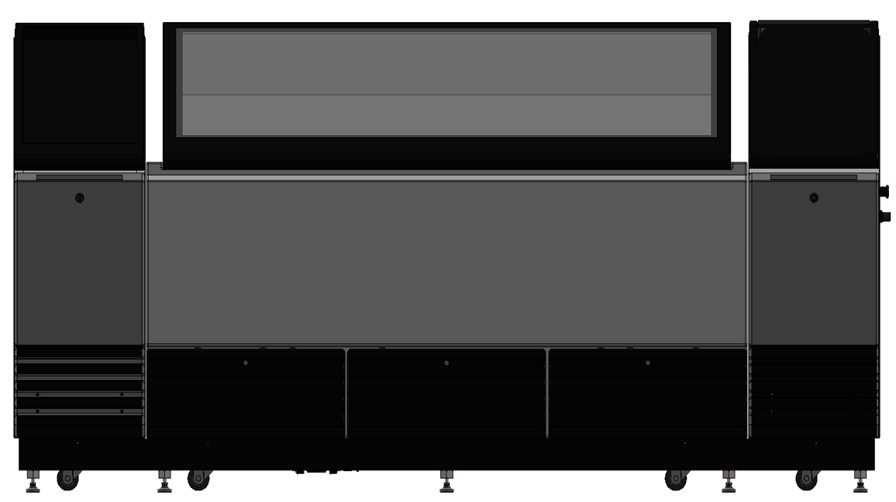
The installed footprint increases with immersion tanks, pumps, transfer plumbing, control cabinets, exhaust routing, and required service clearances.
Additional X Series Size Options
The Size 40 is not the only available SAE J2334 immersion configuration. Size 20 and Size 110 chambers are available for laboratories requiring a smaller system or greater specimen capacity.
| Model | Usable test volume | Internal dimensions |
|---|---|---|
| Size 20 | 20 ft³ / 594 L | 50 × 29 × 25 in / 127 × 73 × 64 cm |
| Size 40 | 39 ft³ / 1106 L | 75 × 36 × 25 in / 191 × 92 × 64 cm |
| Size 110 | 112 ft³ / 3194 L | 89 × 73 × 30 in / 227 × 186 × 77 cm |
Final chamber selection should account for specimen dimensions, loading quantity, immersion-solution volume, thermal mass, drainage, airflow, facility space, and required test capacity.
Configure a Size 40 Chamber for SAE J2334
Specify the applicable J2334 revision, specimen dimensions, loading quantity, total mass, available utilities, and any additional cyclic corrosion methods the chamber must perform.
SAE J2334 Size 40 Chamber FAQ
What is SAE J2334?
SAE J2334 is a laboratory cyclic corrosion test method using repeated humid, salt-application, and dry stages to evaluate automotive materials, coatings, components, and assemblies.
What is the capacity of the X Series Size 40?
The Size 40 provides approximately 39 ft³ or 1106 L of usable test volume. Its internal dimensions are 75 × 36 × 25 inches.
Does SAE J2334 require immersion?
SAE J2334 permits immersion, direct spray, or air-atomized fog. However, the method states that most development work used immersion and that immersion was the basis for comparing other application methods.
Why is immersion preferred for SAE J2334 testing?
Immersion exposes the specimens to the mixed-electrolyte solution for the complete 15-minute interval without relying on spray distribution or fog collection rates. It was also the application method used for most development of SAE J2334.
Can SAE J2334 be performed using direct spray?
Yes. SAE J2334 permits periodic or continuous direct spray as long as specimens remain wet throughout the entire 15-minute interval. The A Series can be configured for this application method.
Can SAE J2334 be performed using salt fog?
The method permits a 15-minute air-atomized fog exposure at a documented collection rate of 2–4 mL/h. However, immersion was used for most J2334 development, and comparative testing has produced less desirable results with fog application.
Are other X Series chamber sizes available?
Yes. In addition to the 39 ft³ Size 40, the X Series is available in a 20 ft³ Size 20 and a 112 ft³ Size 110. Final selection depends on specimen dimensions, load, solution volume, airflow, and facility space.
What information is needed to quote a Size 40 SAE J2334 chamber?
Provide the applicable J2334 revision, specimen dimensions, test quantity, total load, available utilities, and any additional cyclic corrosion methods the chamber must perform.
Related products
-

Acetic Acid Salt Spray Chamber – C Series Size 20
Contact Us to Configure Your Chamber -
X Series Size 40 Precision Cyclic Corrosion Chamber
Contact Us to Configure Your Chamber -
Auto Technology X Series Size 110 Cyclic Corrosion Chamber – 730110-A
Buy product -
MIL-STD-810H Method 507.6 Humidity Chamber – X Series Size 20
Contact Us to Configure Your Chamber