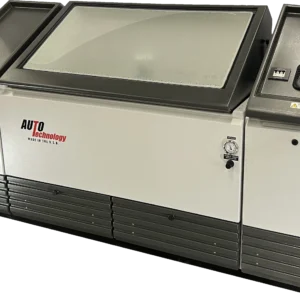
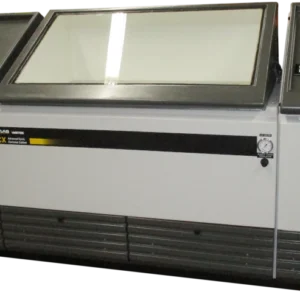
Ford L-467 / CETP 00.00-L-467 Cyclic Corrosion Test Chamber – X Series Size 40
The Auto Technology X Series Size 40 is a configurable L467 (Ford CETP 00.00-L-467) cyclic corrosion test chamber with approximately 39 ft³ (1106 L) of usable internal test volume. The Ford configuration combines a swaying spray bar, Advanced Climate Control, forced cooling, and PC-based sequencing for the method’s wet, transition, and controlled-climate phases.
- L467 Hardware: Swaying spray bar and Advanced Climate Control
- Control System: PC-based programming for spray, temperature, humidity, cooling, and transition steps
- Available Configurations: Multiple chamber sizes, custom racking, access ports, and method-specific hardware
- Optional Expanded Capability: Mechanical cooling for freezing and other low-temperature tests
Final chamber configuration is based on the applicable method revision, specimen geometry, test load, required cooling rate, and facility conditions.
Description
The X Series Size 40 Ford L-467 Cyclic Corrosion Test Chamber (engineered for Ford CETP 00.00-L-467 and Ford L467 variant test procedures) is specifically configured for laboratories testing automotive components, assemblies, and coated specimens to the Global Laboratory Accelerated Cyclic Corrosion Test standard.
The system combines moving direct spray, controlled temperature and relative humidity, forced cooling, conditioned-air circulation, and PC-based test sequencing.
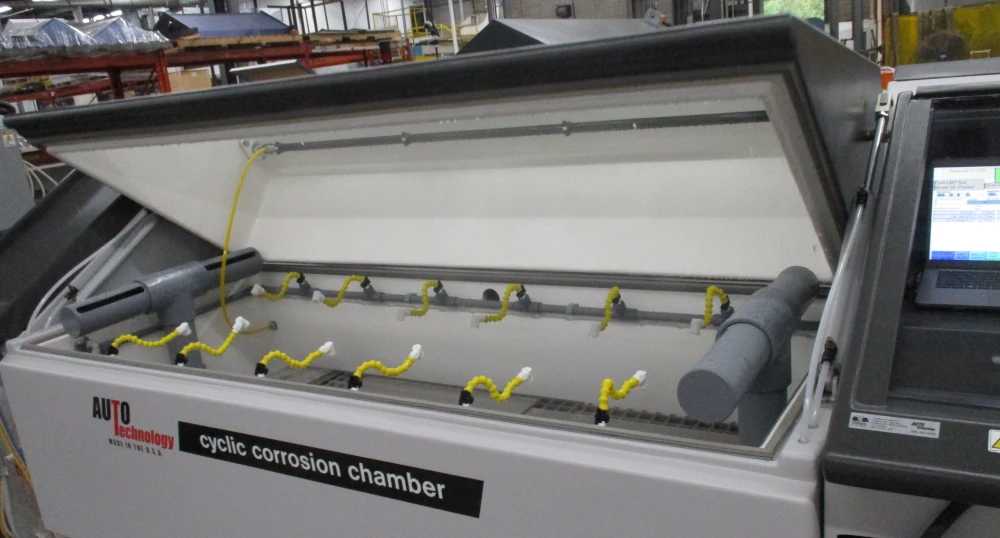
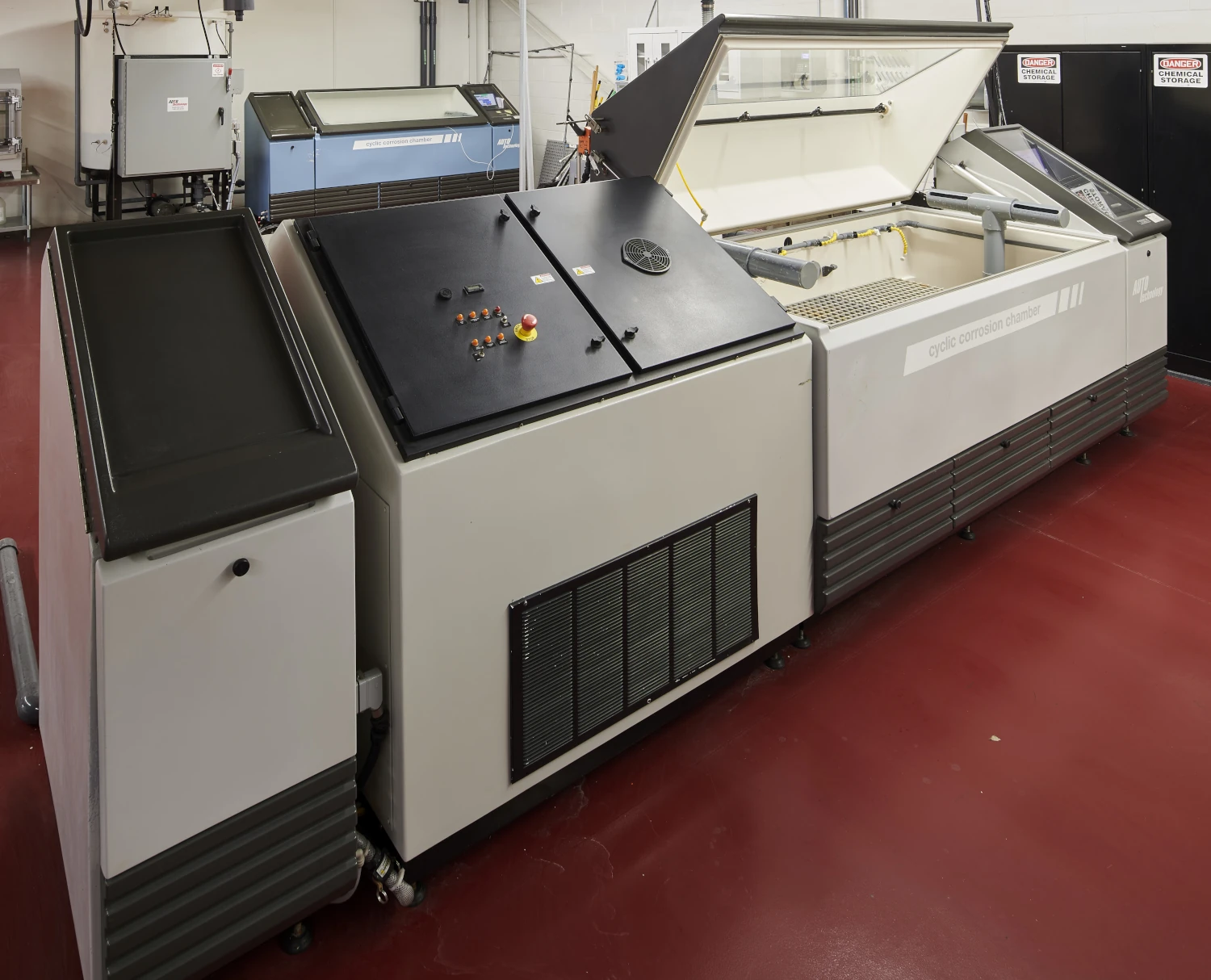
X Series cyclic corrosion chamber equipped with an overhead moving spray system. Final hardware arrangement varies by chamber size and test configuration.
Moving Direct Spray
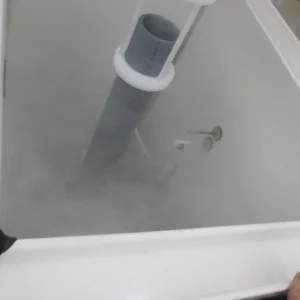
A swaying spray bar distributes the 0.5% sodium chloride solution over the specimen area during the wet phase.
Controlled Test Transitions
Advanced Climate Control manages temperature, relative humidity, circulation, and the transition from wet to dry conditions.
Configured Around the Test Load
Chamber size, cooling capacity, racking, and spray coverage are selected using the actual specimen geometry and loading.
Request a Ford L-467 Chamber Quote
Provide the Ford method revision, specimen dimensions, loading quantity, required chamber size, and any additional low-temperature or corrosion tests.
Ford CETP 00.00-L-467 (Ford L467) Test Cycle & Parameters
Ford CETP 00.00-L-467 (frequently referenced as Ford L467) is an accelerated seven-day cyclic corrosion test standard used to validate automotive components against aggressive environmental conditions. Days 1 through 5 utilize a repeating 24-hour cycle consisting of a wet phase, a controlled transition phase, and an extended controlled-climate phase, while Days 6 and 7 maintain steady climate exposure.
| Phase | Duration | Method conditions |
|---|---|---|
| Wet phase | 6 hours | Intermittent application of 0.5% NaCl solution with specimens maintained visibly wet |
| Transition phase | 2.5 hours | Controlled transition from wet conditions to 50°C and 70% RH |
| Daily controlled-climate phase | 15.5 hours | Constant 50°C and 70% RH |
| Final controlled-climate phase | 48 hours | Constant 50°C and 70% RH during Days 6 and 7 |
Cooling requirement: For automated testing, Ford L-467 requires forced cooling when transitioning from 50°C and 70% RH to the wet phase. The chamber must reach 30°C within 30 minutes and the targeted 25°C within one hour. Required cooling capacity must be verified using the intended chamber configuration and specimen load.
The required number of weekly cycles is established by the specification covering the component or test object.
Swaying Spray Bar for Ford L-467
Automated Ford L-467 testing requires a finely distributed and uniform salt-solution spray falling onto the test objects. The method identifies a moving spray device with overlapping nozzles as a reliable means of producing the required solution downfall.
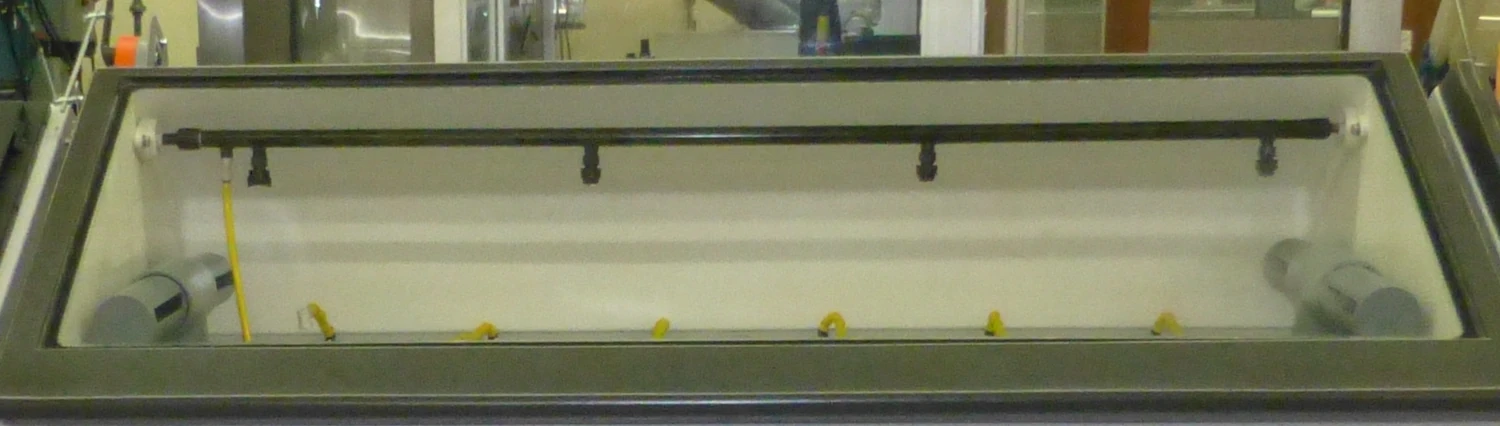
Direct solution spray—not conventional salt fog
The swaying spray bar moves the overlapping nozzle patterns across the specimen area. This is a direct solution-spray system intended to produce the wetting and leaching action required by Ford L-467.
Ford states that atomizing salt-spray nozzles should not be used because they do not produce the required precipitation rate and can make uniform downfall difficult to achieve.
- 0.5 ± 0.05% NaCl solution by weight
- Intermittent spray events during the six-hour wet phase
- Targeted average precipitation of 5 L/m² over the wet phase
- Permitted local precipitation range of 3–15 L/m² over the wet phase
- Collection and verification throughout the usable specimen area
Advanced Climate Control and Forced Cooling
Ford L-467 requires continuous monitoring and control of chamber temperature and relative humidity. Conditioned air must be distributed through the test area, and the system must perform the specified cooling, heating, humidification, and drying transitions without allowing specimen loading to disrupt chamber performance.
| Method requirement | X Series function |
|---|---|
| Temperature and RH control | Advanced Climate Control with internal conditioned-air circulation |
| Cooling from 50°C toward the wet phase | Forced cooling arrangement sized for the chamber and anticipated specimen load |
| High-humidity ramp to 40°C | Programmed temperature and RH transition intended to prevent premature specimen drying |
| 50°C and 70% RH exposure | Controlled temperature, relative humidity, and air circulation |
Ford requires verification with an independent monitoring device positioned among the test objects. A new verification is required when equipment, thermal mass, air circulation, or another aspect of the exposure situation changes.
PC-Based Ford L-467 Test Programming
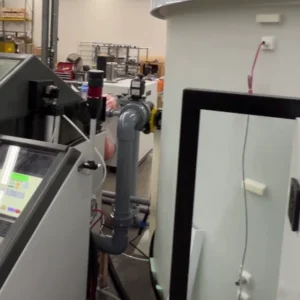
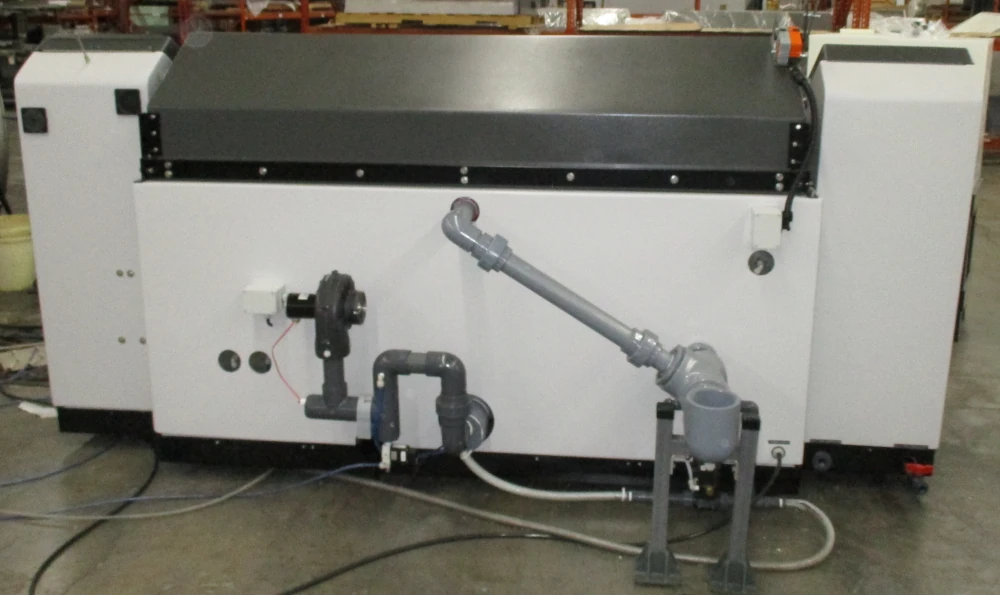
X Series PC controls sequence the chamber functions used during the seven-day Ford cyclic corrosion test. The control program coordinates solution spray, temperature, relative humidity, forced cooling, heating, and the extended controlled-climate phases.
- Multi-step cyclic test programming
- Automatic coordination of spray and climate functions
- Temperature and relative-humidity monitoring
- Test status, alarms, and recorded operating data
- Storage and reuse of programmed test profiles
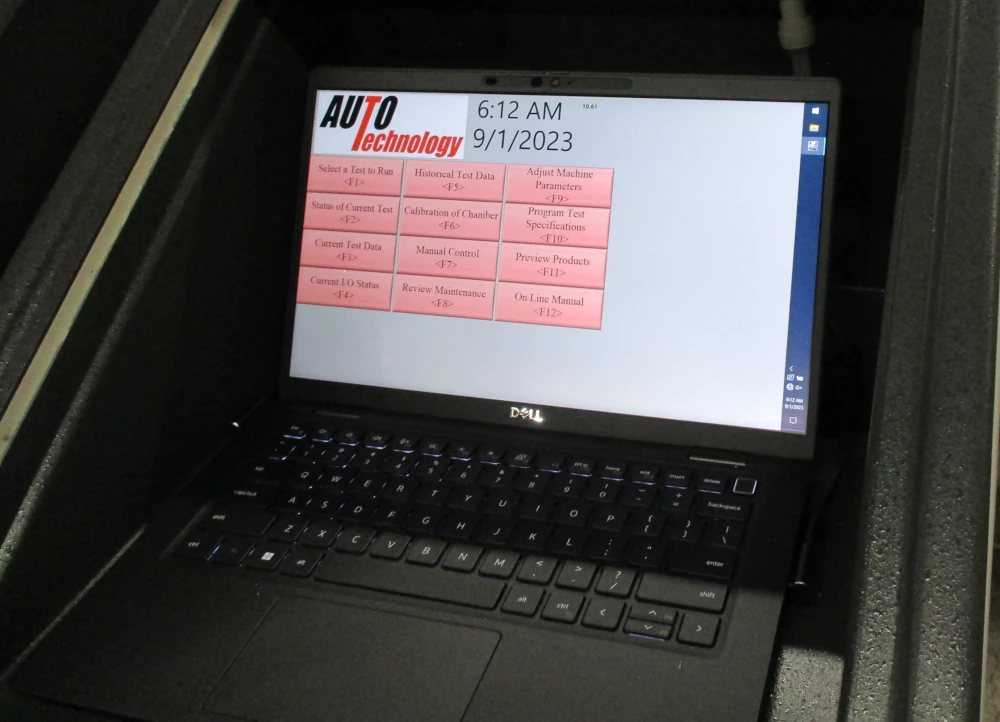
X Series Size 40 Corrosion Chamber
The Size 40 provides approximately 39 ft³ of usable test volume for automotive components, assemblies, and laboratory specimens. Racking and specimen supports must preserve spray exposure, drainage, and conditioned-air circulation around the test objects.
Usable test volume
Approximately 39 ft³
Approximately 1106 liters
Internal dimensions
75 × 36 × 25 in
191 × 92 × 64 cm
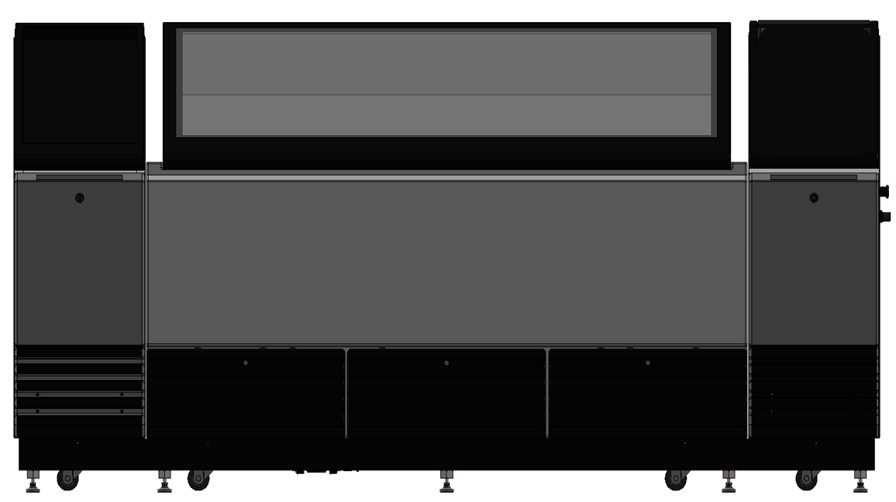
Actual installed footprint can increase with the selected cooling system, solution equipment, control cabinets, access requirements, and other customizations.
Available Sizes and Test Configurations
Size 40 is one available X Series configuration. Other chamber sizes are available when the specimen load, assembly dimensions, required spray area, or laboratory layout call for a different test volume.
Final selection should account for specimen geometry, total thermal mass, spray access, drainage, airflow, required cooling rate, facility utilities, and any additional test methods the chamber must run.
Ford L-467 configuration
- Swaying spray bar with overlapping nozzle coverage
- Advanced Climate Control
- Forced cooling arrangement selected for the chamber and test load
- PC-based control and test programming
- Temperature and relative-humidity monitoring
- Racking or specimen supports selected for the intended test objects
Optional mechanical cooling for expanded testing
The X Series can be paired with mechanical cooling when the laboratory also needs freezing, deeper low-temperature operation, or additional control over temperature transitions. Mechanical cooling capacity and equipment layout depend on chamber size, target temperature, transition time, and specimen load.
Important distinction: Freezing is not part of the Ford 00.00-L-467 cycle described on this page. Mechanical cooling is an optional expanded capability for laboratories that need to run additional low-temperature test methods in the same chamber platform.
Additional customization
- Alternative X Series chamber sizes
- Custom specimen racks, supports, shelves, and mounting fixtures
- Access ports for wiring, sensors, hoses, or externally connected specimens
- Additional solution tanks and spray-system configurations
- Custom electrical configurations
- Hardware packages for other cyclic corrosion test methods
Configure a Corrosion Chamber for Ford L-467 Testing
Provide the applicable Ford method revision, specimen dimensions, loading quantity, required chamber capacity, available utilities, and any additional corrosion or low-temperature tests.
Ford L-467 Corrosion Test Chamber FAQ
What is Ford CETP 00.00-L-467 (Ford L467)?
Ford CETP 00.00-L-467 (also searched as Ford L467) is an accelerated cyclic corrosion test method combining intermittent application of 0.5% NaCl solution with controlled temperature, relative humidity, cooling, heating, and dry-climate exposure.
What type of corrosion chamber is needed for Ford L-467?
Automated testing requires a climate chamber with heating, cooling, humidification, conditioned-air circulation, continuous monitoring, and an automated system for distributing salt solution over the test objects.
Does Ford L-467 use conventional salt fog?
No. The method uses direct application of a 0.5% NaCl solution with sufficient downfall to wet and leach the test objects. Ford states that atomizing salt-spray nozzles should not be used for this application.
Why does the Ford chamber use a swaying spray bar?
The moving spray bar carries overlapping nozzle patterns across the specimen area. Ford identifies a moving spray device, such as a swaying rail with overlapping nozzles, as a reliable way to produce uniform salt-solution downfall.
Does Ford L-467 require forced cooling?
Yes, for automated testing. The method requires the chamber to cool from 50°C to 30°C within 30 minutes and reach 25°C within one hour. The cooling arrangement must be verified with the intended chamber and specimen load.
Is mechanical refrigeration required for Ford L-467?
The method requires forced cooling for an automated process, but it does not state that mechanical refrigeration is the only acceptable means. The selected cooling arrangement must achieve the required transition with the actual chamber configuration and specimen load.
Can an X Series chamber also perform freezing tests?
Yes, when configured with the appropriate mechanical-cooling package. Freezing is an additional capability and is not a phase of the Ford 00.00-L-467 cycle described here.
Is the X Series Size 40 the only chamber size available?
No. Multiple X Series sizes are available. Chamber selection depends on specimen dimensions, loading density, spray coverage, airflow, cooling requirements, facility space, and the required number of test objects.
What information is needed to quote a Ford L-467 chamber?
Provide the applicable Ford method revision, specimen dimensions, number and mass of test objects, mounting orientation, desired chamber capacity, available utilities, and any additional test methods the equipment must perform.
Related products
-

Neutral Salt Spray Chamber – C Series Size 20
Contact Us to Configure Your Chamber -
GMW 14872 Cyclic Corrosion Test Chamber – A Series Size 20
Contact Us to Configure Your Chamber -
SAE J2334 Immersion Cyclic Corrosion Test Chamber – X Series Size 40
Contact Us to Configure Your Chamber -
ASTM B368 CASS Test Chamber – M Series Size 15L
Buy product