CASS Test Chamber – C Series Size 20
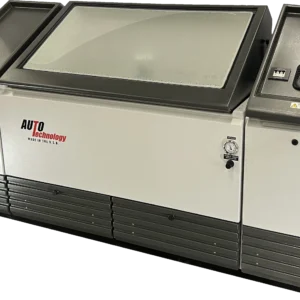
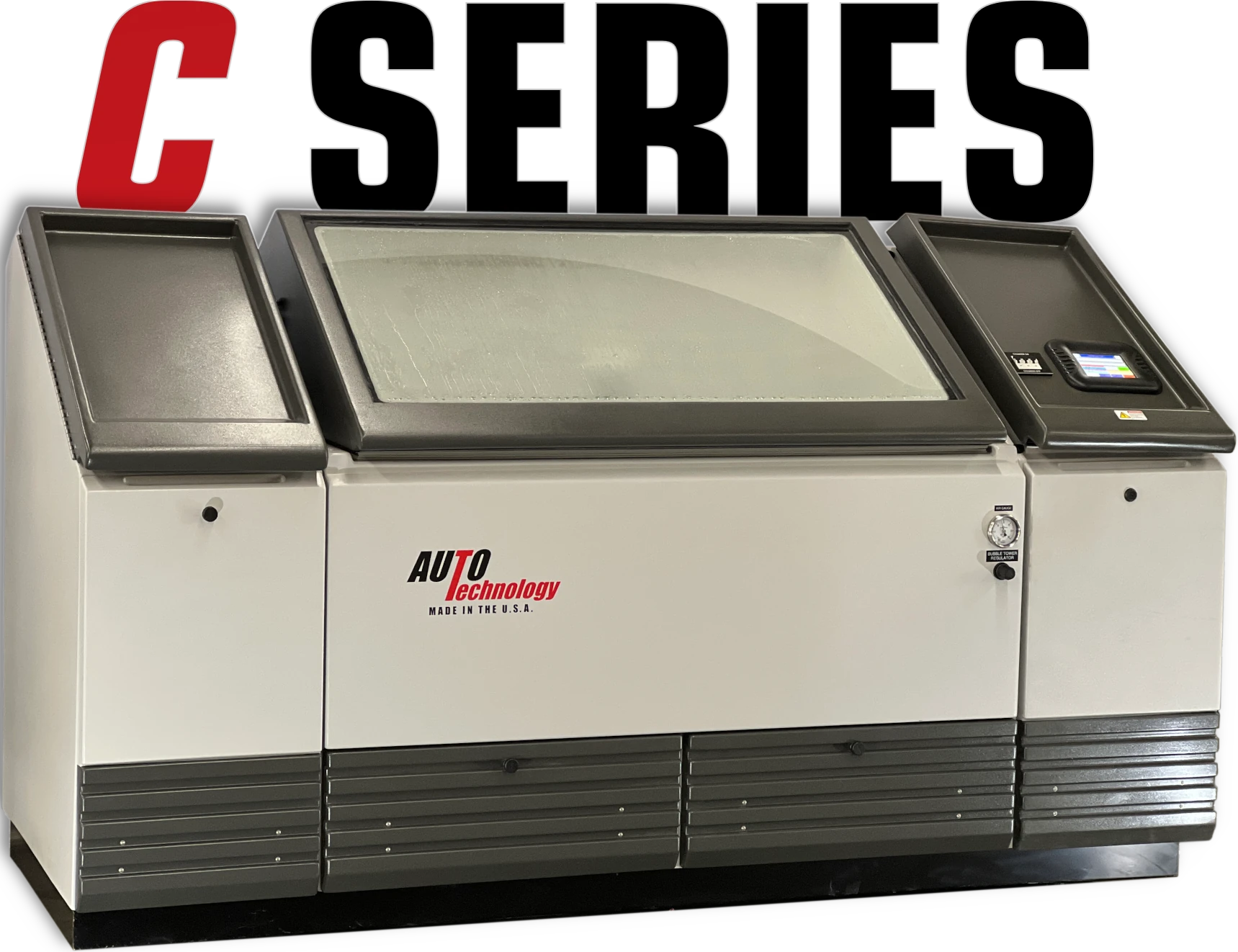
The Auto Technology C Series Size 20 is a fiberglass AASS salt spray chamber providing approximately 20 ft³ (594 L) of usable test volume. It is configurable for continuous exposure under ISO 9227 AASS and JIS Z 2371 AASS, with touchscreen controls, an integrated solution reservoir, conditioned atomizing air, and baffled fog distribution.
- Supported Standards: ISO 9227 AASS and JIS Z 2371 AASS
- Exposure: Continuous fog at 35°C ±2°C
- Test Solution: 50 g/L ±5 g/L sodium chloride acidified with acetic acid
- Fog System: Venturi atomizer with conditioned compressed air and a baffled dispersion tower
- Control System: 6-inch touchscreen for chamber temperature, bubble-tower temperature, fog operation, timing, status, and alarms
- Solution Storage: Integrated 60-gallon reservoir
This product is configured and marketed for AASS testing. The same C Series platform can be configured for NSS, CASS, ASTM G85 Annexes A1, A2, A3, and A5, simple fog/dry cycling, and condensing humidity.
Description
The C Series Size 20 Copper-Accelerated Acetic Acid Salt Spray Chamber is a fiberglass corrosion chamber for continuous CASS testing under ISO 9227 CASS and JIS Z 2371 CASS. It provides approximately 20 ft³ (594 L) of usable test volume and controls the required solution delivery, conditioned atomizing air, fog distribution, chamber temperature, and exposure timing.
Copper-Accelerated Fog
Continuous acidified salt fog containing the specified concentration of copper(II) chloride dihydrate.
50°C Exposure
The fiberglass chamber maintains the ISO 9227 and JIS Z 2371 CASS exposure-zone temperature of 50°C ±2°C.
Verified Corrosivity
The chamber supports reference-panel verification using the 24-hour CASS steel mass-loss requirement.
Provide the required standard and revision, specimen dimensions, loading quantity, exposure duration, evaluation requirements, and available facility utilities.
CASS Exposure Profile
CASS combines an acidic salt solution with copper chloride acceleration and a 50°C chamber temperature. Those three conditions distinguish it from both neutral salt spray and AASS.
| Standards | ISO 9227 CASS and JIS Z 2371 CASS |
| Exposure sequence | Continuous salt spray throughout the prescribed test period |
| Chamber temperature | 50°C ±2°C |
| Collected-solution pH | 3.1-3.3 at 25°C ±2°C |
| Fog collection | 1.5 mL/h ±0.5 mL/h per 80 cm², averaged over at least 24 h |
| Reference-panel verification | 55 g/m² ±15 g/m² steel mass loss after 24 h |
Duration comes from the governing requirement: ISO 9227 and JIS Z 2371 recommend exposure periods of 2, 6, 24, 48, 96, 168, 240, 480, 720, or 1,000 hours, but the product specification or agreement establishes the duration and acceptance criteria for the test item.
CASS Solution Chemistry
The chamber delivers a continuous fog from the specified solution. Solution preparation and collected-fog measurements remain laboratory responsibilities and are recorded with the test.
Sodium chloride:
50 g/L ±5 g/L
Exposure additive:
0.26 g/L ±0.02 g/L CuCl₂·2H₂O
Collected pH:
3.1-3.3 at 25°C ±2°C
Acid-service chamber: ISO 9227 and JIS Z 2371 warn that a cabinet used for AASS or CASS should not subsequently be assumed suitable for NSS. Acidic or copper-bearing residues can affect a neutral exposure, so dedicated chambers are appropriate when strict separation must be maintained.
Materials and Coatings Evaluated with CASS
ISO 9227 identifies CASS as useful for decorative copper-nickel-chromium and nickel-chromium coating systems and anodic coatings on aluminum. The governing product or coating specification determines whether the exposure is appropriate, how specimens are prepared, how long they are exposed, and how results are evaluated.
- Coated panels and standardized reference specimens
- Decorative plated components and production hardware
- Anodized aluminum panels and components when specified
- Comparative quality-control specimens required by a product or customer specification
C Series CASS Fog Generation
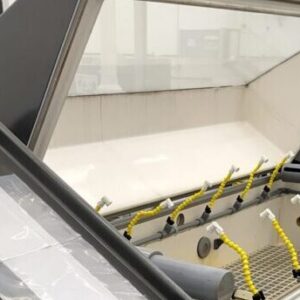
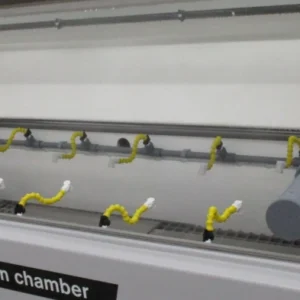
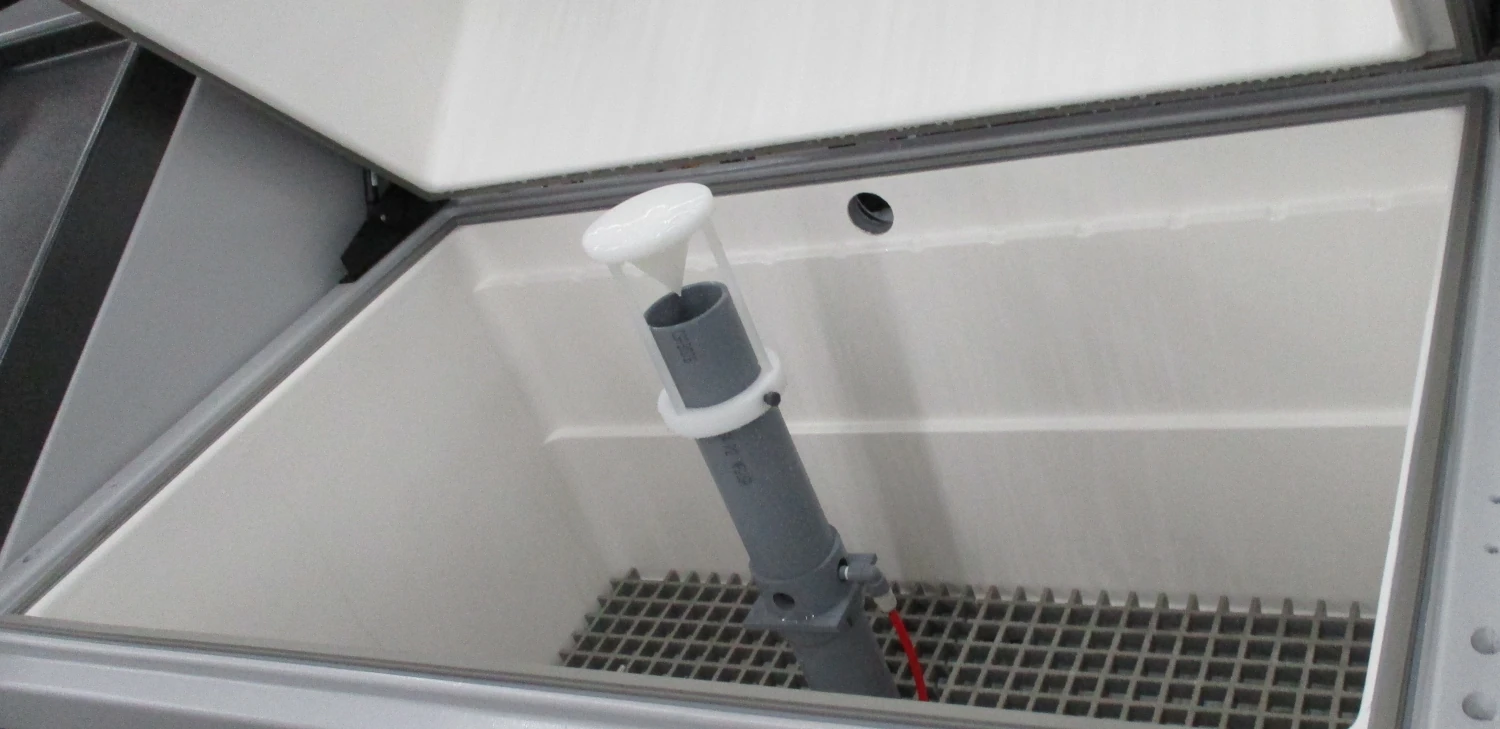
Clean compressed air is conditioned in the heated bubble tower before reaching the venturi atomizer. The aerosol passes through the tall baffled dispersion tower and enters the exposure zone as freely settling fog without direct nozzle impingement on the specimens.
Exposure Hardware
- Molded fiberglass chamber and cover
- Venturi atomizer and heated bubble tower
- Tall baffled dispersion tower
- Fog collectors for fallout-rate monitoring
- Integrated 60-gallon solution reservoir
- Corrosion-resistant specimen supports selected for the required load and exposure angle
Touchscreen CASS Controls
The 6-inch color touchscreen controls chamber temperature, bubble-tower temperature, continuous fog operation, test timing, manual functions, status, and alarms. Optional data logging is available for chamber operating data. Solution concentration, collected pH, fallout rate, and reference-panel mass loss are verified through the laboratory procedure.
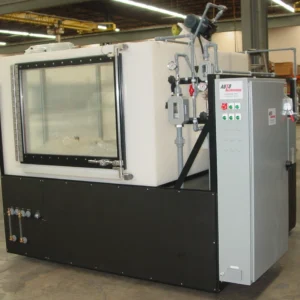
C Series Size 20 CASS Chamber
The Size 20 provides laboratory-scale capacity for coated panels, plated components, aluminum specimens, production parts, and corrosion-control specimens. Racking is selected around specimen dimensions, loading quantity, required orientation, and open fog circulation.

Usable test volume
Approximately 20 ft³
Approximately 594 liters
Base chamber footprint
Approximately 95 × 43 in
Approximately 242 × 110 cm
Solution reservoir
Integrated 60 gallons
Final installed footprint depends on exhaust routing, service clearance, utility connections, and selected options.
Other Tests Available on the C Series Platform
This product is configured for CASS. The same C Series platform can be configured for NSS, AASS, ASTM G85 Annexes A1, A2, A3, and A5, simple fog/dry cycling, and condensing humidity.
Configure the intended chemistry before purchase: Acidic and copper-bearing solutions require appropriate operating procedures and can contaminate a cabinet intended for neutral salt spray. Dedicated chambers are appropriate where strict separation must be preserved.
Configure a Size 20 CASS Chamber
Identify the required standard and revision, specimen dimensions, loading quantity, exposure duration, evaluation requirements, and available utilities.
CASS Chamber FAQ
Which standards can this CASS chamber perform?
The C Series Size 20 can be configured for ISO 9227 CASS and JIS Z 2371 CASS. The laboratory must operate and document the chamber according to the exact standard and revision being reported.
How is CASS different from AASS?
Both use acidified sodium chloride solution, but CASS adds copper(II) chloride dihydrate and raises the chamber temperature from 35°C to 50°C. CASS is therefore a separate copper-accelerated exposure, not an AASS duration variation.
Does CASS include wet and dry cycling?
No. ISO 9227 and JIS Z 2371 CASS use continuous fog throughout the prescribed exposure. A programmed dry, humidity, or immersion step belongs to a different corrosion method.
How is chamber corrosivity verified?
The standards use specified steel reference specimens exposed for 24 hours. Acceptable operation requires 55 g/m² ±15 g/m² steel mass loss after 24 h. This verifies the chamber atmosphere; it is not the acceptance criterion for the customer product.
Can the same cabinet return to NSS testing?
It should not automatically be assumed suitable. ISO 9227 and JIS Z 2371 warn that residues from AASS or CASS can influence neutral salt spray. Where neutral testing must remain controlled, use a dedicated NSS chamber.
What is the capacity of the Size 20?
The chamber provides approximately 20 ft³ or 594 L of usable test volume and includes an integrated 60-gallon solution reservoir.
What information is needed for a quote?
Provide the required standard and revision, governing product specification, specimen material and dimensions, loading quantity, exposure duration, evaluation requirements, and available electrical, compressed-air, water, drainage, and ventilation connections.
Related products
-

GMW 3172 9.4.8 Salt Spray Test Chamber – X Series Size 40
Contact Us to Configure Your Chamber -
Ford L-467 / CETP 00.00-L-467 Cyclic Corrosion Test Chamber – X Series Size 40
Contact Us to Configure Your Chamber -
Water Spray Test Chamber – Century Series
Contact Us to Configure Your Chamber -
MIL-STD-810 Method 509.7 Salt Fog Chamber – C Series Size 20
Contact Us to Configure Your Chamber